IELTS படிப்புத் தேர்வு வழிகாட்டி: IELTS பொது படிப்பு மற்றும் IELTS கல்வி படிப்புக்கான இலவச IELTS படிப்பு பயிற்சித் தேர்வு
இந்த வழிகாட்டியில், ஒரு இலவச IELTS படிப்புத் தேர்வை எழுதி உங்கள் IELTS படிப்புப் பயிற்சியைத் தொடங்கலாம். இருப்பினும், இந்தத் தேர்வுக்கு இரண்டு வகைகள் உள்ளன: IELTS பொது படிப்பு மற்றும் IELTS கல்வி படிப்பு. எந்தப் பதிப்பு உங்களுக்குப் பொருத்தமானது என்பதையும், எங்கள் IELTS படிப்புப் பொருளைப் பயன்படுத்தி ஒவ்வொரு படிப்பு கேள்வி வகையையும் எவ்வாறு கையாள வேண்டும் என்பதையும் நீங்கள் கற்றுக்கொள்வீர்கள்.
ஒரு இலவச IELTS reading பயிற்சி தேர்வை முடித்த பின் இலவச IELTS reading மதிப்பெண் பகுப்பாய்வும் தனிப்பட்ட படிப்பு திட்டமும் பெறுங்கள்.
| IELTS General Reading தேர்வு | IELTS Academic Reading தேர்வு |
|---|---|
கீழே எங்களிடம் உள்ள முழுமையான IELTS reading கேள்விகளின் பட்டியல் பதில்களுடன் கொடுக்கப்பட்டுள்ளது. குறிப்பு: சிவப்பு இணைப்புகள் எங்கள் மாணவர்கள் அதிகம் பரிந்துரைத்த மற்றும் பிரபலமான reading கேள்விகள்; இவற்றை நீங்கள் எப்போதும் இலவசமாகப் பயிற்சி செய்யலாம்.
IELTS வாசிப்புப் பயிற்சித் தேர்வு வழிகாட்டி
இந்த வழிகாட்டியின் மீதமுள்ள பகுதி IELTS வாசிப்புத் தேர்வு பற்றி அனைத்தையும் உங்களுக்குக் கற்பிக்கும் — பொதுப் பயிற்சி வாசிப்புத் தேர்வு மற்றும் கல்வி வாசிப்புத் தேர்வு இரண்டுக்கும். வாசிப்பு ஸ்கோர் எவ்வாறு கணக்கிடப்படுகிறது என்பதை அறிந்து கொள்வீர்கள், ஒவ்வொரு வாசிப்புக் கேள்வி வகைக்கும் வெற்றிகரமாக எவ்வாறு பதிலளிப்பது என்பதைக் கற்றுக் கொள்வீர்கள், IELTS வாசிப்பு உரை பொருளுடன் உங்கள் வாசிப்பை மேம்படுத்துவீர்கள், மேலும் உங்கள் IELTS வாசிப்புப் பயிற்சி வெற்றிக்கான எங்கள் 3 உத்திகளில் தேர்ச்சி பெறுவீர்கள்.
உள்ளடக்க அட்டவணை
- IELTS வாசிப்புத் தேர்வுத் தகவல்
- IELTS பொது வாசிப்புத் தேர்வுத் தகவல்
- IELTS கல்வி வாசிப்புத் தேர்வுத் தகவல்
- IELTS வாசிப்பு ஸ்கோர் கணிப்பான்
- அனைத்து 11 IELTS வாசிப்புக் கேள்வி வகைகளுக்கும் எவ்வாறு பதிலளிப்பது
- உங்கள் IELTS வாசிப்பு பேண்ட் ஸ்கோரை எவ்வாறு மேம்படுத்துவது
- 3 IELTS வாசிப்பு உத்திகள்
- பதில்களுடன் இலவச IELTS வாசிப்புப் பயிற்சித் தேர்வு PDF பதிவிறக்கம்
IELTS வாசிப்புத் தேர்வுத் தகவல்
IELTS வாசிப்புத் தேர்வு 3 பிரிவுகள் மற்றும் மொத்தம் 40 கேள்விகளைக் கொண்டுள்ளது. பொதுவாக, ஒவ்வொரு பிரிவுக்கும் 12-14 கேள்விகளுக்கு நீங்கள் பதிலளிப்பீர்கள், மேலும் உங்கள் வாசிப்புத் தேர்வை முடிக்க சரியாக 60 நிமிடங்கள் வழங்கப்படும். நீங்கள் எடுக்கும் தேர்வைப் பொறுத்து ஒவ்வொரு பிரிவும் 1-3 பகுதிகளைக் கொண்டுள்ளது. நீங்கள் எடுக்கும் தேர்வை அறிந்திருந்தால், அடுத்த சில பிரிவுகளைத் தவிர்க்கலாம். இல்லையென்றால், ஒவ்வொரு தேர்வையும் பற்றி கற்றுக்கொள்வதும், அதற்கு எவ்வாறு தயாராவது என்பதும் முக்கியமானது.
எனக்கு எந்த IELTS வாசிப்புத் தேர்வு சரியானது?
IELTS வாசிப்புத் தேர்வுக்கு இரண்டு பதிப்புகள் உள்ளன: IELTS பொது வாசிப்பு மற்றும் IELTS கல்வி வாசிப்பு. நீங்கள் குடியேற்றம் செய்ய அல்லது உயர்நிலைப் பள்ளியில் சேர விரும்பினால் பொது வாசிப்பு தேர்வை எடுப்பீர்கள். உயர் கல்வியைத் தேடினால் கல்வி வாசிப்பு தேர்வை எடுப்பீர்கள். பொது வாசிப்புக்கும் கல்வி வாசிப்புக்கும் இடையேயான மிகப்பெரிய வேறுபாடு IELTS வாசிப்புப் பகுதிகளின் கடினத்தன்மையாகும். பெயரே குறிப்பிடுவது போல், கல்விப் பரிசோதனை கல்வி ஆதாரங்களிலிருந்து IELTS வாசிப்பு பொருளைப் பயன்படுத்துகிறது, அதே சமயம் பொதுத் தேர்வு அன்றாட வாழ்க்கையிலிருந்து பொருளைப் பயன்படுத்துகிறது.
இரண்டு தேர்வுகளிலும் 3 பிரிவுகள், 40 கேள்விகள் மற்றும் 11 கேள்வி வகைகள் உள்ளன. இரு தேர்வுகளிலும் ஒவ்வொரு பிரிவைப் பற்றியும் கீழே உள்ள அட்டவணையில் விரிவாகப் படிக்கலாம்.
| பிரிவு | IELTS கல்வி வாசிப்புத் தேர்வு | IELTS பொது வாசிப்புத் தேர்வு |
|---|---|---|
| 1 | விளக்கமான மற்றும் உண்மை சார்ந்தவையிலிருந்து விவாதம் மற்றும் பகுப்பாய்வு வரையிலான ஒரு நீளமான கல்வி உரை. உரை
புத்தகங்கள், இதழ்கள், பத்திரிகைகள் மற்றும் செய்தித்தாள்களிலிருந்து எடுக்கப்படும். 12-14 கேள்விகள் |
இரண்டு அல்லது மூன்று குறுகிய உண்மை சார்ந்த உரைகள்.
தலைப்புகள் ஆங்கிலம் பேசும் நாட்டில் அன்றாட வாழ்க்கைக்கு பொருத்தமானவை.
12-14 கேள்விகள் |
| 2 | விளக்கமான மற்றும் உண்மை சார்ந்தவையிலிருந்து விவாதம் மற்றும் பகுப்பாய்வு வரையிலான ஒரு நீளமான கல்வி உரை. உரை
புத்தகங்கள், இதழ்கள், பத்திரிகைகள் மற்றும் செய்தித்தாள்களிலிருந்து எடுக்கப்படும். 10-14 கேள்விகள் |
வேலை தொடர்பான பிரச்சினைகளில் கவனம் செலுத்தும் இரண்டு குறுகிய உண்மை சார்ந்த உரைகள் (எ.கா. வேலைக்கு விண்ணப்பித்தல், நிறுவனக் கொள்கைகள், ஊதியம் மற்றும் நிபந்தனைகள்).
12-14 கேள்விகள் |
| 3 | விளக்கமான மற்றும் உண்மை சார்ந்தவையிலிருந்து விவாதம் மற்றும் பகுப்பாய்வு வரையிலான ஒரு நீளமான கல்வி உரை. உரை
புத்தகங்கள், இதழ்கள், பத்திரிகைகள் மற்றும் செய்தித்தாள்களிலிருந்து எடுக்கப்படும். 12-14 கேள்விகள் |
பொது ஆர்வமுள்ள தலைப்பில் ஒரு நீளமான, மிகவும் சிக்கலான உரை.
உரைகள் உண்மையானவை மற்றும் அறிவிப்புகள், விளம்பரங்கள், நிறுவன கையேடுகள், புத்தகங்கள், பத்திரிகைகள் மற்றும் செய்தித்தாள்களிலிருந்து எடுக்கப்படுகின்றன.
12-14 கேள்விகள் |
இப்போது நீங்கள் IELTS வாசிப்புத் தேர்வுக் கட்டமைப்பு மற்றும் IELTS பொது வாசிப்பு மற்றும் IELTS கல்வி வாசிப்பு இரண்டையும் பற்றி நன்கு அறிந்திருக்கிறீர்கள், Paper-based Test அல்லது Computer-based Test எடுப்பதில் எது சிறந்தது என்பதைக் கற்றுக்கொள்ளும் நேரம் இது.
IELTS Paper-based Test (PBT) VS IELTS Computer-based Test (CBT)
PBT-இல், உங்களுக்கு ஒரு Question Booklet மற்றும் ஒரு Answer Sheet வழங்கப்படும். Question Booklet என்பது பதிலளிக்க வேண்டிய அனைத்து கேள்விகளையும் காணும் இடம். Answer Sheet என்பது மதிப்பீட்டிற்கான உங்கள் இறுதி பதில்களை எழுதும் இடம். அதிகாரப்பூர்வ IELTS answer sheet pdf-ஐ இங்கே பார்க்கலாம்.
குறிப்பு: IELTS கேட்டல் தேர்வைப் போலல்லாமல், Booklet-இலிருந்து Answer Sheet-க்கு உங்கள் பதில்களை மாற்றுவதற்கு கூடுதல் நேரம் வழங்கப்படாது, எனவே ஒவ்வொரு IELTS வாசிப்புத் தேர்வுக் கேள்விக்கும் பதிலளிக்கும்போதே அதை Answer Sheet-இல் சேர்ப்பதை உறுதி செய்யுங்கள்.
CBT-இல், கணினியில் கேள்விகளுக்கு பதிலளிப்பீர்கள். உங்கள் பத்திகள் இடதுபுறத்திலும் கேள்விகள் வலதுபுறத்திலும் இருக்கும். உரையை முன்னிலைப்படுத்தவும், பதில்களை நகலெடுத்து ஒட்டவும் கட்டுப்பாட்டு செயல்பாடுகளைப் பயன்படுத்தவும் உங்களால் முடியும். PBT மற்றும் CBT பற்றிய மேலதிக தகவலுக்கு, The IELTS Computer Based Test Guide பார்க்கவும்.
எங்கள் இலவச IELTS வாசிப்புப் பயிற்சித் தேர்வு மூலம் எந்தப் பதிப்பையும் நீங்கள் விரும்பும் போதெல்லாம் பயிற்சி செய்யலாம். எங்கள் அனைத்து IELTS வாசிப்பு பொருட்களுக்கான இணைப்புகளை பக்கத்தின் மேலே காணலாம்.
பொது IELTS வாசிப்புத் தேர்வு
பொதுத் தேர்வில், ஆங்கிலம் பேசும் சூழலில் அன்றாட அடிப்படையில் நீங்கள் சந்திக்கக்கூடிய பொருட்களிலிருந்து கண்டறியப்பட்ட புத்தகங்கள், பத்திரிகைகள், செய்தித்தாள்கள், அறிவிப்புகள், விளம்பரங்கள், நிறுவன கையேடுகள் மற்றும் வழிகாட்டுதல்களிலிருந்து IELTS வாசிப்புப் பகுதிகள் எடுக்கப்படுகின்றன. கல்வி வாசிப்புத் தேர்வைப் போலவே, 3 பிரிவுகள் உள்ளன, இருப்பினும் IELTS பொது வாசிப்புத் தேர்வில், ஒவ்வொரு பிரிவும் ஒன்றுக்கொன்று சற்று வேறுபடுகிறது.
IELTS பொது வாசிப்பு அறிமுக வீடியோ
-
Section 1: இரண்டு அல்லது மூன்று குறுகிய உரைகள் அல்லது பல குறுகிய உரைகளைக் கொண்டுள்ளது
இந்தப் பிரிவு Social Survival எனப்படுகிறது மற்றும் ஆங்கிலத்தில் அடிப்படை மொழிசார் வாழ்வாதாரத்திற்கு பொருத்தமான உரைகளைக் கொண்டுள்ளது, பெரும்பாலும் பொதுவான உண்மை தகவலை மீட்டெடுத்து வழங்குவது தொடர்பான பணிகளை உள்ளடக்கியது, எடுத்துக்காட்டாக, அறிவிப்புகள், விளம்பரங்கள் மற்றும் கால அட்டவணைகள். -
Section 2: இரண்டு உரைகளைக் கொண்டுள்ளது
இந்தப் பிரிவு Workplace Survival எனப்படுகிறது மற்றும் பணியிட சூழலில் கவனம் செலுத்துகிறது, எடுத்துக்காட்டாக, வேலை விளக்கங்கள், ஒப்பந்தங்கள் மற்றும் பணியாளர் மேம்பாடு மற்றும் பயிற்சிப் பொருட்கள். -
Section 3: ஒரு நீளமான உரை
இந்தப் பிரிவு General Reading எனப்படுகிறது மற்றும் மிகவும் சிக்கலான கட்டமைப்புடன் விரிவான கதையாடலை வாசிப்பதை உள்ளடக்கியது. கவனம் வாதம் சார்ந்த உரைகளுக்குப் பதிலாக விளக்கமான மற்றும் வழிமுறை சார்ந்தவற்றில் உள்ளது.
நீங்கள் மிகவும் தடுமாற்றம் அடையவில்லை என்று நம்புகிறேன். வாசிப்புத் தேர்வு தோன்றுவது போல் கடினமானது அல்ல. எங்கள் IELTS வாசிப்பு குறிப்புகளைப் பின்பற்றி, எங்கள் இலவச IELTS வாசிப்புப் பயிற்சிக் கேள்விகளைப் பயன்படுத்தும் வரை, எந்தவொரு வாசிப்புப் பகுதியையும் கையாள தயாராக இருப்பீர்கள் மற்றும் உங்கள் இலக்கு IELTS வாசிப்பு ஸ்கோரை அடைவீர்கள். மூலம், கல்வி வாசிப்புத் தேர்வு பொது வாசிப்புத் தேர்வைவிட சற்று வித்தியாசமாக ஸ்கோர் செய்யப்படுகிறது. அடுத்து, வாசிப்பு பேண்ட் ஸ்கோர் மற்றும் அவை எவ்வாறு கணக்கிடப்படுகின்றன என்பதைப் பார்ப்போம்.
கல்வி IELTS வாசிப்புத் தேர்வு
கல்விப் தேர்வில், பல்கலைக்கழக மாணவர்களுக்குப் பொருத்தமான கல்வி ஆதாரங்களிலிருந்து புத்தகங்கள், இதழ்கள், பத்திரிகைகள் மற்றும் செய்தித்தாள்களிலிருந்து IELTS வாசிப்புப் பகுதிகள் எடுக்கப்படுகின்றன. ஒவ்வொரு பகுதியும் நீளமானது, ஒருவேளை 6 - 10 பத்திகள், கதை அல்லது விளக்கம் போன்ற பல்வேறு பாணிகளில் எழுதப்பட்டிருக்கலாம், மற்றும் மானுடவியல், வரலாறு, அறிவியல், உயிரியல், கலை, கல்வி, மொழியியல் போன்ற பரந்த அளவிலான கல்வித் தலைப்புகளை உள்ளடக்கியது. பகுதிகள் சில நேரங்களில் தொழில்நுட்ப சொற்கள் அல்லது விளக்கப்படங்கள் மற்றும் வரைபடங்கள் போன்ற காட்சிப் பொருட்களைக் கூட உள்ளடக்கியதாக இருக்கலாம். எங்கள் IELTS வாசிப்புப் பயிற்சித் தேர்வுக் கேள்விகளுடன் இந்தத் தலைப்புகளையும் மேலும் பலவற்றையும் பயிற்சி செய்யலாம்.
IELTS கல்வி வாசிப்பு அறிமுக வீடியோ
எனவே அதிகாரப்பூர்வ IELTS கல்வி வாசிப்புத் தேர்வில் எந்தக் கல்வித் தலைப்புகள் அதிகம் தோன்றுகின்றன?
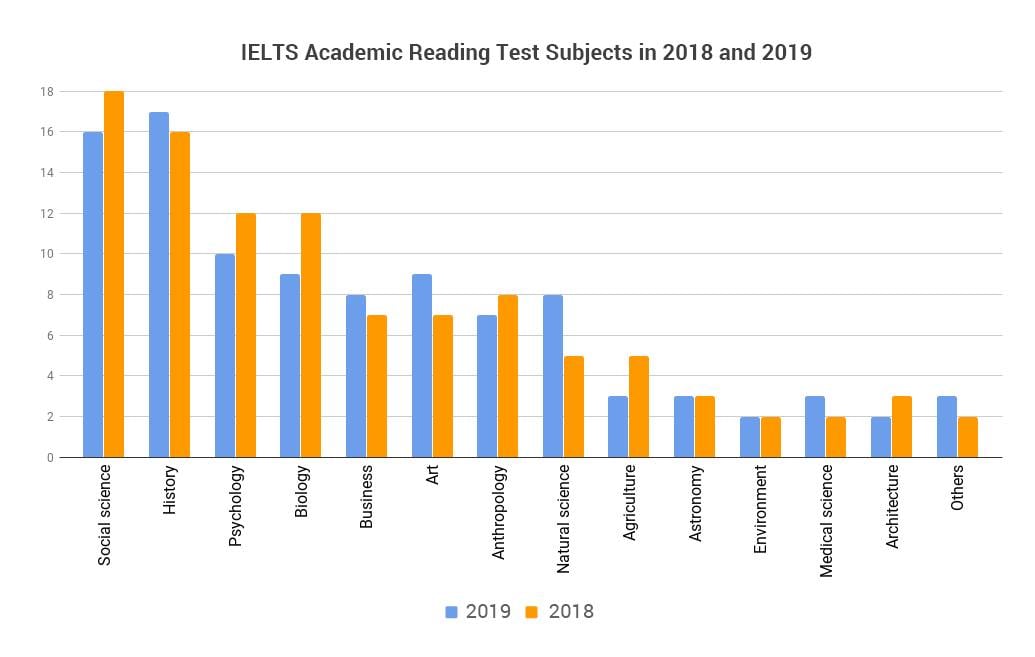
சரி, 2018 & 2019-இல், மிகவும் பொதுவான கல்வி வாசிப்புத் தலைப்புகள் வரலாறு மற்றும் சமூக அறிவியல்களாக இருந்தன, இதில் கலாச்சாரம், கல்வி, மொழியியல் மற்றும் சமூகவியல் ஆகியவை அடங்கும். சுவாரஸ்யமாக, வரலாற்றுத் தலைப்புகள் பெரும்பாலும் நியூசிலாந்து, ஆஸ்திரேலியா, இங்கிலாந்து மற்றும் கனடாவின் விலங்குகள்/தாவரங்கள் பற்றியதாக இருந்தன. அடுத்த மிகவும் பிரபலமான IELTS வாசிப்புத் தலைப்புகள் உளவியல், இயற்கை அறிவியல், கலை, மானுடவியல், வணிகம் மற்றும் உயிரியல் ஆகும்.
2018 மற்றும் 2019 ஆண்டுகளில் கல்வி IELTS வாசிப்புத் தேர்வுகளில் சோதிக்கப்பட்ட பல்வேறு பாடங்களைக் கீழே உள்ள விளக்கப்படம் காட்டுகிறது.
இந்த போக்குகள் காரணமாக, எங்கள் IELTS வாசிப்புப் பயிற்சித் தேர்வுகள் இந்தத் தலைப்புகளை உள்ளடக்கியதாக நாங்கள் உறுதி செய்தோம். கூடவே, குறைவாகப் பயன்படுத்தப்பட்ட தலைப்புகளிலிருந்தும் வாசிப்பு மாதிரிகளைச் சேர்த்துள்ளோம், ஒருவேளை. எல்லா சூழ்நிலைகளுக்கும் நீங்கள் தயாராக இருப்பது முக்கியம், ஏனென்றால் எந்த IELTS வாசிப்புத் தலைப்பை நீங்கள் பெறுவீர்கள் என்று உங்களுக்குத் தெரியாது.
உங்கள் IELTS வாசிப்பு ஸ்கோர் எவ்வாறு கணக்கிடப்படுகிறது
ஒவ்வொரு IELTS வாசிப்புக் கேள்விக்கும் 1 புள்ளி மதிப்பு உள்ளது, எனவே நீங்கள் 40 புள்ளிகள் வரை "raw" ஸ்கோரைப் பெறலாம். பின்னர், உங்கள் raw ஸ்கோர் உங்கள் பேண்ட் ஸ்கோராக மாற்றப்படும். ஒவ்வொரு தேர்வுக்கும் raw IELTS வாசிப்பு ஸ்கோர்கள் பேண்ட் ஸ்கோர்களாக எவ்வாறு மாற்றப்படுகின்றன என்பதைப் பற்றிய பொதுவான கருத்தை கீழே உள்ள அட்டவணைகள் உங்களுக்கு வழங்கும்.
IELTS பொது வாசிப்பு ஸ்கோர் VS IELTS கல்வி வாசிப்பு ஸ்கோர்
| Raw ஸ்கோர்கள்: கல்வி | பேண்ட் ஸ்கோர்கள்: கல்வி | Raw ஸ்கோர்கள்: பொது | பேண்ட் ஸ்கோர்கள்: பொது |
|---|---|---|---|
| 39-40 | 9 | 40 | 9 |
| 37-38 | 8.5 | 39 | 8.5 |
| 35-36 | 8 | 37-38 | 8 |
| 33-34 | 7.5 | 36 | 7.5 |
| 30-32 | 7 | 34-35 | 7 |
| 27-29 | 6.5 | 32-33 | 6.5 |
| 23-26 | 6 | 30-31 | 6 |
| 19-22 | 5.5 | 27-29 | 5.5 |
| 15-18 | 5 | 23-26 | 5 |
| 13-14 | 4.5 | 19-22 | 4.5 |
| 10-12 | 4 | 15-18 | 4 |
| 8-9 | 3.5 | 12-14 | 3.5 |
| 6-7 | 3 | 9-11 | 3 |
| 4-5 | 2.5 | 6-8 | 2.5 |
| 1-3 | 2 | 1-5 | 2 |
இருப்பினும், IELTS வாசிப்புத் தேர்வின் ஒவ்வொரு பதிப்பும் சற்று வேறுபடுகிறது மற்றும் ஒரு குறிப்பிட்ட பேண்டை அடைய தேவையான ஸ்கோர் அந்த தேர்வை எடுத்த அனைவரும் அந்த குறிப்பிட்ட நாளில் எவ்வாறு செயல்பட்டார்கள் என்பதைப் பொறுத்து மாறுகிறது என்பதை மனதில் கொள்ளுங்கள். எனவே, ஒரு பேண்ட் ஸ்கோரைப் பெற தேவையான சரியான பதில்களின் எண்ணிக்கை தேர்விற்கு தேர்வாக சற்று வேறுபடும், ஆனால் பொதுவாக நீங்கள் பேண்ட் 7 ஸ்கோரைப் பெற விரும்பினால் 40-ல் சுமார் 30 பெற இலக்கு வைக்க வேண்டும்.
நாங்கள் உங்களுக்கு நினைவூட்ட விரும்பும் மற்றொரு விஷயம் என்னவென்றால், கடினமான கேள்விகளும் எளிதான கேள்விகளும் உங்கள் இறுதி வாசிப்பு ஸ்கோருக்கு சமமாக கணக்கிடப்படுகின்றன, எனவே கடினமான கேள்விகளில் மாட்டிக் கொண்டு எளிதான புள்ளிகளை இழக்காதீர்கள் என்பதை உறுதி செய்யுங்கள். அடுத்து, ஒவ்வொரு வாசிப்புத் தேர்வுக் கேள்விக்கும் எவ்வாறு பதிலளிப்பது என்பது குறித்த சில IELTS வாசிப்பு குறிப்புகள் மற்றும் உத்திகளை நாங்கள் உள்ளடக்குவோம்.
IELTS வாசிப்பு குறிப்புகள் - 11 வாசிப்புக் கேள்வி வகைகளுக்கு எவ்வாறு பதிலளிப்பது
வாசிப்புத் தேர்வில் 11 வெவ்வேறு கேள்வி வகைகள் உள்ளன, அவை அனைத்திற்கும் வேறுபட்ட உத்தி தேவை. எனவே, உயர் IELTS வாசிப்பு ஸ்கோருக்கு அதை எதிர்கொள்ள சிறந்த வழியைக் கற்றுக்கொள்ள ஒவ்வொரு கேள்வி வகையையும் பயிற்சி செய்வது முக்கியம். பின்வரும் பிரிவுகளில், ஒவ்வொரு வாசிப்புக் கேள்வி வகைக்கும் பதிலுடன் ஒரு IELTS வாசிப்பு மாதிரியைப் பார்ப்பீர்கள் மற்றும் அவற்றுக்கு வெற்றிகரமாக எவ்வாறு பதிலளிப்பது என்பது குறித்த குறிப்புகளைக் கற்றுக்கொள்வீர்கள்.
- கேள்வி வகை 1 – Matching Information
- கேள்வி வகை 2 – Matching Headings
- கேள்வி வகை 3 – Matching Features
- கேள்வி வகை 4 – Identifying Information
- கேள்வி வகை 5 – Identifying Writer's Views/claims
- கேள்வி வகை 6 – Multiple Choice
- கேள்வி வகை 7 – Matching Sentence Endings
- கேள்வி வகை 8 – Sentence Completion
- கேள்வி வகை 9 – Summary, Note, Table, Flow-chart Completion
- கேள்வி வகை 10 – Diagram Label Completion
- கேள்வி வகை 11 – Short Answer Questions
- போக்குகள் IELTS வாசிப்புத் தேர்வுக்கு உங்களைத் தயார்படுத்த எவ்வாறு உதவுகின்றன
கேள்வி வகை 1 – Matching Information
இந்தக் கேள்வி வகையில், வாசிப்பு உரையில் உள்ள பத்திகளுடன் கூற்றுகளைப் பொருத்த உங்களிடம் கேட்கப்படும். கூற்றுகள் காரணங்கள், விளக்கங்கள், சுருக்கங்கள், வரையறைகள், உண்மைகள் அல்லது விளக்கங்களாக இருக்கலாம். பத்தியில் குறிப்பிட்ட தகவலைக் கண்டறிந்து அதை கூற்றுகளில் ஒன்றுடன் பொருத்த வேண்டும். பதில் பொதுவாக ஒரு முழு சொற்றொடர் அல்லது வாக்கியத்தில் இருக்கும், ஒற்றை வார்த்தையில் அல்ல. IELTS கல்வி வாசிப்புத் தேர்வில் உள்ள ஒரு மாதிரி Matching Information கேள்வி கீழே உள்ளது.
எங்கள் முழு IELTS வாசிப்புப் பயிற்சித் தேர்வுப் பாடத்தைப் பாருங்கள்: Matching Information கேள்விகளுக்கு எவ்வாறு பதிலளிப்பது. அதில் இரு தேர்வு வகைகளுக்கும் வீடியோ பாடங்களையும், மாதிரிக் கேள்விகளுடன் விரிவான விளக்கங்களையும் காணலாம்.
Reading Passage 7 has eight paragraphs labelled A-F.
Which paragraphs contains the following information?
Write the correct letter A-F in boxes 27-32 on your answer sheet.
NB You may use any letter more than once.
- an explanation of the factors affecting the transmission of information
- an example of how unnecessary information can be omitted
- a reference to attitude to fame
- details of a machine capable of interpreting incomplete information
- a detailed account of an incident involving information theory
- a reference to what Shannon initially intended to achieve in his research
Answer sheet
| 27 | |
| 28 | |
| 29 | |
| 30 | |
| 31 | |
| 32 |
-
spellcheck பதில்கள்27 D
28 F
29 B
30 E
31 A
32 C
Information theory lies at the heart of everything - from DVD players and the genetic code of DNA to the physics of the universe at its most fundamental. It has been central to the development of the science of communication, which enables data to be sent electronically and has therefore had a major impact on our lives
A In April 2002 an event took place which demonstrated one of the many applications of information theory. The space probe, Voyager I, launched in 1977, had sent back spectacular images of Jupiter and Saturn and then soared out of the Solar System on a one-way mission to the stars. After 25 years of exposure to the freezing temperatures of deep space, the probe was beginning to show its age. Sensors and circuits were on the brink of failing and NASA experts realised that they had to do something or lose contact with their probe forever. The solution was to get a message to Voyager I to instruct it to use spares to change the failing parts. With the probe 12 billion kilometres from Earth, this was not an easy task. By means of a radio dish belonging to NASA's Deep Space Network, the message was sent out into the depths of space. Even travelling at the speed of light, it took over 11 hours to reach its target, far beyond the orbit of Pluto. Yet, incredibly, the little probe managed to hear the faint call from its home planet, and successfully made the switchover.
B It was the longest-distance repair job in history, and a triumph for the NASA engineers. But it also highlighted the astonishing power of the techniques developed by American communications engineer Claude Shannon, who had died just a year earlier. Born in 1916 in Petoskey, Michigan, Shannon showed an early talent for maths and for building gadgets, and made breakthroughs in the foundations of computer technology when still a student. While at Bell Laboratories, Shannon developed information theory, but shunned the resulting acclaim In the 1940s, he single-handedly created an entire science of communication which has since inveigled its way into a host of applications, from DVDs to satellite communications to bar codes - any area, in short, where data has to be conveyed rapidly yet accurately.
C This all seems light years away from the down-to-earth uses Shannon originally had for his work, which began when he was a 22-year-old graduate engineering student at the prestigious Massachusetts Institute of Technology in 1939. He set out with an apparently simple aim: to pin down the precise meaning of the concept of 'information'. The most basic form of information, Shannon argued, is whether something is true or false - which can be captured in the binary unit, or 'bit', of the form 1 or 0. Having identified this fundamental unit, Shannon set about defining otherwise vague ideas about information and how to transmit it from place to place. In the process he discovered something surprising: it is always possible to guarantee information will get through random interference - 'noise' - intact.
D Noise usually means unwanted sounds which interfere with genuine information. Information theory generalises this idea via theorems that capture the effects of noise with mathematical precision. In particular, Shannon showed that noise sets a limit on the rate at which information can pass along communication channels while remaining error-free. This rate depends on the relative strengths of the signal and noise travelling down the communication channel, and on its capacity (its 'bandwidth'). The resulting limit, given in units of bits per second, is the absolute maximum rate of error-free communication given signal strength and noise level. The trick, Shannon showed, is to find ways of packaging up - 'coding' - information to cope with the ravages of noise, while staying within the information-carrying capacity - 'bandwidth' - of the communication system being used.
E Over the years scientists have devised many such coding methods, and they have proved crucial in many technological feats. The Voyager spacecraft transmitted data using codes which added one extra bit for every single bit of information; the result was an error rate of just one bit in 10,000 - and stunningly clear pictures of the planets. Other codes have become part of everyday life - such as the Universal Product Code, or bar code, which uses a simple error-detecting system that ensures supermarket check-out lasers can read the price even on, say, a crumpled bag of crisps. As recently as 1993, engineers made a major breakthrough by discovering so-called turbo codes - which come very close to Shannon's ultimate limit for the maximum rate that data can be transmitted reliably, and now play a key role in the mobile videophone revolution.
F Shannon also laid the foundations of more efficient ways of storing information, by stripping out superfluous ('redundant') bits from data which contributed little real information. As mobile phone text messages like 'I CN C U' show, it is often possible to leave out a lot of data without losing much meaning. As with error correction, however, there's a limit beyond which messages become too ambiguous. Shannon showed how to calculate this limit, opening the way to the design of compression methods that cram maximum information into the minimum space.
கேள்வி வகை 2 – Matching Headings
இந்தக் கேள்வி வகை ஒவ்வொரு பத்தியின் முக்கியக் கருத்தைப் புரிந்து கொள்ளும் உங்கள் திறனைச் சோதிக்கிறது. உங்களுக்கு 5 மற்றும் 7-க்கும் இடைப்பட்ட headings வழங்கப்படும், மேலும் வாசிப்பு உரையில் உள்ள ஒவ்வொரு பத்தியையும் ஒரு heading-உடன் பொருத்த வேண்டும். ஒரு heading என்பது ஒரு பத்தியில் உள்ள தகவலைச் சுருக்கமாகக் கூறும் ஒரு குறுகிய வாக்கியம். பத்திகளை விட headings எப்போதும் அதிகமாக இருக்கும்.
எங்கள் முழு IELTS வாசிப்புப் பயிற்சித் தேர்வுப் பாடத்தைப் பாருங்கள்: Matching Headings கேள்விகளுக்கு எவ்வாறு பதிலளிப்பது. அதில் இரு தேர்வு வகைகளுக்கும் வீடியோ பாடங்களையும், மாதிரிக் கேள்விகளுடன் விரிவான விளக்கங்களையும் காணலாம்.
Reading Passage 6 has six sections, A-E.
Choose the correct heading for sections A-D and E from the list of headings below.
Write the correct number i-vii in boxes 2-5 on your answer sheet.
List of Headings
- Commercial pressures on people in charge
- Mixed views on current changes to museums
- Interpreting the facts to meet visitor expectations
- The international dimension
- Collections of factual evidence
- Fewer differences between public attractions
- Current reviews and suggestions
| Example | Answer |
| 1. Section A | v |
- Section B
- Section C
- Section D
- Section E
| 2 | |
| 3 | |
| 4 | |
| 5 |
-
spellcheck பதில்கள்2. ii
3. vi
4. i
5. iii
Section A The conviction that historical relics provide infallible testimony about the past is rooted in the nineteenth and early twentieth centuries, when science was regarded as objective and value free. As one writer observes: 'Although it is now evident that artefacts are as easily altered as chronicles, public faith in their veracity endures: a tangible relic seems ipso facto real/ Such conviction was, until recently, reflected in museum displays. Museums used to look - and some still do - much like storage rooms of objects packed together in showcases: good for scholars who wanted to study the subtle differences in design, but not for the ordinary visitor, to whom it all looked alike. Similarly, the information accompanying the objects often made little sense to the lay visitor. The content and format of explanations dated back to a time when the museum was the exclusive domain of the scientific researcher.
Section B Recently, however, attitudes towards history and the way it should be presented have altered. The key word in heritage display is now 'experience', the more exciting the better and, if possible, involving all the senses. Good examples of this approach in the UK are the Jorvik Centre in York; the National Museum of Photography, Film and Television in Bradford; and the Imperial War Museum in London. In the US the trend emerged much earlier: Williamsburg has been a prototype for many heritage developments in other parts of the world. No one can predict where the process will end. On so-called heritage sites the re-enactment of historical events is increasingly popular, and computers will soon provide virtual reality experiences, which will present visitors with a vivid image of the period of their choice, in which they themselves can act as if part of the historical environment. Such developments have been criticised as an intolerable vulgarisation, but the success of many historical theme parks and similar locations suggests that the majority of the public does not share this opinion.
Section C In a related development, the sharp distinction between museum and heritage sites on the one hand, and theme parks on the other, is gradually evaporating. They already borrow ideas and concepts from one another. For example, museums have adopted story lines for exhibitions, sites have accepted 'theming' as a relevant tool, and theme parks are moving towards more authenticity and research-based presentations. In zoos, animals are no longer kept in cages, but in great spaces, either in the open air or in enormous greenhouses, such as the jungle and desert environments in Burgers' Zoo in Holland. This particular trend is regarded as one of the major developments in the presentation of natural history in the twentieth century.
Section D Theme parks are undergoing other changes,too, as they try to present more serious social and cultural issues, and move away from fantasy. This development is a response to market forces and, although museums and heritage sites have a special, rather distinct role to fulfil, they are also operating in a very competitive environment, where visitors make choices on how and where to spend their free time. Heritage and museum experts do not have to invent stories and recreate historical environments to attract their visitors: their assets are already in place. However, exhibits must be both based on artifacts and facts as we know them, and attractively presented. Those who are professionally engaged in the art of interpreting history are thus in a difficult position, as they must steer a narrow course between the demands of 'evidence' and 'attractiveness' especially given the increasing need in the heritage industry for income-generating activities.
Section E It could be claimed that in order to make everything in heritage more 'real', historical accuracy must be increasingly altered. For example, Pithecanthropus erectus is depicted in an Indonesian museum with Malay facial features, because this corresponds to public perceptions. Similarly, in the Museum of Natural History in Washington, Neanderthal man is shown making a dominant gesture to his wife. Such presentations tell us more about contemporary perceptions of the world than about our ancestors. There is one compensation, however, for the professionals who make these interpretations: if they did not provide the interpretation, visitors would do it for themselves, based on their own ideas, misconceptions and prejudices. And no matter how exciting the result it would contain a lot more bias than the presentations provided by experts.
Section F Human bias is inevitable, but another source of bias in the representation of history has to do with the transitory nature of the materials themselves. The simple fact is that not everything from history survives the historical process. Castles, palaces and cathedrals have a longer lifespan than the dwellings of ordinary people. The same applies to the furnishings and other contents of the premises. In a town like Leyden in Holland, which in the seventeenth century was occupied by approximately the same number of inhabitants as today, people lived within the walled town, an area more than five times smaller than modern Leyden. In most of the houses several families lived together in circumstances beyond our imagination. Yet in museums, fine period rooms give only an image of the lifestyle of the upper class of that era. No wonder that people who stroll around exhibitions are filled with nostalgia; the evidence in museums indicates that life was so much better in the past. This notion is induced by the bias in its representation in museums and heritage centres.
கேள்வி வகை 3 – Matching Features
இந்தத் தேர்வு வகையில், ஒரு தொகுப்பு கூற்றுகளுக்கு ஒரு பட்டியலான விருப்பங்களைப் பொருத்த வேண்டியிருக்கும்.
விருப்பங்கள் IELTS உரையிலிருந்து ஒரு குழுவான features ஆகும், மேலும் அவை எழுத்துக்களால் அடையாளம் காணப்படுகின்றன.
எடுத்துக்காட்டாக, பல்வேறு ஆய்வு கண்டுபிடிப்புகளை ஒரு பட்டியலான ஆராய்ச்சியாளர்களுடன் பொருத்தலாம்,
அல்லது அம்சங்களை வயது குழுக்களுடன், நிகழ்வுகளை வரலாற்று காலகட்டங்களுடன் பொருத்தலாம், போன்றவை.
சில விருப்பங்கள் பயன்படுத்தப்படாமல் இருக்கலாம், மற்றவை ஒன்றுக்கு மேற்பட்ட முறை பயன்படுத்தப்படக்கூடும் என்பதை கவனிக்கவும்.
விருப்பங்களை ஒன்றுக்கு மேற்பட்ட முறை பயன்படுத்தலாமா என்பதை வழிமுறைகள் உங்களுக்குத் தெரிவிக்கும்.
எங்கள் முழு IELTS வாசிப்புப் பயிற்சித் தேர்வுப் பாடத்தைப் பாருங்கள்: Matching Features கேள்விகளுக்கு எவ்வாறு பதிலளிப்பது. அதில் இரு தேர்வு வகைகளுக்கும் வீடியோ பாடங்களையும், மாதிரிக் கேள்விகளுடன் விரிவான விளக்கங்களையும் காணலாம்.
Look at the following items (Questions 7-10) and the list of groups below.
Match each item with the group which first invented or used them.
Write the correct letter A-E in boxes 7-10 on your answer sheet.
NB You may use any letter more than once.
- black powder
- rocket-propelled arrows for fighting
- rockets as war weapons
- the rocket
A the Chinese
B the Indians
C the British
D the Arabs
E the Americans
Answer sheet
| 7 | |
| 8 | |
| 9 | |
| 10 |
-
spellcheck பதில்கள்7 A
8 A
9 B
10 E
The invention of rockets is linked inextricably with the invention of 'black powder'. Most historians of technology credit the Chinese with its discovery. They base their belief on studies of Chinese writings or on the notebooks of early Europeans who settled in or made long visits to China to study its history and civilisation. It is probable that, some time in the tenth century, black powder was first compounded from its basic ingredients of saltpetre, charcoal and sulphur. But this does not mean that it was immediately used to propel rockets. By the thirteenth century, powder- propelled fire arrows had become rather common. The Chinese relied on this type of technological development to produce incendiary projectiles of many sorts, explosive grenades and possibly cannons to repel their enemies. One such weapon was the 'basket of fire' or, as directly translated from Chinese, the 'arrows like flying leopards'. The 0.7 metre-long arrows, each with a long tube of gunpowder attached near the point of each arrow, could be fired from a long, octagonal-shaped basket at the same time and had a range of 400 paces. Another weapon was the 'arrow as a flying sabre', which could be fired from crossbows. The rocket, placed in a similar position to other rocket-propelled arrows, was designed to increase the range. A small iron weight was attached to the 1.5m bamboo shaft, just below the feathers, to increase the arrow's stability by moving the centre of gravity to a position below the rocket. At a similar time, the Arabs had developed the 'egg which moves and burns'. This 'egg' was apparently full of gunpowder and stabilised by a 1.5m tail. It was fired using two rockets attached to either side of this tail.
It was not until the eighteenth century that Europe became seriously interested in the possibilities of using the rocket itself as a weapon of war and not just to propel other weapons. Prior to this, rockets were used only in pyrotechnic displays. The incentive for the more aggressive use of rockets came not from within the European continent but from far-away India, whose leaders had built up a corps of rocketeers and used rockets successfully against the British in the late eighteenth century. The Indian rockets used against the British were described by a British Captain serving in India as 'an iron envelope about 200 millimetres long and 40 millimetres in diameter with sharp points at the top and a 3m-long bamboo guiding stick'. In the early nineteenth century the British began to experiment with incendiary barrage rockets. The British rocket differed from the Indian version in that it was completely encased in a stout, iron cylinder, terminating in a conical head, measuring one metre in diameter and having a stick almost five metres long and constructed in such a way that it could be firmly attached to the body of the rocket. The Americans developed a rocket, complete with its own launcher, to use against the Mexicans in the mid-nineteenth century. A long cylindrical tube was propped up by two sticks and fastened to the top of the launcher, thereby allowing the rockets to be inserted and lit from the other end. However, the results were sometimes not that impressive as the behaviour of the rockets in flight was less than predictable.
கேள்வி வகை 4 – Identifying Information (TRU/FALSE/NOT GIVEN)
இந்தக் கேள்வி வகையில், வாசிப்புப் பகுதி தொடர்பான கூற்றுகள் உங்களுக்கு வழங்கப்படும், மேலும் அந்தக் கூற்று true, false, அல்லது not given என்று பதிலளிக்க வேண்டும். இது IELTS வாசிப்புத் தேர்வில் மிகவும் கடினமான கேள்வி வகைகளில் ஒன்றாகும், ஏனெனில் சரியாக பதிலளிக்க உங்களிடம் வலுவான தர்க்கம் இருக்க வேண்டும். தேர்வு எடுப்பவர்கள் "FALSE" மற்றும் "NOT GIVEN" பதில்களுக்கு இடையேயான வேறுபாட்டைப் புரிந்துகொள்வது இன்றியமையாதது.
ஒரு பதில் "FALSE" எனில், கையில் உள்ள கூற்றை தவறானது என்று நிரூபிக்கும் தகவல் பகுதியில் உள்ளது என்று பொருள்.
பதில் "NOT GIVEN" எனில், கூற்றில் வழங்கப்பட்ட தகவலைப் பகுதி கொண்டிருக்கவில்லை, மேலும் அந்தத் தகவலை பகுதி உறுதிப்படுத்தவோ முரண்படவோ இல்லை என்று பொருள்.
எங்கள் முழு IELTS வாசிப்புப் பயிற்சித் தேர்வுப் பாடத்தைப் பாருங்கள்: Identifying Information (TRU/FALSE/NOT GIVEN) கேள்விகளுக்கு எவ்வாறு பதிலளிப்பது. அதில் இரு தேர்வு வகைகளுக்கும் வீடியோ பாடங்களையும், மாதிரிக் கேள்விகளுடன் விரிவான விளக்கங்களையும் காணலாம்.
Do the following statements agree with the information given in Reading Passage 1? In boxes 1–7 on your answer sheet, write
TRUE if the statement agrees with the information
FALSE if the statement contradicts the information
NOT GIVEN if there is no information on this
- Chronobiology is the study of how living things have evolved over time.
- The rise and fall of sea levels affects how sea creatures behave.
- Most animals are active during the daytime.
- Circadian rhythms identify how we do different things on different days.
- A 'night person' can still have a healthy circadian rhythm.
- New therapies can permanently change circadian rhythms without causing harm.
- Naturally-produced vegetables have more nutritional value
| 1 | |
| 2 | |
| 3 | |
| 4 | |
| 5 | |
| 6 | |
| 7 |
-
spellcheck பதில்கள்1. FALSE
2. TRUE
3. NOT GIVEN
4. FALSE
5. TRUE
6. FALSE
7. TRUE
Chronobiology might sound a little futuristic – like something from a science fiction novel, perhaps – but it's actually a field of study that concerns one of the oldest processes life on this planet has ever known: short-term rhythms of time and their effect on flora and fauna.
This can take many forms. Marine life, for example, is influenced by tidal patterns. Animals tend to be active or inactive depending on the position of the sun or moon. Numerous creatures, humans included, are largely diurnal – that is, they like to come out during the hours of sunlight. Nocturnal animals, such as bats and possums, prefer to forage by night. A third group are known as crepuscular: they thrive in the lowlight of dawn and dusk and remain inactive at other hours.
When it comes to humans, chronobiologists are interested in what is known as the circadian rhythm. This is the complete cycle our bodies are naturally geared to undergo within the passage of a twenty-four hour day. Aside from sleeping at night and waking during the day, each cycle involves many other factors such as changes in blood pressure and body temperature. Not everyone has an identical circadian rhythm. 'Night people', for example, often describe how they find it very hard to operate during the morning, but become alert and focused by evening. This is a benign variation within circadian rhythms known as a chronotype.
Scientists have limited abilities to create durable modifications of chronobiological demands. Recent therapeutic developments for humans such as artificial light machines and melatonin administration can reset our circadian rhythms, for example, but our bodies can tell the difference and health suffers when we breach these natural rhythms for extended periods of time. Plants appear no more malleable in this respect; studies demonstrate that vegetables grown in season and ripened on the tree are far higher in essential nutrients than those grown in greenhouses and ripened by laser.
Knowledge of chronobiological patterns can have many pragmatic implications for our day-to-day lives. While contemporary living can sometimes appear to subjugate biology – after all, who needs circadian rhythms when we have caffeine pills, energy drinks, shift work and cities that never sleep? – keeping in synch with our body clock is important.
The average urban resident, for example, rouses at the eye-blearing time of 6.04 a.m., which researchers believe to be far too early. One study found that even rising at 7.00 a.m. has deleterious effects on health unless exercise is performed for 30 minutes afterward. The optimum moment has been whittled down to 7.22 a.m.; muscle aches, headaches and moodiness were reported to be lowest by participants in the study who awoke then.
Once you're up and ready to go, what then? If you're trying to shed some extra pounds, dietitians are adamant: never skip breakfast. This disorients your circadian rhythm and puts your body in starvation mode. The recommended course of action is to follow an intense workout with a carbohydrate-rich breakfast; the other way round and weight loss results are not as pronounced.
Morning is also great for breaking out the vitamins. Supplement absorption by the body is not temporal-dependent, but naturopath Pam Stone notes that the extra boost at breakfast helps us get energised for the day ahead. For improved absorption, Stone suggests pairing supplements with a food in which they are soluble and steering clear of caffeinated beverages. Finally, Stone warns to take care with storage; high potency is best for absorption, and warmth and humidity are known to deplete the potency of a supplement.
After-dinner espressos are becoming more of a tradition – we have the Italians to thank for that – but to prepare for a good night's sleep we are better off putting the brakes on caffeine consumption as early as 3 p.m. With a seven hour half-life, a cup of coffee containing 90 mg of caffeine taken at this hour could still leave 45 mg of caffeine in your nervous system at ten o'clock that evening. It is essential that, by the time you are ready to sleep, your body is rid of all traces.
Evenings are important for winding down before sleep; however, dietitian Geraldine Georgeou warns that an after-five carbohydrate-fast is more cultural myth than chronobiological demand. This will deprive your body of vital energy needs. Overloading your gut could lead to indigestion, though. Our digestive tracts do not shut down for the night entirely, but their work slows to a crawl as our bodies prepare for sleep. Consuming a modest snack should be entirely sufficient.
கேள்வி வகை 5 – Identifying Writer's Views/claims
இந்தக் கேள்வி வகையில், பல கூற்றுகள் உங்களுக்கு வழங்கப்படும், மேலும் கேட்கப்படும்:
பின்வரும் கூற்றுகள் எழுத்தாளரின் கருத்துக்கள்/உரிமைகோரல்களுடன் ஒத்துப்போகின்றனவா?
Answer Sheet-இல் உள்ள பெட்டிகளில் YES, NO அல்லது NOT GIVEN என்று எழுத வேண்டும்.
NO என்றால் எழுத்தாளரின் கருத்துக்கள் அல்லது உரிமைகோரல்கள் கூற்றுடன் வெளிப்படையாக மாறுபடுகின்றன என்று பொருள்.
NOT GIVEN என்றால் கருத்து அல்லது உரிமைகோரல் உறுதிப்படுத்தப்படவோ முரண்படவோ இல்லை என்று பொருள்.
எங்கள் முழு IELTS வாசிப்புப் பயிற்சித் தேர்வுப் பாடத்தைப் பாருங்கள்: Identifying Writer's Views/Claims கேள்விகளுக்கு எவ்வாறு பதிலளிப்பது. அதில் இரு தேர்வு வகைகளுக்கும் வீடியோ பாடங்களையும், மாதிரிக் கேள்விகளுடன் விரிவான விளக்கங்களையும் காணலாம்.
Do the following statements reflect the claims of the writer in the reading passage?
In boxes 4-7 on your answer sheet write
YES if the statement reflects the claims of the writer
NO if the statement contradicts the claims of the writer
NOT GIVEN if it is impossible to say what the writer thinks about this
- Thirty per cent of deaths in the United States are caused by smoking-relateddiseases.
- If one partner in a marriage smokes, the other is likely to take up smoking
- Teenagers whose parents smoke are at risk of getting lung cancer at some time during their lives.
- Opponents of smoking financed the UCSF study.
Answer sheet
| 4 | |
| 5 | |
| 6 | |
| 7 |
-
spellcheck பதில்கள்4. NO
5. NOT GIVEN
6. YES
7. NOT GIVEN
Discovered in the early 1800s and named 'nicotianine', the oily essence now called nicotine is the main active ingredient of tobacco. Nicotine, however, is only a small component of cigarette smoke, which contains more than 4,700 chemical compounds, including 43 cancer-causing substances. In recent times, scientific research has been providing evidence that years of cigarette smoking vastly increases the risk of developing fatal medical conditions.
In addition to being responsible for more than 85 per cent of lung cancers, smoking is associated with cancers of, amongst others, the mouth, stomach and kidneys, and is thought to cause about 14 per cent of leukemia and cervical cancers. In 1990, smoking caused more than 84,000 deaths, mainly resulting from such problems as pneumonia, bronchitis and influenza. Smoking, it is believed, is responsible for 30 per cent of all deaths from cancer and clearly represents the most important preventable cause of cancer in countries like the United States today.
Passive smoking, the breathing in of the side-stream smoke from the burning of tobacco between puffs or of the smoke exhaled by a smoker, also causes a serious health risk. A report published in 1992 by the US Environmental Protection Agency (EPA) emphasized the health dangers, especially from side-stream smoke. This type of smoke contains more smaller particles and is therefore more likely to be deposited deep in the lungs. On the basis of this report, the EPA has classified environmental tobacco smoke in the highest risk category for causing cancer.
As an illustration of the health risks, in the case of a married couple where one partner is a smoker and one a non-smoker, the latter is believed to have a 30 per cent higher risk of death from heart disease because of passive smoking. The risk of lung cancer also increases over the years of exposure and the figure jumps to 80 per cent if the spouse has been smoking four packs a day for 20 years. It has been calculated that 17 per cent of cases of lung cancer can be attributed to high levels of exposure to second-hand tobacco smoke during childhood and adolescence.
A more recent study by researchers at the University of California at San Francisco (UCSF) has shown that second-hand cigarette smoke does more harm to non-smokers than to smokers. Leaving aside the philosophical question of whether anyone should have to breathe someone else's cigarette smoke, the report suggests that the smoke experienced by many people in their daily lives is enough to produce substantial adverse effects on a person's heart and lungs.
The report, published in the Journal of the American Medical Association (AMA), was based on the researchers' own earlier research but also includes a review of studies over the past few years. The American Medical Association represents about half of all US doctors and is a strong opponent of smoking. The study suggests that people who smoke cigarettes are continually damaging their cardiovascular system, which adapts in order to compensate for the effects of smoking. It further states that people who do not smoke do not have the benefit of their system adapting to the smoke inhalation. Consequently, the effects of passive smoking are far greater on non-smokers than on smokers.
This report emphasizes that cancer is not caused by a single element in cigarette smoke; harmful effects to health are caused by many components. Carbon monoxide, for example, competes with oxygen in red blood cells and interferes with the blood's ability to deliver life-giving oxygen to the heart. Nicotine and other toxins in cigarette smoke activate small blood cells called platelets, which increases the likelihood of blood clots, thereby affecting blood circulation throughout the body.
The researchers criticize the practice of some scientific consultants who work with the tobacco industry for assuming that cigarette smoke has the same impact on smokers as it does on non-smokers. They argue that those scientists are underestimating the damage done by passive smoking and, in support of their recent findings, cite some previous research which points to passive smoking as the cause for between 30,000 and 60,000 deaths from heart attacks each year in the United States. This means that passive smoking is the third most preventable cause of death after active smoking and alcohol-related diseases
The study argues that the type of action needed against passive smoking should be similar to that being taken against illegal drugs and AIDS (SIDA). The UCSF researchers maintain that the simplest and most cost-effective action is to establish smoke-free work places, schools and public places.
கேள்வி வகை 6 – Multiple Choice
IELTS கல்வி வாசிப்புத் தேர்வு மற்றும் IELTS பொது வாசிப்புத் தேர்வில், multiple choice கேள்விகளுக்கு பதிலளிக்க வேண்டும். ஒவ்வொரு multiple choice கேள்வியும் எத்தனை பதில் தேர்வுகளைத் தேர்ந்தெடுக்க வேண்டும் என்பதிலும், கேட்கப்படும் கேள்வி வகையிலும் வேறுபடும்.
பதில் தேர்வுகளின் வெவ்வேறு எண்ணிக்கைகள்
- நான்கு விருப்பங்களில் ஒரு பதிலைத் தேர்ந்தெடுப்பது (மிகவும் பொதுவானது)
- ஐந்து விருப்பங்களில் இரண்டு பதில்களைத் தேர்ந்தெடுப்பது
- ஆறு விருப்பங்களில் மூன்று பதில்களைத் தேர்ந்தெடுப்பது
கேள்வி வகை
- ஒரு வாக்கியத்தை முடிப்பது
- ஒரு கேள்விக்கு பதிலளிப்பது
எங்கள் முழு IELTS வாசிப்புப் பயிற்சித் தேர்வுப் பாடத்தைப் பாருங்கள்: Multiple Choice கேள்விகளுக்கு எவ்வாறு பதிலளிப்பது. அதில் இரு தேர்வு வகைகளுக்கும் வீடியோ பாடங்களையும், மாதிரிக் கேள்விகளுடன் விரிவான விளக்கங்களையும் காணலாம்.
Choose the appropriate letters A, B, C or D.
Write your answers in boxes 10-12 on your answer sheet.
- reduced the productivity of farmland by 20 per cent.
- was almost as severe as in India and China.
- was causing significant damage to 20 per cent of farmland.
- could be reduced by converting cultivated land to meadow or forest.
- used 50 per cent less fertiliser than Dutch farmers.
- used twice as much fertiliser as they had in 1960.
- applied fertiliser much more frequently than in 1960.
- more than doubled the amount of pesticide they used in just 3 years.
- farm incomes
- use of fertiliser
- over-stocking
- farm diversification
Answer sheet
| 10 | |
| 11 | |
| 12 |
-
spellcheck பதில்கள்10. C
11. B
12. D
All these activities may have damaging environmental impacts. For example, land clearing for agriculture is the largest single cause of deforestation; chemical fertilisers and pesticides may contaminate water supplies; more intensive farming and the abandonment of fallow periods tend to exacerbate soil erosion; and the spread of monoculture and use of high- yielding varieties of crops have been accompanied by the disappearance of old varieties of food plants which might have provided some insurance against pests or diseases in future. Soil erosion threatens the productivity of land in both rich and poor countries. The United States, where the most careful measurements have been done, discovered in 1982 that about one-fifth of its farmland was losing topsoil at a rate likely to diminish the soil's productivity. The country subsequently embarked upon a program to convert 11 per cent of its cropped land to meadow or forest. Topsoil in India and China is vanishing much faster than in America.
Government policies have frequently compounded the environmental damage that farming can cause. In the rich countries, subsidies for growing crops and price supports for farm output drive up the price of land. The annual value of these subsidies is immense: about $250 billion, or more than all World Bank lending in the 1980s. To increase the output of crops per acre, a farmer's easiest option is to use more of the most readily available inputs: fertilisers and pesticides. Fertiliser use doubled in Denmark in the period 1960-1985 and increased in The Netherlands by 150 per cent. The quantity of pesticides applied has risen too: by 69 per cent in 1975-1984 in Denmark, for example, with a rise of 115 per cent in the frequency of application in the three years from 1981.
In the late 1980s and early 1990s some efforts were made to reduce farm subsidies. The most dramatic example was that of New Zealand, which scrapped most farm support in 1984. A study of the environmental effects, conducted in 1993, found that the end of fertiliser subsidies had been followed by a fall in fertiliser use (a fall compounded by the decline in world commodity prices, which cut farm incomes). The removal of subsidies also stopped land-clearing and over-stocking, which in the past had been the principal causes of erosion. Farms began to diversify. The one kind of subsidy whose removal appeared to have been bad for the environment was the subsidy to manage soil erosion.
In less enlightened countries, and in the European Union, the trend has been to reduce rather than eliminate subsidies, and to introduce new payments to encourage farmers to treat their land in environmentally friendlier ways, or to leave it fallow. It may sound strange but such payments need to be higher than the existing incentives for farmers to grow food crops. Farmers, however, dislike being paid to do nothing. In several countries they have become interested in the possibility of using fuel produced from crop residues either as a replacement for petrol (as ethanol) or as fuel for power stations (as biomass). Such fuels produce far less carbon dioxide than coal or oil, and absorb carbon dioxide as they grow. They are therefore less likely to contribute to the greenhouse effect. But they are rarely competitive with fossil fuels unless subsidised - and growing them does no less environmental harm than other crops.
கேள்வி வகை 7 – Matching Sentence Endings
இந்தத் தேர்வு வகையில், முடிவுகள் இல்லாத முழுமையற்ற வாக்கியங்களின் பட்டியல் மற்றும் சாத்தியமான முடிவுகளுடன் மற்றொரு பட்டியல் உங்களுக்கு வழங்கப்படும். வாசிப்பு உரையின் அடிப்படையில் சரியான முடிவுடன் முழுமையற்ற வாக்கியங்களைப் பொருத்துவதே உங்கள் வேலை.
எங்கள் முழு IELTS வாசிப்புப் பயிற்சித் தேர்வுப் பாடத்தைப் பாருங்கள்: Matching Sentence Endings கேள்விகளுக்கு எவ்வாறு பதிலளிப்பது. அதில் இரு தேர்வு வகைகளுக்கும் வீடியோ பாடங்களையும், மாதிரிக் கேள்விகளுடன் விரிவான விளக்கங்களையும் காணலாம்.
Complete each sentence with the correct ending A-J from the box below.
Write the correct letter A-J in boxes 8-10 on your answer sheet.
NB You may use any letter more than once.
- Passive smoking
- Compared with a non-smoker, a smoker
- The American Medical Association
- includes reviews of studies in its reports.
- argues for stronger action against smoking in public places.
- is one of the two most preventable causes of death.
- is more likely to be at risk from passive smoking diseases.
- is more harmful to non-smokers than to smokers.
- is less likely to be at risk of contracting lung cancer.
- is more likely to be at risk of contracting various cancers.
- opposes smoking and publishes research on the subject.
- is just as harmful to smokers as it is to non-smokers.
- reduces the quantity of blood flowing around the body.
Answer sheet
| 8 | |
| 9 | |
| 10 |
-
spellcheck பதில்கள்8. E
9. G
10. H
Discovered in the early 1800s and named 'nicotianine', the oily essence now called nicotine is the main active ingredient of tobacco. Nicotine, however, is only a small component of cigarette smoke, which contains more than 4,700 chemical compounds, including 43 cancer-causing substances. In recent times, scientific research has been providing evidence that years of cigarette smoking vastly increases the risk of developing fatal medical conditions.
In addition to being responsible for more than 85 per cent of lung cancers, smoking is associated with cancers of, amongst others, the mouth, stomach and kidneys, and is thought to cause about 14 per cent of leukaemia and cervical cancers. In 1990, smoking caused more than 84,000 deaths, mainly resulting from such problems as pneumonia, bronchitis and influenza. Smoking, it is believed, is responsible for 30 per cent of all deaths from cancer and clearly represents the most important preventable cause of cancer in countries like the United States today.
Passive smoking, the breathing in of the side-stream smoke from the burning of tobacco between puffs or of the smoke exhaled by a smoker, also causes a serious health risk. A report published in 1992 by the US Environmental Protection Agency (EPA) emphasized the health dangers, especially from sidestream smoke. This type of smoke contains more smaller particles and is therefore more likely to be deposited deep in the lungs. On the basis of this report, the EPA has classified environmental tobacco smoke in the highest risk category for causing cancer.
As an illustration of the health risks, in the case of a married couple where one partner is a smoker and one a non-smoker, the latter is believed to have a 30 per cent higher risk of death from heart disease because of passive smoking. The risk of lung cancer also increases over the years of exposure and the figure jumps to 80 per cent if the spouse has been smoking four packs a day for 20 years. It has been calculated that 17 per cent of cases of lung cancer can be attributed to high levels of exposure to secondhand tobacco smoke during childhood and adolescence.
A more recent study by researchers at the University of California at San Francisco (UCSF) has shown that second-hand cigarette smoke does more harm to non-smokers than to smokers. Leaving aside the philosophical question of whether anyone should have to breathe someone else's cigarette smoke, the report suggests that the smoke experienced by many people in their daily lives is enough to produce substantial adverse effects on a person's heart and lungs.
The report, published in the Journal of the American Medical Association (AMA), was based on the researchers' own earlier research but also includes a review of studies over the past few years. The American Medical Association represents about half of all US doctors and is a strong opponent of smoking. The study suggests that people who smoke cigarettes are continually damaging their cardiovascular system, which adapts in order to compensate for the effects of smoking. It further states that people who do not smoke do not have the benefit of their system adapting to the smoke inhalation. Consequently, the effects of passive smoking are far greater on non-smokers than on smokers.
This report emphasizes that cancer is not caused by a single element in cigarette smoke; harmful effects to health are caused by many components. Carbon monoxide, for example, competes with oxygen in red blood cells and interferes with the blood's ability to deliver life-giving oxygen to the heart. Nicotine and other toxins in cigarette smoke activate small blood cells called platelets, which increases the likelihood of blood clots, thereby affecting blood circulation throughout the body.
The researchers criticize the practice of some scientific consultants who work with the tobacco industry for assuming that cigarette smoke has the same impact on smokers as it does on non-smokers. They argue that those scientists are underestimating the damage done by passive smoking and, in support of their recent findings, cite some previous research which points to passive smoking as the cause for between 30,000 and 60,000 deaths from heart attacks each year in the United States. This means that passive smoking is the third most preventable cause of death after active smoking and alcohol-related diseases.
The study argues that the type of action needed against passive smoking should be similar to that being taken against illegal drugs and AIDS (SIDA). The UCSF researchers maintain that the simplest and most cost-effective action is to establish smoke-free work places, schools and public places.
கேள்வி வகை 8 – Sentence Completion
இந்த வகையான கேள்வியில், இடைவெளிகள் கொண்ட பல வாக்கியங்கள் உங்களுக்கு வழங்கப்படும், மேலும் வாசிப்பு உரையிலிருந்து சொற்களைக் கொண்டு
வாக்கியங்களை முடிக்கச் சொல்லப்படும்.
இந்தக் கேள்விகள் வாசிப்பு சோதனைகளாகவும் சொல் சோதனைகளாகவும் உள்ளன, ஏனெனில் paraphrasing-ஐப் (ஒரே பொருளை வழங்க வாக்கியத்தை மீண்டும் சொல்ல வேறு வார்த்தைகளைப் பயன்படுத்துவது) பற்றியும்
synonyms-ஐப் (ஒரே அல்லது மிக ஒத்த பொருளுள்ள சொற்கள்) பற்றியும் நீங்கள் அறிந்திருக்க வேண்டும்.
எங்கள் முழு IELTS வாசிப்புப் பயிற்சித் தேர்வுப் பாடத்தைப் பாருங்கள்: Sentence/Table Completion கேள்விகளுக்கு எவ்வாறு பதிலளிப்பது. அதில் இரு தேர்வு வகைகளுக்கும் வீடியோ பாடங்களையும், மாதிரிக் கேள்விகளுடன் விரிவான விளக்கங்களையும் காணலாம்.
Complete the sentences below.
Choose NO MORE THAN THREE WORDS from the passage for each answer.
- ______would be a more effective target for government investment than micro-turbines.
- An indirect benefit of subsidising micro-turbines is the support it provides for ______
- Most spending has a _____effect on the environment
- If people buy a micro-turbine, they have less money to spend on things like foreign holidays and ____.
Answer sheet
| 10 | |
| 11 | |
| 12 | |
| 13 |
-
spellcheck பதில்கள்10 offshore wind farms.
11. developing technology
12. negatived
13. cars
A In terms of micro-renewable energy sources suitable for private use, a 15-kilowatt (kW) turbine is at the biggest end of the spectrum. With a nine metre diameter and a pole as high as a four-storey house, this is the most efficient form of wind microturbine, and the sort of thing you could install only if you had plenty of space and money. According to one estimate, a 15-kW micro-turbine (that's one with the maximum output), costing £41,000 to purchase and a further £9,000 to install, is capable of delivering 25,000 kilowatt-hours (kWh)' of electricity each year if placed on a suitably windy site.
B I don't know of any credible studies of the greenhouse gas emissions involved in producing and installing turbines, so my estimates here are going to be even more broad than usual. However, it is worth trying. If turbine manufacture is about as carbon intensive per pound sterling of product as other generators and electrical motors, which seems a reasonable assumption, the carbon intensity of manufacture will be around 640 kilograms (kg) per £1,000 of value. Installation is probably about as carbon intensive as typical construction, at around 380 kg per £1,000. That makes the carbon footprint (the total amount of greenhouse gases that installing a turbine creates) 30 tonnes.
C The carbon savings from wind-powered electricity generation depend on the carbon intensity of the electricity that you're replacing. Let's assume that your generation replaces the coal-fuelled part of the country's energy mix. In other words, if you live in the UK, let's say that rather than replacing typical grid electricity, which comes from a mix of coal, gas, oil and renewable energy sources, the effect of your turbine is to reduce the use of coal-fired power stations. That's reasonable, because coal is the least preferable source in the electricity mix. In this case the carbon saving is roughly one kilogram per kWh, so you save 25 tonnes per year and pay back the embodied carbon in just 14 months - a great start.
D The UK government has recently introduced a subsidy for renewable energy that pays individual producers 24p per energy unit on top of all the money they save on their own fuel bill, and on selling surplus electricity back to the grid at approximately 5p per unit. With all this taken into account, individuals would get back £7,250 per year on their investment. That pays back the costs in about six years. It makes good financial sense and, for people who care about the carbon savings for their own sake, it looks like a fantastic move. The carbon investment pays back in just over a year, and every year after that is a 25-tonne carbon saving. (It's important to remember that all these sums rely on a wind turbine having a favourable location)
E So, at face value, the turbine looks like a great idea environmentally, and a fairly good long-term investment economically for the person installing it. However, there is a crucial perspective missing from the analysis so far. Has the government spent its money wisely? It has invested 24p per unit into each micro-turbine. That works out at a massive £250 per tonne of carbon saved. My calculations tell me that had the government invested its money in offshore wind farms, instead of subsidising smaller domestic turbines, they would have broken even after eight years. In other words, the micro-turbine works out as a good investment for individuals, but only because the government spends, and arguably wastes, so much money subsidising it. Carbon savings are far lower too.
F Nevertheless, although the micro-wind turbine subsidy doesn't look like the very best way of spending government resources on climate change mitigation, we are talking about investing only about 0.075 percent per year of the nation's GDP to get a one percent reduction in carbon emissions, which is a worthwhile benefit. In other words, it could be much better, but it could be worse. In addition, such investment helps to promote and sustain developing technology.
G There is one extra favourable way of looking at the micro-wind turbine, even if it is not the single best way of investing money in cutting carbon. Input- output modelling has told us that it is actually quite difficult to spend money without having a negative carbon impact. So if the subsidy encourages people to spend their money on a carbon-reducing technology such as a wind turbine, rather than on carbon-producing goods like cars, and services such as overseas holidays, then the reductions in emissions will be greater than my simple sums above have suggested.
கேள்வி வகை 9 – Summary, Note, Table, Flow-chart Completion
இந்தக் கேள்வி வகையில், IELTS உரையிலிருந்து ஒரு summary உங்களுக்கு வழங்கப்படும், மேலும் உரையிலிருந்து தகவலைப் பயன்படுத்தி அதை முடிக்க வேண்டும். summary IELTS வாசிப்புப் பகுதியின் ஒரு பகுதியிலிருந்து மட்டுமே இருக்கும், எனவே அது முழு வாசிப்புப் பகுதியையும் சுருக்கமாகக் கூறாது. இந்தக் கேள்வி வகையின் இரண்டு வேறுபாடுகள் உள்ளன. உரையிலிருந்து சொற்களைத் தேர்ந்தெடுக்கவோ அல்லது பதில்களின் பட்டியலிலிருந்து தேர்ந்தெடுக்கவோ உங்களிடம் கேட்கப்படலாம்.
கொடுக்கப்பட்ட தகவல் இந்த வடிவத்தில் இருக்கலாம்:
- பல இணைக்கப்பட்ட உரை வாக்கியங்கள் (summary என குறிப்பிடப்படுகிறது)
- பல குறிப்புகள் (notes என குறிப்பிடப்படுகின்றன)
- சில செல்கள் காலியாகவோ அல்லது ஓரளவு காலியாகவோ உள்ள ஒரு table (table என குறிப்பிடப்படுகிறது)
- நிகழ்வுகளின் வரிசையைக் காட்ட அம்புக்குறிகளால் இணைக்கப்பட்ட பெட்டிகள் அல்லது படிகளின் வரிசை
- சில பெட்டிகள் அல்லது படிகள் காலியாகவோ அல்லது ஓரளவு காலியாகவோ இருக்கலாம் (flow-chart என குறிப்பிடப்படுகிறது).
எங்கள் முழு IELTS வாசிப்புப் பயிற்சித் தேர்வுப் பாடத்தைப் பாருங்கள்: Summary Completion கேள்விகளுக்கு எவ்வாறு பதிலளிப்பது. அதில் இரு தேர்வு வகைகளுக்கும் வீடியோ பாடங்களையும், மாதிரிக் கேள்விகளுடன் விரிவான விளக்கங்களையும் காணலாம்.
Complete the table below.
Choose NO MORE THAN THREE WORDS from the passage for each answer.
Write your answers in boxes 9-13 on your answer sheet.
| Species | French | Spanish | South African ball |
| Preferred climate | cool | 9 _____ | 12 _____ |
| Complementary species | Spanish | 13 _____ | |
| Start of active period | late spring | 10 _____ | |
| Number of generations per year | 1-2 | 11 _____ |
Answer sheet
| 9 | |
| 10 | |
| 11 | |
| 12 | |
| 13 |
-
spellcheck பதில்கள்9 temperate
10 early spring
11 two to five / 2-5
12 sub-tropical
13 South African tunneling/tunnelling
Introducing dung1 beetles into a pasture is a simple process: approximately 1,500 beetles are released, a handful at a time, into fresh cow pats2 in the cow pasture. The beetles immediately disappear beneath the pats digging and tunnelling and, if they successfully adapt to their new environment, soon become a permanent, self-sustaining part of the local ecology. In time they multiply and within three or four years the benefits to the pasture are obvious.
Dung beetles work from the inside of the pat so they are sheltered from predators such as birds and foxes. Most species burrow into the soil and bury dung in tunnels directly underneath the pats, which are hollowed out from within. Some large species originating from France excavate tunnels to a depth of approximately 30 cm below the dung pat. These beetles make sausage-shaped brood chambers along the tunnels. The shallowest tunnels belong to a much smaller Spanish species that buries dung in chambers that hang like fruit from the branches of a pear tree. South African beetles dig narrow tunnels of approximately 20 cm below the surface of the pat. Some surface-dwelling beetles, including a South African species, cut perfectly-shaped balls from the pat, which are rolled away and attached to the bases of plants.
For maximum dung burial in spring, summer and autumn, farmers require a variety of species with overlapping periods of activity. In the cooler environments of the state of Victoria, the large French species (2.5 cms long), is matched with smaller (half this size), temperate-climate Spanish species. The former are slow to recover from the winter cold and produce only one or two generations of offspring from late spring until autumn. The latter, which multiply rapidly in early spring, produce two to five generations annually. The South African ball-rolling species, being a sub-tropical beetle, prefers the climate of northern and coastal New South Wales where it commonly works with the South African tunneling species. In warmer climates, many species are active for longer periods of the year.
Glossary
1. dung: the droppings or excreta of animals
2. cow pats: droppings of cows
கேள்வி வகை 10 – Diagram Label Completion
இந்தக் கேள்வி வகை IELTS உரையில் உள்ள விளக்கத்துடன் தொடர்புடைய ஒரு diagram-இல் labels-ஐ முடிக்கச் சொல்கிறது. நீங்கள் பெறக்கூடிய மூன்று வகையான diagrams உள்ளன: ஒரு இயந்திரம் அல்லது கண்டுபிடிப்பின் தொழில்நுட்ப வரைபடம், இயற்கை உலகிலிருந்து ஏதோ ஒன்று, அல்லது ஒரு வடிவமைப்பு அல்லது திட்டம்.
எங்கள் முழு IELTS வாசிப்புப் பயிற்சித் தேர்வுப் பாடத்தைப் பாருங்கள்: Diagram Label Completion கேள்விகளுக்கு எவ்வாறு பதிலளிப்பது. அதில் இரு தேர்வு வகைகளுக்கும் வீடியோ பாடங்களையும், மாதிரிக் கேள்விகளுடன் விரிவான விளக்கங்களையும் காணலாம்.
Label the tunnels on the diagram below using words from the box.
Write your answers in boxes 6-8 on your answer sheet.

Answer sheet
| 6 | |
| 7 | |
| 8 |
-
spellcheck பதில்கள்6 South African
7 French
8 Spanish
Introducing dung1 beetles into a pasture is a simple process: approximately 1,500 beetles are released, a handful at a time, into fresh cow pats2 in the cow pasture. The beetles immediately disappear beneath the pats digging and tunnelling and, if they successfully adapt to their new environment, soon become a permanent, self-sustaining part of the local ecology. In time they multiply and within three or four years the benefits to the pasture are obvious.
Dung beetles work from the inside of the pat so they are sheltered from predators such as birds and foxes. Most species burrow into the soil and bury dung in tunnels directly underneath the pats, which are hollowed out from within. Some large species originating from France excavate tunnels to a depth of approximately 30 cm below the dung pat. These beetles make sausage-shaped brood chambers along the tunnels. The shallowest tunnels belong to a much smaller Spanish species that buries dung in chambers that hang like fruit from the branches of a pear tree. South African beetles dig narrow tunnels of approximately 20 cm below the surface of the pat. Some surface-dwelling beetles, including a South African species, cut perfectly-shaped balls from the pat, which are rolled away and attached to the bases of plants.
For maximum dung burial in spring, summer and autumn, farmers require a variety of species with overlapping periods of activity. In the cooler environments of the state of Victoria, the large French species (2.5 cms long), is matched with smaller (half this size), temperate-climate Spanish species. The former are slow to recover from the winter cold and produce only one or two generations of offspring from late spring until autumn. The latter, which multiply rapidly in early spring, produce two to five generations annually. The South African ball-rolling species, being a sub-tropical beetle, prefers the climate of northern and coastal New South Wales where it commonly works with the South African tunneling species. In warmer climates, many species are active for longer periods of the year.
1. dung: the droppings or excreta of animals
2. cow pats: droppings of cows
கேள்வி வகை 11 – Short Answer Questions
இந்தக் கேள்வி வகையில், ஒரு பதிலாக ஒரு, இரண்டு அல்லது மூன்று சொற்கள் அல்லது ஒரு எண்ணை எழுத வேண்டும்.
கேள்விகள் பொதுவாக உரையில் உள்ள விவரங்கள் பற்றிய உண்மை சார்ந்த தகவலுடன் தொடர்புடையவை.
தேர்வு எடுப்பவர்கள் தங்கள் பதில்களில் எத்தனை சொற்கள்/எண்களைப் பயன்படுத்த வேண்டும் என்பதை வழிமுறைகள் தெளிவாக்கும், எ.கா. பகுதியிலிருந்து NO MORE THAN THREE WORDS AND/OR A NUMBER, ONE WORD ONLY அல்லது NO MORE THAN TWO WORDS.
தேர்வு எடுப்பவர்கள் கேட்கப்பட்ட சொற்களின் எண்ணிக்கையை விட அதிகமாக எழுதினால், அவர்கள் மதிப்பெண்களை இழப்பார்கள்.
எண்களை இலக்கங்கள் அல்லது சொற்களைப் பயன்படுத்தி எழுதலாம்.
எங்கள் முழு IELTS வாசிப்புப் பயிற்சித் தேர்வுப் பாடத்தைப் பாருங்கள்: Short Answer கேள்விகளுக்கு எவ்வாறு பதிலளிப்பது. அதில் இரு தேர்வு வகைகளுக்கும் வீடியோ பாடங்களையும், மாதிரிக் கேள்விகளுடன் விரிவான விளக்கங்களையும் காணலாம்.
Answer the questions below using NO MORE THAN THREE WORDS for each answer.
Write your answers in boxes 1-3 on your answer sheet.
- In which year did the World Health Organisation define health in terms of mental, physical and social well-being
- Name the three broad areas which relate to people's health, according to the socio-ecological view of health.
- During which decade were lifestyle risks seen as the major contributors to poor health?
Answer sheet
| 1 | |
| 2 | |
| 3 |
-
spellcheck பதில்கள்1. 1946
2. social, economic, environmental
3. 1970's
The concept of health holds different meanings for different people and groups. These meanings of health have also changed over time. This change is no more evident than in Western society today, when notions of health and health promotion are being challenged and expanded in new ways.
For much of recent Western history, health has been viewed in the physical sense only. That is, good health has been connected to the smooth mechanical operation of the body, while ill health has been attributed to a breakdown in this machine. Health in this sense has been defined as the absence of disease or illness and is seen in medical terms. According to this view, creating health for people means providing medical care to treat or prevent disease and illness. During this period, there was an emphasis on providing clean water, improved sanitation and housing.
In the late 1940s the World Health Organisation challenged this physically and medically oriented view of health. They stated that "health is a complete state of physical, mental and social well-being and is not merely the absence of disease" (WHO, 1946). Health and the person were seen more holistically (mind/body/spirit) and not just in physical terms.
The 1970s was a time of focusing on the prevention of disease and illness by emphasising the importance of the lifestyle and behaviour of the individual. Specific behaviours which were seen to increase risk of disease, such as smoking, lack of fitness and unhealthy eating habits, were targeted. Creating health meant providing not only medical health care, but health promotion programs and policies which would help people maintain healthy behaviours and lifestyles. While this individualistic healthy lifestyles approach to health worked for some (the wealthy members of society), people experiencing poverty, unemployment, underemployment or little control over the conditions of their daily lives benefited little from this approach. This was largely because both the healthy lifestyles approach and the medical approach to health largely ignored the social and environmental conditions affecting the health of people.
During the 1980s and 1990s there has been a growing swing away from seeing lifestyle risks as the root cause of poor health. While lifestyle factors still remain important, health is being viewed also in terms of the social, economic and environmental contexts in which people live. This broad approach to health is called the socio-ecological view of health. The broad socio-ecological view of health was endorsed at the first International Conference of Health Promotion held in 1986, Ottawa, Canada, where people from 38 countries agreed and declared that: "The fundamental conditions and resources for health are peace, shelter, education, food, a viable income, a stable eco-system, sustainable resources, social justice and equity. Improvement in health requires a secure foundation in these basic requirements." (WHO, 1986)
It is clear from this statement that the creation of health is about much more than encouraging healthy individual behaviours and lifestyles and providing appropriate medical care. Therefore, the creation of health must include addressing issues such as poverty, pollution, urbanisation, natural resource depletion, social alienation and poor working conditions. The social, economic and environmental contexts which contribute to the creation of heath do not operate separately or independently of each other. Rather, they are interacting and interdependent, and it is the complex interrelationships between them which determine the conditions that promote health. A broad socio-ecological view of health suggests that the promotion of health must include a strong social, economic and environmental focus.
At the Ottawa Conference in 1986, a charter was developed which outlined new directions for health promotion based on the socio-ecological view of health. This charter, known as the Ottawa Charter for Health Promotion, remains as the backbone of health action today. In exploring the scope of health promotion it states that:
Good health is a major resource for social, economic and personal development and an important dimension of quality of life. Political, economic, social, cultural, environmental, behavioural and biological factors can all favour health or be harmful to it. (WHO, 1986) The Ottawa Charter brings practical meaning and action to this broad notion of health promotion. It presents fundamental strategies and approaches in achieving health for all. The overall philosophy of health promotion which guides these fundamental strategies and approaches is one of "enabling people to increase control over and to improve their health" (WHO, 1986).
போக்குகள் IELTS வாசிப்புத் தேர்வுக்கு உங்களைத் தயார்படுத்த எவ்வாறு உதவுகின்றன
ஒவ்வொரு கேள்வி வகைக்கும் பதிலளிப்பதற்கான IELTS வாசிப்பு குறிப்புகளைப் பற்றிப் பேசினோம், இப்போது உங்கள் வாசிப்புத் தேர்வுத் தயாரிப்புக்கு உதவக்கூடிய ஒரு சுவாரஸ்யமான போக்கைப் பார்ப்போம். 2017 ஆம் ஆண்டில் அதிகாரப்பூர்வ IELTS வாசிப்புத் தேர்வுகளில் தோன்றிய ஒவ்வொரு வாசிப்புக் கேள்வி வகையின் விகிதத்தைக் கீழே உள்ள பை விளக்கப்படம் விளக்குகிறது.
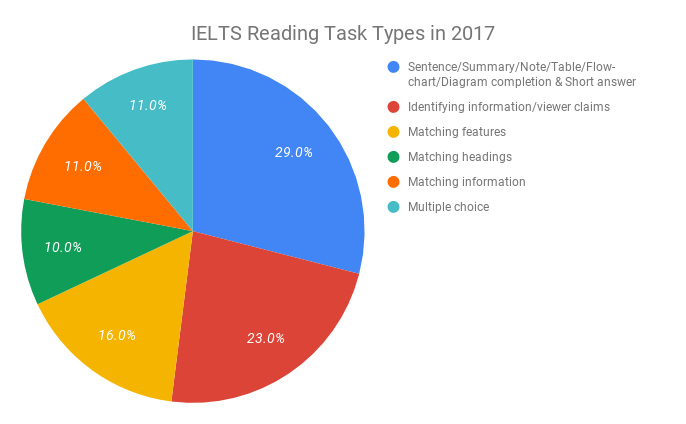
நீங்கள் பார்ப்பது போல், "Sentence/Summary/Note/Table/Flow-chart/Diagram completion & Short answer" கேள்வி வகைகள் 29%-உடன் மிகவும் பொதுவாக இருந்தன, "Identifying information/viewer claims" கேள்வி வகைகள் 23%-உடன் நெருக்கமாக இரண்டாவது இடத்தில் இருந்தன. இறுதியாக, "Matching features" கேள்வி வகை 16% ஆகவும், "Matching information/Multiple choice" 11% ஆகவும், "Matching headings" 10% ஆகவும் இருந்தன.
இந்தத் தகவலுடன், உங்கள் IELTS வாசிப்புத் தேர்வில் எந்தக் கேள்வி வகைகள் தோன்றுவதற்கான வாய்ப்பு அதிகம் என்பதை நீங்கள் பார்க்கலாம். அனைத்து கேள்வி வகைகளுக்கும் நீங்கள் கட்டாயம் தயாராக வேண்டும் என்றாலும், இந்தத் தகவலை அறிந்திருப்பது அவற்றுக்கிடையே உங்கள் நேரத்தை நிர்வகிக்க உதவும். நிச்சயமாக, சில கேள்வி வகைகளில் நீங்கள் உயர் ஸ்கோர் பெறுகிறீர்கள் என்றால், நீங்கள் சிரமப்படும் கேள்வி வகைகளில் அதிக நேரம் கவனம் செலுத்த வேண்டும். எந்த வாசிப்புக் கேள்வி வகைகளில் நீங்கள் சிரமப்படுகிறீர்கள் என்பதைச் சரியாக அறிய விரும்பினால், ஒரு இலவச IELTS வாசிப்பு மாதிரித் தேர்வைத் தொடங்கி, தேர்வின் முடிவில், ஒவ்வொரு கேள்வி வகைக்கும் நீங்கள் எவ்வாறு செய்தீர்கள் என்பதை உள்ளடக்கிய உங்கள் முழு வாசிப்பு diagnostic அறிக்கையைப் பார்க்க View Results-ஐ கிளிக் செய்யவும்.
அடுத்து உயர் வாசிப்பு ஸ்கோருக்கு தேவையான IELTS வாசிப்பு குறிப்புகள் மற்றும் உத்திகளைப் பார்ப்போம்.
IELTS வாசிப்பு குறிப்புகள் - உங்கள் வாசிப்பு பேண்ட் ஸ்கோரை எவ்வாறு மேம்படுத்துவது
பெரும்பாலான மாணவர்கள் வாசிப்புப் பிரிவில் தோல்வியடைய பின்வரும் மூன்று காரணங்கள் உள்ளன
- மெதுவான வாசிப்பு வேகம்
- மோசமான சொற்களஞ்சியம்
- சிறிய அல்லது தயாரிப்பு இல்லாமை
உங்கள் வாசிப்பு வேகத்தை மேம்படுத்துதல்
முதலில், வெளிப்படையானதை வழியில் இருந்து விலக்குவோம். உங்கள் வாசிப்பு வேகத்தை மேம்படுத்த, நீங்கள் உண்மையாக வாசிப்பதைப் பயிற்சி செய்து தொடர்ச்சியாகச் செய்ய வேண்டும்.
இப்போது வாக்கியங்களின் பெரிய துண்டுகளின் பொருளைப் புரிந்துகொள்ள உதவும் குறைவான வெளிப்படையான ஒரு உத்தியைப் பார்ப்போம். வாக்கியத்தைப் பகுப்பாய்வு செய்வதன் மூலம் தொடங்குங்கள். வாக்கியத்தின் subject மற்றும் verb-ஐத் தேடுவதன் மூலம் இதைச் செய்யுங்கள். Subject மற்றும் verb-ஐக் கண்டறிவது வாக்கியத்தின் பொருளைப் புரிந்துகொள்ள உதவும். கல்வி வாசிப்புப் பகுதிகள் புரிந்துகொள்ள கடினமாக இருப்பதற்கான ஒரு காரணம், அவை நீளமான கூட்டு வாக்கியங்களை உருவாக்க கருத்துக்களின் சங்கிலிகளை இணைக்கின்றன. இது கிரகிக்க கடினமாக இருக்கும் வாக்கியங்களின் பெரிய துண்டுகளை உருவாக்குகிறது, எனவே முழு துண்டையும் புரிந்துகொள்வதற்கான வழிகாட்டியாக subject மற்றும் verb-ஐப் பயன்படுத்துவது உங்கள் IELTS வாசிப்புத் தேர்வின் போது நீங்கள் பயன்படுத்தக்கூடிய ஒரு சிறந்த கருவியாகும்.
உங்கள் சொற்களஞ்சியத்தை மேம்படுத்துதல்
வாசிப்புக் கேள்விகளுக்கு பதிலளிப்பது keywords மற்றும் தகவலுக்காக பத்தியை ஸ்கேன் செய்வது போல் எளிமையானது என்று பலர் நினைக்கிறார்கள்...சரி, துரதிர்ஷ்டவசமாக, அது அவ்வளவு எளிதல்ல. வாசிப்புக் கேள்விகள் பொதுவாக paraphrase செய்யப்படுகின்றன, அதாவது, IELTS வாசிப்புப் பகுதியிலிருந்து வந்த சொற்களின் synonyms-ஐப் பயன்படுத்த சொற்கள் மாற்றப்பட்டுள்ளன. கடினத்தன்மையை அதிகரிக்க இது செய்யப்படுகிறது, இல்லையென்றால், தேர்வு மிகவும் எளிதாக இருக்கும். இதன் காரணமாக, ஒரு சொல்லின் பல்வேறு synonyms-ஐ அறிய உங்கள் சொற்களஞ்சியத்தை நீங்கள் மேம்படுத்த வேண்டும்.
வாசிப்புத் தேர்வுக்குத் தயாராகும்போது மற்றும் உங்களுக்குத் தெரியாத ஒரு வார்த்தையை நீங்கள் சந்தித்தால், நிறுத்தி அதைத் தேடிப்பார்க்கவோ அல்லது குறைந்தபட்சம் அதை எழுதி வைத்துப் பின்னர் அதைத் தேடிப்பார்க்கவோ ஒரு பழக்கத்தை உருவாக்குங்கள். இது சற்று அலுப்பானது, ஆனால் இது மிகவும் பயனுள்ளதாக இருக்கும். உங்கள் இலக்கு ஒவ்வொரு நாளும் 15 முதல் 20 புதிய கல்வி சொற்களைப் படிப்பதாக இருக்க வேண்டும், ஆனால் அதற்கு மட்டுப்படுத்தப்படவில்லை.
எந்த கேள்வி வகைகளில் பதில்கள் வரிசையில் உள்ளன/இல்லை என்பதை அறிதல்
சில கேள்வி வகைகளுக்கு, பதில்கள் பொதுவாக (கிட்டத்தட்ட எப்போதும்) IELTS வாசிப்புப் பகுதியில் உள்ள அதே வரிசையில் இருக்கும் என்பதை அறிவது முக்கியம். பிற கேள்வி வகைகளுக்கு, பதில்கள் வாசிப்புப் பகுதியில் உள்ள அதே வரிசையில் அரிதாகவே இருக்கும். வரிசையில் தோன்றும் கேள்வி வகைகள் மற்றும் தோன்றாதவற்றுக்கான ஒரு அட்டவணையை நாங்கள் முடித்துள்ளோம். தயவுசெய்து மனதில் கொள்ளுங்கள்.
| பதில்கள் பொதுவாக (கிட்டத்தட்ட எப்போதும்) பகுதியின் அதே வரிசையில் இருக்கும் | பதில்கள் பகுதியின் அதே வரிசையில் அரிதாகவே இருக்கும். |
|---|---|
|
|
உங்களுக்கு சிறந்த வாசிப்பு உத்தியைக் கண்டறிதல்
IELTS வாசிப்புத் தேர்வில் பெரும்பாலான மக்கள் எதிர்கொள்ளும் மிகப்பெரிய சவால் என்னவென்றால், நேரம் முடிவடைவதற்கு முன் அனைத்து வாசிப்புக் கேள்விகளையும் முடிப்பதே. அடுத்த பிரிவில், மூன்று உத்திகளைக் கற்றுக்கொள்வீர்கள், எது உங்களுக்கு மிகவும் பொருத்தமானது என்பதைக் கண்டறிவது உங்களைச் சார்ந்தது. எங்கள் இலவச வாசிப்புப் பயிற்சிகளைப் பயன்படுத்தி அதைச் செய்வீர்கள்.
3 IELTS வாசிப்பு உத்திகள்
உத்தி 1: முழுப் பகுதியையும் வாசித்து பின்னர் கேள்விகளுக்கு பதிலளித்தல்.
முதலில், இது ஒரு உத்தியாக இல்லை. மக்கள் வாசிப்புத் தேர்வுக்கு சரியாக தயார் ஆகாதபோது செய்வது இது. இருப்பினும், தொழில்நுட்ப ரீதியாக, நீங்கள் முதல் முறை வாசிப்பின் போது பகுதியில் உள்ள தகவலைத் தக்க வைத்துக்கொண்டு கேள்விகளுக்கு பதிலளிக்க முடிந்தால், உத்தி 2 தேவைப்படாது என்பதால் இதை ஒரு உத்தியாக நாங்கள் சேர்த்துள்ளோம்.
சராசரியை விட சிறந்த நினைவகம் உங்களிடம் இல்லாவிட்டால், இந்த உத்தி திறமையற்றது. அனைத்து கேள்விகளுக்கும் பதிலளிப்பதற்கு முன் நேரம் முடிவடைந்துவிடும். பலர் இந்த தவறைச் செய்கிறார்கள். இருப்பினும், அதிக முயற்சி தேவைப்படாத மற்றும் இந்த உத்தியிலிருந்து பயனடையக்கூடிய சில கேள்விகள் உள்ளன, எடுத்துக்காட்டாக, கேள்வி "Yes" அல்லது "No" பதிலாக இருந்தால், விரைவாக ஸ்கிம் செய்து பதிலை விரைவாகக் கண்டறிய முடியும், ஆனால் இந்த வகையான கேள்விகள் போதுமான அளவு இல்லை, எனவே நீங்கள் இதைக் கையாள முடியாவிட்டால் இந்த உத்தியைப் பயன்படுத்த பரிந்துரைக்கப்படவில்லை.
உத்தி 2: முதலில் கேள்விகளை வாசித்தல், ஒரு நோக்கத்துடன் வாசித்து குறிப்புகள் எடுத்தல், பின்னர் கேள்விகளுக்கு புத்திசாலித்தனமாக பதிலளித்தல்
இது எங்கள் பரிந்துரைக்கப்பட்ட உத்தியாகும். இது உயர் IELTS வாசிப்பு ஸ்கோரைப் பெற உதவும். பொதுவாக தேர்வை எவ்வாறு அணுகுவது என்பதற்கான தெளிவான வரைபடமாக இதை நினைத்துக் கொள்ளுங்கள்:
வாசிப்புத் தேர்வை அணுகும்போது விண்ணப்பதாரர்கள் செய்யும் பொதுவான தவறுகளில் ஒன்று
IELTS வாசிப்புப் பகுதிகளின் ஒவ்வொரு வார்த்தையையும் வாசிப்பது. இன்பத்திற்காக வாசிப்பதன் மூலம் தேர்வுக்குப் பயிற்சி செய்யலாம் என்றாலும், கேள்விகள் என்ன கேட்கப்படும் என்ற எந்த உணர்வும் இல்லாமல் "குருட்டுத்தனமாக வாசிப்பது" தேர்வில் உங்களுக்கு எந்த உதவியும் செய்யாது. மாறாக, உங்கள் நேரத்தை திறமையாக நிர்வகிக்கவும் சிறந்த ஸ்கோரைப் பெறவும் உங்கள் வாய்ப்புகளுக்கு இது தீங்கு விளைவிக்கும்.
முதலில் கேள்விகளை வாசிக்க முக்கிய காரணம் என்னவென்றால், கேள்வியின் வகை பகுதியில் என்ன படிக்கிறீர்கள் அல்லது அதை எவ்வாறு படிக்கிறீர்கள் என்பதை தீர்மானிக்கலாம். எடுத்துக்காட்டாக, சில கேள்வி வகைகள் "skimming" நுட்பத்தைக் கோரும், மற்றவை "scanning" நுட்பத்தைக் கோரலாம்.
ஒரே கேள்வி வகையின் ஒரு தொகுப்பான கேள்விகளைக் கையாள வேண்டியது முக்கியம்.
எந்த கேள்வி வகையை முதலில் கையாள விரும்புகிறீர்கள் என்பதை நீங்கள் தீர்மானிக்க வேண்டும்.
எளிதான கேள்வி வகையில் தொடங்கி பின்னர் மிகவும் கடினமான கேள்வி வகைகளுக்கு செல்வது ஒரு நல்ல உத்தி.
எளிதான கேள்வி வகைகள் என்பது நீங்கள் குறைவான நேரம் வாசிப்பதற்கு செலவிடும் வகைகள்.
எடுத்துக்காட்டாக, Matching Heading கேள்வி வகை எளிதானது, ஏனெனில்
ஒரு பத்தியின் முக்கியக் கருத்தை சிறப்பாக விவரிக்கும் heading-ஐ மட்டுமே நீங்கள் கண்டறிய வேண்டும்.
கடினமான கேள்வி வகைக்கான எடுத்துக்காட்டு Identifying Information ஆகும். இந்தக் கேள்வி வகைக்கு,
பகுதியின்படி ஒவ்வொரு கூற்றும் TRUE, FALSE, அல்லது NOT GIVEN என்பதைக் கண்டறிய ஒவ்வொரு பத்தியையும் வாசிக்க வேண்டும்.
ஒவ்வொரு கேள்வி வகைக்கான கடினத்தன்மை நிலைகளை பட்டியலிடும் ஒரு அட்டவணை இங்கே. முதலில் எந்த கேள்வி
வகையை கையாள விரும்புகிறீர்கள் என்பதைத் தேர்ந்தெடுக்கும்போது இந்த அட்டவணையை ஒரு குறிப்பாகப் பயன்படுத்தவும்.
| கடினத்தன்மை நிலை | கேள்வி வகை |
|---|---|
| எளிது | Match Headings Short answer |
| நடுத்தரம் |
Matching Sentence Endings Matching Features Multiple choice Sentence Completion Diagram Label, Summary, Note, Table, Flow-Chart Completion |
| கடினம் |
Match Information Identifying Information (TRUE/FALSE/NOT GIVEN) Identifying Viewer's claims (YES/NO/NOT GIVEN) |
IELTS உரையிலிருந்து கேள்விகளை நீங்கள் வாசித்த பிறகு, ஒரு நோக்கத்துடன் வாசிக்க முடியும். இதன் பொருள் என்ன? எடுத்துக்காட்டாக, "1896" என்ற ஆண்டை உள்ளடக்கிய ஒரு கேள்வியை நீங்கள் சந்தித்தால், இந்த ஆண்டு உரையில் எப்போது வருகிறது என்பதைக் குறிப்பிட்டு, பின்னர் கேள்விக்கு பதிலளிக்க அதைப் பயன்படுத்தலாம்.
ஒரு நோக்கத்துடன் வாசிப்பதில் உங்களைத் தடம் பிறழாமல் இருக்க உதவும் இரண்டு வாசிப்பு நுட்பங்கள் உள்ளன. முதலாவது, skimming, ஒரு பகுதியின் "gist" அல்லது பொதுவான கருத்தை பெற விரைவாக வாசிப்பது என சிறப்பாக வரையறுக்கப்படுகிறது. இந்த நுட்பத்தில், அறிமுகமில்லாத சொற்களுக்காக நிறுத்தாமல் அல்லது குறிப்பிட்ட விவரங்களைத் தேடாமல் இருக்கிறீர்கள். இரண்டாவது நுட்பம், scanning, குறிப்பிட்ட தகவலுக்காக வாசிப்பது என சிறப்பாக வரையறுக்கப்படுகிறது. இந்த நுட்பத்தில், ஒட்டுமொத்த gist-க்காக வாசிக்காமல், குறிப்பிட்ட தகவலுக்காக வாசிக்கிறீர்கள். இந்த நுட்பங்கள் ஒவ்வொன்றும் மனதில் ஒரு குறிப்பிட்ட நோக்கத்தைக் கொண்டுள்ளது என்பதைக் கவனியுங்கள். இது தகவலை விரைவாகக் கண்டறிய உதவும்.
ஒரு நோக்கத்துடன் வாசிக்கும்போது, பகுதியின் ஓரங்களில் குறிப்புகளை எடுக்க வேண்டும், பல்வேறு கேள்விகளுக்கு பதிலளிக்க உதவும் முக்கியத் தகவலின் அருகில் நட்சத்திரங்களை வைப்பது அல்லது விஷயங்களை அடிக்கோடிட்டுக் காட்டுவது. கேள்விகளில் சில விஷயங்கள் கேட்கப்படும்போது மீண்டும் சரிபார்ப்பதை இது எளிதாக்கும். உங்களுக்கு சரியான குறிப்பு எடுக்கும் முறையை எதையாவது தேர்வு செய்யுங்கள்—அதை நீங்கள் செய்வதை உறுதி செய்து கொள்ளுங்கள்!
நீங்கள் கேள்விகளை வாசித்து, பகுதியை வாசித்து, தகுந்த குறிப்புகளை எடுத்த பிறகு, நீங்கள் கவனமாக வாசிக்க வேண்டிய உரையின் பகுதியை நீங்கள் கண்டறிந்திருக்க வேண்டும். பின்னர் சரியான பதிலைத் தீர்மானிக்க கவனமாக வாசித்து விமர்சன ரீதியாக சிந்தியுங்கள்.
உத்தி 3: Skimming, குறிப்பு எடுத்தல், & கேள்வி வகைகள்.
இது பல IELTS தேர்வு எடுப்பவர்களால் பயன்படுத்தப்படும் மற்றொரு உத்தி. இது உயர் வாசிப்பு ஸ்கோரைப் பெற உதவும். உத்தி 4 படிகளைக் கொண்டது:
- ஒவ்வொரு பத்தியின் பொதுவான கருத்தைப் பெற ஒவ்வொரு பத்தியையும் skim செய்யுங்கள். ஒரு பத்தியின் முக்கியக் கருத்து பொதுவாக முதல் சில வாக்கியங்களில் காணப்படுகிறது, எனவே அந்த வாக்கியங்களில் சற்று அதிகமாக கவனம் செலுத்துங்கள். பின்வரும் வாக்கியங்களை விரைவாக skim செய்யலாம், தனித்து நிற்கும் பெயர்கள்/சொற்கள்/சொற்றொடர்களை அடிக்கோடிடலாம்.
- ஒவ்வொரு பத்தியையும் skim செய்த பிறகு, அந்த பத்தியின் முக்கியக் கருத்தைப் பற்றிய உங்கள் சிறந்த யூகத்துடன் ஒவ்வொரு பத்தியின் அருகிலும் குறுகிய குறிப்புகளை (2-5 வார்த்தைகள்) எழுதுங்கள்.
- அடுத்து, ஒரே கேள்வி வகையின் ஒரு தொகுப்பான கேள்விகளுக்கு பதிலளிக்கவும்.
- இறுதியாக, ஒரு தொகுப்பான கேள்விகளுக்கு திறமையாகவும் சரியாகவும் பதிலளிக்கவும்.
படிகள் 1 மற்றும் 2-க்கு 3-5 நிமிடங்களுக்கு மேல் நீங்கள் செலவிடாமல் இருப்பது முக்கியம். இந்தப் படிகளில் அதிக நேரம் செலவிடுவது அதிக நேரத்தை வீணாக்கும் மற்றும் நேரம் முடிவடைந்துவிடும்.
படிகள் 1 & 2பகுதியில் பதில்களைக் கண்டறிவதற்கான ஒரு திறமையான முறையை அமைப்பதே இங்கு நோக்கம். ஒவ்வொரு பத்தியின் பொதுவான கருத்தை எழுதுவதன் மூலம், ஒவ்வொரு கேள்விக்கும் பதில் எந்தப் பத்தியில் உள்ளது என்பதை நீங்கள் அறிவீர்கள். நீங்கள் இதை எழுதவில்லை என்றால், கேள்வியின் பொதுவான கருத்துக்காக ஒவ்வொரு பத்தியையும் skim செய்ய வேண்டியிருக்கும், பின்னர் பதிலுக்காக பத்தியை கவனமாக scan செய்ய வேண்டியிருக்கும். ஒவ்வொரு பத்தியின் முக்கியக் கருத்தையும் குறிப்பிடுவதன் மூலம், ஒவ்வொரு பத்தியையும் skim செய்யும் முதல் படியைத் தவிர்த்து, பதிலுக்கு scan செய்யத் தொடங்கலாம்.
படி 3
நீங்கள் உரையை முழுமையாக skim செய்து சில குறிப்புகளை எழுதிய பிறகு, படி 3-க்கு நீங்கள் தயாராக இருக்கிறீர்கள்.
இந்தப் படியில், எந்தக் கேள்வி வகையை முதலில் கையாள விரும்புகிறீர்கள் என்பதை நீங்கள் தீர்மானிக்க வேண்டும்.
எளிதான கேள்வி வகையில் தொடங்கி பின்னர் மிகவும் கடினமான கேள்வி வகைகளுக்கு செல்வது ஒரு நல்ல உத்தி.
எளிதான கேள்வி வகைகள் என்பது நீங்கள் குறைவான நேரம் வாசிப்பதற்கு செலவிடும் வகைகள்.
எடுத்துக்காட்டாக, Matching Heading கேள்வி வகை எளிதானது, ஏனெனில்
ஒரு பத்தியின் முக்கியக் கருத்தை சிறப்பாக விவரிக்கும் heading-ஐ மட்டுமே நீங்கள் கண்டறிய வேண்டும், எனவே தொழில்நுட்ப ரீதியாக இந்த கேள்வி வகைக்கு பதிலளிக்க படி 1 மற்றும் 2 மட்டுமே தேவை.
கடினமான கேள்வி வகைக்கான எடுத்துக்காட்டு Identifying Information ஆகும். இந்தக் கேள்வி வகைக்கு,
பகுதியின்படி ஒவ்வொரு கூற்றும் TRUE, FALSE, அல்லது NOT GIVEN என்பதைக் கண்டறிய ஒவ்வொரு பத்தியையும் வாசிக்க வேண்டும்.
ஒவ்வொரு கேள்வி வகைக்கான கடினத்தன்மை நிலைகளை பட்டியலிடும் ஒரு அட்டவணை இங்கே. முதலில் எந்த கேள்வி வகையை கையாள விரும்புகிறீர்கள் என்பதைத் தேர்ந்தெடுக்கும்போது இந்த அட்டவணையை ஒரு குறிப்பாகப் பயன்படுத்தவும்.
| கடினத்தன்மை நிலை | கேள்வி வகை |
|---|---|
| எளிது | Match Headings Short answer |
| நடுத்தரம் |
Matching Sentence Endings Matching Features Multiple choice Sentence Completion Diagram Label, Summary, Note, Table, Flow-Chart Completion |
| கடினம் |
Match Information Identifying Information (TRUE/FALSE/NOT GIVEN) Identifying Viewer's claims (YES/NO/NOT GIVEN) |
எந்த தொகுப்பான கேள்விகளை முதலில் பதிலளிப்பீர்கள் என்பதை நீங்கள் கண்டறிந்துவிட்டதால், இப்போது அவற்றுக்கு உண்மையாக பதிலளிக்கும் நேரம் இது :( கவலைப்பட வேண்டாம்! ஒவ்வொரு கேள்வி வகையும் வேறுபட்டாலும், அவற்றுக்கு சரியாக பதிலளிக்கும் உத்தி அவை அனைத்திற்கும் பொருந்தும். அடிப்படைக் கொள்கை எளிமையானது, கீழே உள்ள படிகளைப் பின்பற்றவும்:
- கேள்வியை கவனமாக வாசித்து முக்கிய keywords-ஐ அடையாளம் காணவும்.
- கேள்விக்கு பதிலளிக்கத் தேவையான தகவலைக் கொண்ட பத்தியைக் கண்டறியவும். (ஒவ்வொரு பத்திக்கும் பொதுவான கருத்துக்களை நீங்கள் ஏற்கனவே எழுதி வைத்திருப்பீர்கள் என்று நம்புகிறேன், எனவே இதை எளிதாகக் கண்டறிய முடியும்.)
- நீங்கள் கவனமாக வாசிக்க வேண்டிய உரையின் பகுதியைக் கண்டறியும் வரை முக்கிய keywords-க்காக பத்தியை scan செய்யவும் (அவை பெரும்பாலும் synonyms ஆக இருக்கும்!).
- இறுதியாக, சரியான பதிலைத் தீர்மானிக்க கவனமாக வாசித்து விமர்சன ரீதியாக சிந்தியுங்கள்.
பதில்களுடன் இலவச IELTS வாசிப்பு மாதிரி PDF பதிவிறக்கங்கள்
British Council-இல் (IELTS தேர்வை உருவாக்கியவர்கள்) இருந்து சில இலவச வாசிப்பு மாதிரிகள் கீழே உள்ளன. கேள்விகளுக்கு பதிலளிக்க முயற்சித்து, நீங்கள் எவ்வாறு செய்கிறீர்கள் என்பதைப் பாருங்கள்!