TOEFL Listening பயிற்சி: பதில்களுடன் கூடிய இலவச TOEFL கேட்டலறி தேர்வை எடுத்துக் கொள்ளுங்கள், உயர் மதிப்பெண்ணுக்கான 7 முக்கிய உதவிக்குறிப்புகளை அறியுங்கள்
இந்த வழிகாட்டியில் நீங்கள் பதில்களுடன் கூடிய புதிய இலவச TOEFL கேட்டலறி தேர்வை எடுக்கலாம், 7 முக்கிய உதவிக்குறிப்புகளை அறியலாம் மற்றும் Listening பிரிவு பற்றிய பொதுத் தகவல்களைப் பெற்று உங்கள் தேர்வுக்கு வெற்றிகரமாகத் தயாராகலாம். கேட்டலறியில் உயர் மதிப்பெண் பெற தேவையான அனைத்தும் மற்றும் இன்றியமையாத திறமைகளை இந்தப் பக்கம் கொண்டுள்ளது.
முதலில், நீங்கள் இலவச TOEFL listening பயிற்சி தேர்வை எழுத விரும்பினால் அல்லது அதிகாரப்பூர்வ TOEFL listening தேர்வு எப்படி இருக்கும் என்று அறிய விரும்பினால், கீழேயுள்ள பொத்தானை கிளிக் செய்யவும்.
play_circle_outline TOEFL Listening பயிற்சி தேர்வைத் தொடங்குங்கள்கீழே எங்களிடம் உள்ள அனைத்து TOEFL listening கேள்விகளின் பட்டியல் உள்ளது; இதில் ஒவ்வொரு கேள்வியையும் உங்கள் சொந்த வேகத்தில் படிக்கலாம். இலவச TOEFL listening தேர்வு கேள்வியைத் தொடங்க Mock Test 1 இணைப்பை கிளிக் செய்யவும்.
- chat_bubble ஒரு பதிலைத் தேர்ந்தெடுக்கவும்
- forum உரையாடல்
- headset அறிவிப்பு
- record_voice_over அகாடமிக் உரை
TOEFL Listening பயிற்சி கேள்விகள் - ஒரு பதிலைத் தேர்ந்தெடுக்கவும்
TOEFL Listening பயிற்சி கேள்விகள் - உரையாடல்
TOEFL Listening பயிற்சி கேள்விகள் - அறிவிப்பு
| மாதிரி தேர்வு 229 - 240 |
| மாதிரி தேர்வு 229 மாதிரி தேர்வு 230 |
TOEFL Listening பயிற்சி கேள்விகள் - அகாடமிக் உரை
பொருளடக்கம்
புதிய TOEFL Listening அறிமுகம்
TOEFL Listening பிரிவு இரண்டு தொகுதிகள் கொண்ட புதிய தழுவல் வடிவமைப்பைப் பயன்படுத்துகிறது. அனைவரும் ஒரே ரூட்டிங் தொகுதியுடன் தொடங்குகிறார்கள், மற்றும் அங்கு அவர்களின் செயல்திறன் அவர்கள் தொடருமா என்பதை தீர்மானிக்கிறது எளிதாக அல்லது கடினமானது இரண்டாவது தொகுதி.
- இரண்டு மாட்யூல்களுக்கும் மொத்த சோதனை நேரம் சுமார் 27 நிமிடங்கள்.
- திரையில் உள்ள ஒரு கடிகாரம் தற்போதைய தொகுதியில் எவ்வளவு நேரம் மீதமுள்ளது என்பதைக் காட்டுகிறது (புதிய தொகுதி தொடங்கும் போது டைமர் மீட்டமைக்கப்படும்).
- இரண்டும் அடித்த மற்றும் மதிப்பெண் பெறாத கேள்விகள் என்ற பிரிவில் கலந்துள்ளன, மேலும் எவை சோதனைக்குரியவை என்பதை உங்களால் கூற முடியாது.
ரூட்டிங் தொகுதி என்பது கேட்கும் பிரிவின் முதல் மற்றும் நீளமான பகுதி ஆகும். இது எப்போதும் நான்கு பணி வகைகளின் கலவையை கொண்டுள்ளது.
பணி வகை |
விளக்கம் |
|---|---|
|
ஒரு பதிலைத் தேர்ந்தெடுக்கவும் |
நீங்கள் கேட்கிறீர்கள் உரையாடல் ஆங்கிலத்தின் ஒரு குறுகிய வரி பின்னர் தேர்வு செய்யவும் மிகவும் இயல்பான பதில் நான்கு விருப்பங்களிலிருந்து. சரியான பதில் ஒரு இருக்கலாம் மறைமுக பதில், இது மிகவும் மறைமுகமான பதில் பிரச்சனையை தீர்க்கிறது, அல்லது ஒரு கேள்வி உரையாடலை முன்னோக்கி நகர்த்துகிறது. |
|
ஒரு உரையாடலைக் கேளுங்கள் |
ZEveryday வளாகத்திலோ அல்லது அன்றாட வாழ்க்கைச் சூழ்நிலைகளிலோ என்ற இரு பேச்சாளர்களுக்கு இடையேயான சிறிய உரையாடல்களை (20–30 வினாடிகள்) கேட்கிறீர்கள். ஒவ்வொரு உரையாடலையும் தொடர்ந்து என்ன நடந்தது மற்றும் அடுத்து என்ன நடக்கும் பற்றிய நேரடியான கேள்விகள். |
|
Campus அறிவிப்பு |
நீங்கள் குறுகிய அறிவிப்புகளைக் கேட்கிறீர்கள் (20-30 வினாடிகள்) பற்றி நிகழ்வுகள், சேவை மாற்றங்கள், அல்லது வாய்ப்புகள் வளாகத்தில். ஒவ்வொரு அறிவிப்பையும் தொடர்ந்து கேள்விகள் உள்ளன முக்கிய நோக்கம், ஒரு முக்கியமான விவரம், அல்லது தி கேட்போர் நடவடிக்கை எடுக்க வேண்டும். |
|
ஒரு கல்விப் பேச்சைக் கேளுங்கள் |
நீங்கள் குறுகிய கல்விப் பேச்சுகளைக் கேட்கிறீர்கள் (பற்றி 90 வினாடிகள்) போன்ற பழக்கமான பல்கலைக்கழக பாடங்களில் உளவியல், சமூகவியல், வரலாறு, பொருளாதாரம், அல்லது கலை. ஒவ்வொரு பேச்சும் தொடர்ந்து வருகிறது பல கேள்விகள், பொதுவாக மேலும் உரையாடல்கள் அல்லது அறிவிப்புகளை விட. பொதுவான கேள்வி வகைகள் அடங்கும் முக்கிய யோசனை, குறிப்பிட்ட விவரம், நோக்கம், அனுமானம், மற்றும் வகுப்பு அடுத்து என்ன செய்யும். |
Up 29 நிமிடங்கள் |
ரூட்டிங் தொகுதியில் உங்கள் செயல்திறன் நீங்கள் எந்த இரண்டாவது தொகுதியைப் பெறுகிறீர்கள் என்பதை தீர்மானிக்கிறது.
எளிய தொகுதி
- நீங்கள் தோராயமாக ரூட்டிங்-தொகுதி கேள்விகளில் 60 சதவீதம் க்கும் குறைவாக பதிலளித்தால், கணினி உங்களை easier தொகுதிக்கு அனுப்பும்.
- இந்த தொகுதியில் மேலும் "பதிலைத் தேர்ந்தெடு" உருப்படிகள், கூடுதல் உரையாடல்கள் மற்றும் campus அறிவிப்புகள் ஆகியவை அடங்கும்.
- எளிதான தொகுதியில் கல்விசார் பேச்சுக்கள் இல்லை.
கடினமான தொகுதி
- ரூட்டிங்-தொகுதி கேள்விகளில் தோராயமாக 60 சதவீதம் அல்லது அதற்கு மேற்பட்டக்கு நீங்கள் சரியாகப் பதிலளித்தால், நீங்கள் harder தொகுதிக்குக்குச் செல்லவும்.
- இந்த தொகுதி பொதுவாக a உடன் தொடங்குகிறது சிறிய எண் "பதிலைத் தேர்ந்தெடு" என்ற கேள்விகள் மற்றும் பின்னர் சேர்க்கிறது உரையாடல்கள், வளாக அறிவிப்புகள், மற்றும் கல்விசார் பேச்சுக்கள்.
- கடினமான தொகுதியின் உள்ளடக்கம் காரணமாக, நீங்கள் மிகவும் சிக்கலான கல்விக் கேட்பதற்குத் தயாராக இருக்க வேண்டும் மற்றும் பரந்த பல்வேறு வகையான கேள்விகள்.
கேட்கும் பகுதியின் முடிவில், முழு TOEFL சோதனைக்கான unofficial ஸ்கோர் திரையில் காட்டப்படும். உங்களின் Official Score சில நாட்களுக்குப் பிறகு உங்கள் ஆன்லைன் கணக்கில் தோன்றும், மேலும் சோதனை நாளில் நீங்கள் பார்க்கும் அதிகாரப்பூர்வமற்ற எண்ணிலிருந்து சிறிது வேறுபடலாம்.
புதிய TOEFL Listening மாதிரி கேள்விகள்
எங்கள் புதிய ZZTWIG5ZZ TOEFL கேட்கும் மாதிரி கேள்விகளிலிருந்து கற்றுக்கொள்ளுங்கள்.
In the Choose a Response task, you'll listen to a short question or statement and choose the most appropriate response.

- I need to buy some fruit.
- They have a student discount.
- Yes, but only on weekdays.
- Groceries can be expensive.
-
spellcheck AnswerC (Audio Question: So the grocery store near campus closes at 10?)

- Psychology is my favorite subject.
- My roommate also takes science courses.
- I think the library is open today.
- I'm still on the waitlist.
-
spellcheck AnswerD (Audio Question: Did you register for the psychology class yet?)

- Well, my ticket is digital.
- Yeah, but the schedule was updated.
- I haven't decided what to wear.
- Concerts usually end late.
-
spellcheck AnswerC (Audio Question: Wait, didn't you say the concert was at 8 p.m.?)
In the Listen to a Conversation task, you'll listen to a short conversation and answer 2 questions.

- A campsite
- A lodge near the trails
- A hostel in town
- An apartment rental
- They are too expensive
- They are almost fully booked
- They are newly renovated
- They require a shuttle reservation
-
spellcheck Answers1. B
2. B
Audio transcriptMan: Hey Lisa, have you picked a hotel for our weekend trip to the mountains?
Woman: Not yet. I was waiting for your input. Do you prefer something close to the trails or in town?
Man: Closer to the trails would save us driving time. Did you find any options?
Woman: Yes, there's Pine Ridge Lodge. It has good reviews and offers a shuttle from the train station.
Man: Sounds perfect. Should I go ahead and book it tonight?
Woman: Please do. The website said only two rooms were left.
In the Listen to an Announcement task, you'll listen to a short announcement and answer 2 questions.

- To review a recent seminar outcome
- To discuss tomorrow’s adjusted event agenda
- To give details about an updated lunch selection
- To request caregivers to attend a conference
- Remain for extracurricular group gatherings
- Prepare homemade meals for evening consumption
- Arrange personal rides accordingly
- Show up at school later in the morning than usual
-
spellcheck Answers1. B
2. C
Audio transcriptListen to an announcement at a workshop.
Attention students and faculty. Due to tomorrow’s district-wide teacher workshop, all classes will end at 12:30 p.m. Buses will depart at 12:45, and the cafeteria will serve grab-and-go lunches only. After-school clubs are canceled. Please inform your parents and make transportation arrangements accordingly. Thank you.
In the Listen to an Academic Talk task, you'll listen to a short academic talk and answer 4 questions.


- Reproductive strategies of coral reef fish
- The anatomy of sea anemone tentacles
- Human impacts on coral reefs
- The partnership between clownfish and sea anemones
- To illustrate how clownfish attract prey
- To explain clownfish survival in stinging tentacles
- To criticize earlier research on coral reefs
- To compare clownfish to other fish species
- How coral reefs developed over millions of years
- Threats to the clownfish–anemone bond
- What different predators on reefs eat
- How the chemical makeup of seawater works
- It poisons predators near the anemone
- It signals mating readiness to other clownfish
- It feeds the anemone with needed nutrients
- It damages surrounding coral
-
spellcheck Answers1. D
2. B
3. B
4. C
Audio transcriptListen to a talk in a biology class.
Today I’d like to examine a classic example of mutualism on tropical coral reefs—the partnership between clownfish and sea anemones.
The anemone’s tentacles are armed with stinging cells that deter most predators, so a clownfish that lives among those tentacles gains a very safe home. In return, the fish defends the anemone from butterflyfish and other small grazers and, just as important, its wastes provide the anemone with nitrogen that fuels faster growth.
But how does the clownfish avoid being stung itself? Before settling, juveniles perform a cautious dance, rubbing against the tentacles until they coat their skin with a layer of specialized mucus. This mucus chemically mimics the anemone’s own tissue, preventing the discharge of the stinging cells.
TOEFL Listening-இல் புதிய கேள்வி வகைகள்
TOEFL Listening பிரிவில் உள்ள கேள்விகள் மதிப்பிடப்படுகின்றன நீங்கள் பேசும் ஆங்கிலம் எவ்வளவு நன்றாகப் புரிந்துகொள்கிறீர்கள் கல்வி விரிவுரைகளில், வளாக உரையாடல்கள் மற்றும் குறுகிய அறிவிப்புகள். ஒவ்வொரு கேள்வியும் குறிவைக்கிறது a குறிப்பிட்ட கேட்கும் திறன். தெளிவாக மூலம் ஒவ்வொரு கேள்வி வகையையும் அது என்ன சோதிக்கிறது என்பதைப் புரிந்துகொள்வது, உங்களால் முடியும் மேலும் மூலோபாயமாக கேளுங்கள் மற்றும் பொதுவான பொறிகளைத் தவிர்க்கவும். கீழே உள்ளன 6 அதிகாரப்பூர்வ TOEFL கேட்கும் கேள்வி வகைகள், நீங்கள் அவர்களை சந்திக்கும் சரியான வரிசையில் விளக்கப்பட்டுள்ளது நவீன தயாரிப்பு பொருட்கள்.
விரிவான கேள்விகள்விவரக் கேள்விகள்
விரிவான கேள்விகள், ஆடியோவில் என்று வெளிப்படையாகக் கூறப்பட்ட தகவலை அடையாளம் காணும் உங்கள் திறனைச் சோதிக்கிறது. பதில் நேரடியாக பேசப்படுகிறது, ஆனால் அது கூடுதல் தகவல்களால் சூழப்பட்டிருக்கலாம்.
Question: What is the man's problem?
- He forgot to attend the team lunch
- He didn't bring the assigned item
- He lost the lunch list
- He arrived late to the lunch
-
spellcheck AnswerAnswer: B
(B) He didn't bring the assigned item is correct because the man admits, Yeah, but I completely forgot until just now, after the woman reminds him he was supposed to bring the drinks. His problem is clearly that he failed to bring the drinks he was assigned to supply.
(A) He forgot to attend the team lunch is incorrect because the man is actively preparing for the lunch; he is asking what he can bring, which shows he has not forgotten to attend.
(C) He lost the lunch list is incorrect because neither speaker mentions any list; the conversation focuses only on the drinks.
(D) He arrived late to the lunch is incorrect because there is no discussion of arrival time; the issue centers on forgetting the drinks, not lateness.
Transcript
Man: Do you have anything I can bring for the team lunch?
Woman: Why? Weren't you supposed to bring the drinks?
Man: Yeah, but I completely forgot until just now.
Woman: You're lucky—I grabbed extra juice boxes for my kids this morning.
Man: Seriously? That would save me.
Woman: No problem. Just bring the drinks next time!
மையப் பொருள் (உள்ளடக்கம்) கேள்விகள்
சுருக்க-உள்ளடக்கக் கேள்விகள் ஒரு விரிவுரை அல்லது பேச்சின் main யோசனை மீது கவனம் செலுத்துகிறது. துணை எடுத்துக்காட்டுகள் மற்றும் பக்க விவரங்களைப் புறக்கணிக்கவும் மற்றும் விவாதிக்கப்படும் மத்திய தலைப்பு ஐ அடையாளம் காணவும்.
Question: What is the main focus of the talk?
- The economic trade of bronze in the Mediterranean
- The steps involved in the lost-wax casting technique
- The religious symbolism of bronze statues
- Differences between Greek and Benin art
-
spellcheck AnswerAnswer: B
(B) The steps involved in the lost-wax casting technique is correct because the professor systematically explains each phase: “it all starts with a model that’s made entirely out of beeswax… they would cover it with clay… they’d heat the whole thing up… the wax melts and drains out… they’d pour molten bronze into that empty space… break the clay mold open.” These sequential details show the lecture’s primary purpose is to walk students through the process itself.
(A) The economic trade of bronze in the Mediterranean is incorrect because the talk never mentions prices, markets, or trading networks; it confines itself to artistic production, not commerce.
(C) The religious symbolism of bronze statues is incorrect as the professor does not refer to any gods, rituals, or symbolic meanings—only the mechanical technique.
(D) Differences between Greek and Benin art is incorrect because no stylistic comparison between cultures is provided; the focus remains on a single shared casting method.
Transcript
Listen to a talk in an art history class.
Today I’d like to talk about something really interesting—it's called the lost-wax casting technique. So, this was an ancient method used to make detailed bronze sculptures, and it’s actually pretty clever. It all starts with a model that’s made entirely out of beeswax. Artists would shape this wax very carefully to look exactly like the sculpture they wanted to make.
Once the wax model was ready, they would cover it with clay to create a hard outer shell. Then, after the clay dried, they’d heat the whole thing up. And what happens? Well, the wax melts and drains out, leaving a hollow space inside. That’s why it’s called “lost-wax”—because the wax is literally lost in the process.
Now, here’s the cool part. They’d pour molten bronze into that empty space. Once it cooled and hardened, they’d break the clay mold open, and out came a bronze sculpture—almost an exact copy of the original wax version.
You see, this method let artists capture really fine details, like tiny folds in fabric or strands of hair. Later on, workshops started using reusable molds, which helped speed things up and spread artistic styles across different regions, especially around the Mediterranean.
மைய நோக்கம் கேள்விகள்
உரையாடல் அல்லது அறிவிப்பு ஏன் நிகழ்கிறது என்று சுருக்க நோக்கத்திற்கான கேள்விகளைக் கேட்கவும். பேச்சாளரைப் பற்றி விரிவாக சிந்தியுங்கள் உதவியைக் கோருதல், ஒரு சிக்கலை விளக்குதல் அல்லது அறிவிப்பை உருவாக்குதல் போன்ற குறிக்கோள்
Question: What is the main purpose of the announcement?
- To introduce additional laboratory materials
- To postpone the upcoming class period
- To review the previous week's laboratory results
- To inform lab groups about a required meeting
-
spellcheck AnswerAnswer: D
(D) Inform lab groups about a required meeting is correct because the speaker clearly says, “all lab groups must attend a mandatory safety workshop this Friday at 3 p.m. in Room B204,” which is a direct statement that the purpose of the announcement is to tell students about an obligatory session they must attend.
(A) To introduce additional laboratory materials is incorrect because the announcement never mentions new equipment or supplies; it only focuses on the upcoming safety workshop.
(B) To postpone the upcoming class period is incorrect because there is no indication that any class is being delayed or rescheduled; the announcement simply adds a workshop after regular class time.
(C) To review the previous week’s laboratory results is incorrect because the speaker does not discuss last week’s findings; instead, the announcement references last week’s spill only to justify the need for the safety workshop.
Transcript
Listen to an announcement in a chemistry class.
Good morning, chemistry students. Due to last week’s spill, all lab groups must attend a mandatory safety workshop this Friday at 3 p.m. in Room B204. Bring your goggles and lab notebooks for inspection. Anyone who misses the session will not be allowed to begin the acid–base experiments scheduled for next week.
சொல்லாட்சி நோக்கம் கேள்விகள்
"சொல்லாட்சி நோக்கம்" கேள்விகளுக்கு, பேச்சாளர் ஏன் சில விஷயங்களைச் சொல்கிறார் என்பதைப் புரிந்து கொள்ள வேண்டும்.
நீங்கள் வழக்கமாகப் பார்க்கும் கேள்வி இதுபோல் தெரிகிறது:
பேச்சாளர் XXX ஐ ஏன் குறிப்பிடுகிறார்?
Question: Why does the speaker mention retirement savings plans?
- To criticize low employer contributions.
- To demonstrate an example of the default effect.
- To compare them with organ donation programs.
- To explain the mechanics of financial markets.
-
spellcheck AnswerAnswer: B
(B) To demonstrate an example of the default effect is correct because the speaker notes, “Researchers first noticed this in retirement savings plans; participation rates jumped … when workers were automatically enrolled.” This sentence clearly uses retirement plans as evidence of how defaults influence behavior.
(A) To criticize low employer contributions is incorrect because the talk never mentions contribution levels; the emphasis is entirely on participation rates.
(C) To compare them with organ donation programs is incorrect because the retirement plan story is introduced before organ donation and serves primarily to illustrate the concept, not to create a formal comparison.
(D) To explain the mechanics of financial markets is incorrect because there is no discussion of market operations or investment instruments; the focus is psychological, not financial.
Transcript
Listen to a talk in an economics class.
Good morning, everyone. Today I’d like to introduce a key concept in behavioral economics called the “default effect.” The idea is simple: when a choice is pre-selected for us, most people stick with it even though they are free to opt out. Researchers first noticed this in retirement savings plans; participation rates jumped from about 40 percent to over 90 percent when workers were automatically enrolled.
An even more striking illustration comes from studies of organ-donation forms. Countries that set “yes, I want to donate” as the default achieve donation consent rates above 80 percent, while nations requiring citizens to check a box reach barely 20 percent. The only difference is the starting option. Understanding this bias helps governments and firms design policies—sometimes called “nudges”—that guide behavior without removing freedom of choice.
உய்த்தறிதல் கேள்விகள்
அனுமானக் கேள்விகள் நேரடியாகக் கூறப்படுவதற்குப் பதிலாக, ZZimplided என்றால் என்ன என்பதைச் சோதிக்கிறது. நீங்கள் சூழல், தொனி மற்றும் தர்க்கரீதியான விளைவுகள் சரியான முடிவை அடைய. மறைமுகமாக ஆதரிக்கப்படும் பதில்களைத் தேடுங்கள் ஆடியோ.
Question: What does the speaker imply about the waste produced by clownfish?
- It poisons predators near the anemone
- It signals mating readiness to other clownfish
- It feeds the anemone with needed nutrients
- It damages surrounding coral
-
spellcheck AnswerAnswer: C
(C) It feeds the anemone with needed nutrients is correct because the lecturer states that clownfish wastes “provide the anemone with nitrogen that fuels faster growth,” directly indicating the excretion acts as a nutrient source.
(A) It poisons predators near the anemone is incorrect because the speaker never claims the waste is toxic; instead, the benefit is nutritional.
(B) It signals mating readiness to other clownfish is incorrect because no mention is made of pheromones or reproductive signaling associated with the waste.
(D) It damages surrounding coral is incorrect because the only effect described is positive for the anemone; there is no reference to harm befalling coral.
Transcript
Listen to a talk in a biology class.
Today I’d like to examine a classic example of mutualism on tropical coral reefs—the partnership between clownfish and sea anemones.
The anemone’s tentacles are armed with stinging cells that deter most predators, so a clownfish that lives among those tentacles gains a very safe home. In return, the fish defends the anemone from butterflyfish and other small grazers and, just as important, its wastes provide the anemone with nitrogen that fuels faster growth.
But how does the clownfish avoid being stung itself? Before settling, juveniles perform a cautious dance, rubbing against the tentacles until they coat their skin with a layer of specialized mucus. This mucus chemically mimics the anemone’s own tissue, preventing the discharge of the stinging cells.
பதிலைத் தேர்ந்தெடுக்கவும்
பதிலைத் தேர்வுசெய்யும் கேள்விகளில், Zone என்ற குறுகிய வாக்கியத்தைக் கேட்கிறீர்கள், மிகவும் பொருத்தமான பதிலைத் தேர்ந்தெடுக்க வேண்டும். பேச்சாளரின் நோக்கம் (கோரிக்கை, சலுகை, மன்னிப்பு) மற்றும் சூழ்நிலையின் தொனி ஆகியவற்றில் கவனம் செலுத்தவும்.
- நான் கொஞ்சம் பழம் வாங்க வேண்டும்.
- அவர்களுக்கு மாணவர் தள்ளுபடி உண்டு.
- ஆம், ஆனால் வார நாட்களில் மட்டும்.
- மளிகை பொருட்கள் விலை உயர்ந்ததாக இருக்கும்.
-
spellcheck AnswerAnswer: C
Audio Question: So the grocery store near campus closes at 10?
(C) Yes, but only on weekdays. – This directly confirms the store closes at 10 and adds the important condition that it's only on weekdays, fully answering the question.
(A) I need to buy some fruit. Stating a personal need doesn't confirm the store's closing time, so it's irrelevant.
(B) They have a student discount. Mentioning discounts provides no information about closing hours, so it doesn't answer the question.
(D) Groceries can be expensive. Commenting on prices does not address the store's closing time, making it off-topic.
TOEFL Listening தேர்வுக்கு எப்படி தயாராவது
பல ஆசிரியர்கள் முடிந்தவரை ஆங்கில டிவி சேனல்கள்/ரேடியோக்கள் போன்ற பல மூலங்களிலிருந்து பேசும் ஆங்கிலத்தைக் கேட்கச் சொல்லும். இது மிகவும் திறமையான வழி அல்ல TOEFL கேட்பது படிக்க! TOEFL® iBT இல் உள்ள பொருள் வகை கல்விசார். கேட்பது பிரிவில் உரையாடல்கள் மற்றும் விரிவுரைகள் உள்ளன கல்வி இயல்பு. TOEFL ஐ கடந்து வரும்போது, நீங்கள் செய்வீர்கள் அதிக பயன் இல்லை திரைப்படங்களைப் பார்ப்பது மற்றும் ஆங்கிலத்தில் இசை கேட்பது. எனவே, தி மிகவும் பயனுள்ள வழி TOEFL கேட்பதற்கு தயாராவது என்பது கேட்பது பொருள் வகைகள் என்று நீங்கள் சந்திப்பீர்கள் அதிகாரப்பூர்வ TOEFL கேட்கும் சோதனை.
TOEFL Listening கேள்விகள் மூலம் TOEFL Listening-ஐ எப்படி கற்பது
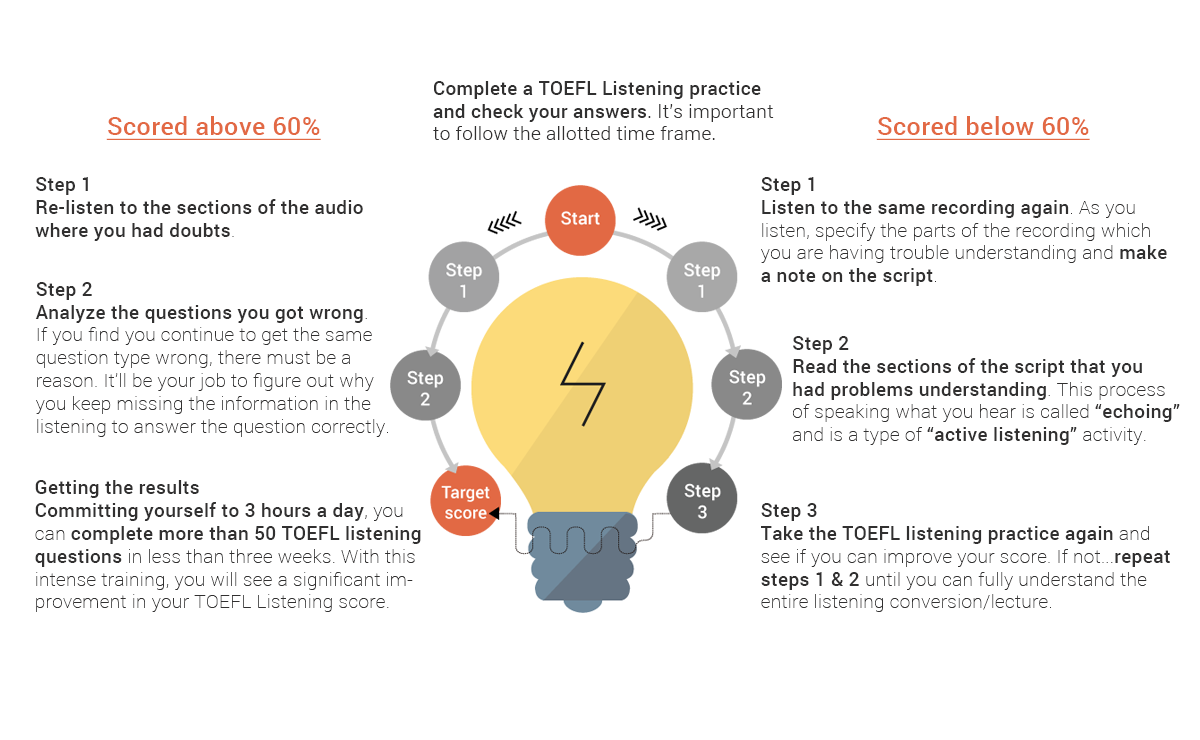
முதலில், நீங்கள் ஒரு TOEFL கேட்கும் பயிற்சியை முடிக்க வேண்டும் மற்றும் உங்கள் பதில்களை சரிபார்க்கவும். பின்பற்றுவது முக்கியம் ஒதுக்கப்பட்ட கால அளவு. நேரம் கடந்துவிட்டால், மீதமுள்ள கேள்விகளை முடிக்க வேண்டாம். நீங்கள் மேம்படுத்த உதவ விரும்புகிறோம், மேலும் ஏமாற்றுதல் உங்களுக்கு வழங்கும் தவறான தரவு.
கேட்கும் பயிற்சியில் நீங்கள் கடந்துவிட்டீர்களா அல்லது தோல்வியடைந்தீர்களா என்பதைப் பொறுத்து அடுத்த இரண்டு பிரிவுகள் படிகளாக பிரிக்கப்படுகின்றன.
pass அல்லது fail என்பது சாதாரணமாக 50% மதிப்பெண்களுக்கு மேல் அல்லது அதற்குக் கீழே இல்லை என்பதை நினைவில் கொள்ளவும். இது உங்கள் target TOEFL ஸ்கோர் என்ன என்பதைப் பொறுத்தது, எனவே சிலருக்கு எல்லாப் பிரிவுகளிலும் 80%க்கு மேல் மதிப்பெண்கள் தேவைப்படலாம், எனவே அதற்குக் கீழே உள்ள எதுவும் தோல்வியாகக் கருதப்படும். இருப்பினும், சராசரியானது 60% க்கு மேல் மதிப்பெண் பெற்றிருக்க வேண்டும், எனவே இந்தக் கட்டுரையின் எஞ்சிய பகுதிக்கு அந்த சதவீதத்துடன் செல்வோம்.
60% க்கும் குறைவான மதிப்பெண்கள்
படி 1: அதே பதிவை மீண்டும் கேளுங்கள். நீங்கள் கேட்கும் போது, நீங்கள் புரிந்துகொள்வதில் சிக்கல் உள்ள பதிவின் பகுதிகளைக் குறிப்பிடவும் ஸ்கிரிப்ட்டில் ஒரு குறிப்பை உருவாக்கவும் (நீங்கள் டிரான்ஸ்கிரிப்டை அச்சிடலாம்). பொதுவாக, தவறான புரிதலுக்கான காரணம் அறிமுகமில்லாத வார்த்தைகள், எனவே அவற்றின் அர்த்தத்தைப் பார்த்து அவற்றின் உச்சரிப்பைப் பயிற்சி செய்யுங்கள்... உங்களுக்குச் சிக்கல் இருந்தால், அது உதவும் அவற்றை சத்தமாக வாசிக்கவும்.
Step 2: இப்போது உங்களுக்கு அறிமுகமில்லாத சொற்களைப் புரிந்துகொண்டீர்கள், ஸ்கிரிப்ட்டின் பகுதிகளைப் படிக்கவும். நீங்கள் கேட்பதைப் பேசும் இந்த செயல்முறை “எதிரொலி” என்று அழைக்கப்படுகிறது, மேலும் இது ஒரு வகையான “செயலில் கேட்பது” செயல்பாடாகும். இது கேட்கும் திறன்களை மேம்படுத்த உதவுகிறது என்று ஆய்வுகள் காட்டுகின்றன மிகவும் திறம்பட செயலற்ற முறையில் கேட்பதை விட (செயலற்ற கேட்பது).
படி 3: TOEFL கேட்கும் பயிற்சியை மீண்டும் எடுத்து உங்களால் முடியுமா என்று பாருங்கள் உங்கள் மதிப்பெண்ணை மேம்படுத்தவும். இல்லை என்றால்... மீண்டும் செய்யவும் படிகள் 1 & 2 நீங்கள் முழு கேட்கும் மாற்றம்/விரிவுரையை முழுமையாக புரிந்து கொள்ளும் வரை.
60%க்கு மேல் மதிப்பெண்
படி 1: உங்களுக்கு சந்தேகம் உள்ள ஆடியோ பகுதிகளை மீண்டும் கேட்கவும். ஒரு கேள்வியைப் பற்றி உங்களுக்குத் தெரியாமல் இருக்கலாம் மற்றும் இரண்டு பதில் தேர்வுகளுக்கு இடையில் யூகித்திருக்கலாம். ஆடியோவில் உள்ள Z இல் உள்ள இடம் மற்றும் உங்கள் சந்தேகம் எங்கிருந்து வந்தது என்பதை அறிய இது ஒரு நல்ல கேள்வியாக இருக்கும்.
Step 2: நீங்கள் தவறாகப் பெற்ற கேள்விகளை பகுப்பாய்வு செய்யுங்கள். கேள்வி வகையை நீங்கள் தொடர்ந்து தவறாகப் பெறுவதைக் கண்டால், அதற்கு ஒரு காரணம் இருக்க வேண்டும். why கேள்விக்கு சரியான பதிலைக் கேட்பதில் உள்ள தகவலை நீங்கள் தவறவிடுகிறீர்கள் என்பதைக் கண்டுபிடிப்பது உங்கள் வேலையாக இருக்கும். "எனது குறிப்புகளில் ஏன் அந்தத் தகவல் இல்லை?" என்பது நீங்களே ஒரு கேள்வி.
இந்த வழிமுறைகளைப் பின்பற்றவும், இது அதிசயங்களைச் செய்வதை நீங்கள் காண்பீர்கள்Z
மேலே உள்ள படிப்படியான செயல்முறையை முடிப்பதால், TOEFL கேட்கும் பயிற்சிக்கு 45 முதல் 60 நிமிடங்கள் ஆகும். நிச்சயமாக, நீங்கள் எல்லா அல்லது பெரும்பாலான கேள்விகளுக்கும் சரியாக பதிலளித்திருந்தால், அது உங்களுக்கு மிகக் குறைந்த நேரத்தை எடுக்கும்.
எனவே, ஒரு நாளைக்கு 3 மணிநேரம் என்பதில் உங்களை ஈடுபடுத்திக் கொள்வதன் மூலம், நீங்கள் இல் 50 க்கும் மேற்பட்ட TOEFL கேட்கும் கேள்விகளை இல் மூன்று வாரங்களுக்குள் Z இல் முடிக்கலாம். இந்த தீவிர பயிற்சியின் மூலம், உங்கள் TOEFL கேட்கும் மதிப்பெண்ணில் குறிப்பிடத்தக்க முன்னேற்றம்ஐக் காண்பீர்கள்.
எங்களிடம் இன்னும் ஒரு பரிந்துரை உள்ளது! நாள் முழுவதும் உங்கள் 3 மணிநேரம் கேட்கும் பயிற்சியைப் பரப்புங்கள் மற்ற TOEFL பிரிவுகளுடன் TOEFL பயிற்சி சோதனையை மேற்கொள்ளுங்கள் அல்லது உங்கள் பேசும் TOEFL தயாரிப்பைத் தொடங்குங்கள். இது ஒரு உகந்த கற்றல் அட்டவணை ஏனெனில் ஆங்கில மொழிக்கு உங்களை வெளிப்படுத்துகிறது தொடர்ந்து மற்றும் தொடர்ந்து ஒவ்வொரு நாளும் உங்கள் கற்றலைத் தூண்டும், மேலும் TOEFL தேர்வை நீங்கள் எளிதாகப் பெறுவீர்கள்.
புதிய TOEFL Listening உதவிக்குறிப்புகள்
TOEFL கேட்கும் பிரிவில் சிறப்பாகச் செயல்பட உதவும் சில புதிய TOEFL கேட்கும் உதவிக்குறிப்புகள் இங்கே உள்ளன:
- 1. முக்கிய நோக்கத்திற்காக கேளுங்கள். கேட்கும் பத்திகள் ஆகும் குறுகிய மற்றும் கவனம், எனவே கேள்விகள் பொதுவாக பேச்சாளரைப் பற்றிய உங்கள் புரிதலை சோதிக்கும் முக்கிய யோசனை, இலக்கு, or எண்ணம். இதில் கவனம் செலுத்துங்கள்: பேச்சாளர் ஏன் பேசுகிறார் ஒவ்வொரு விவரத்தையும் நினைவில் வைக்க முயற்சிப்பதை விட.
- 2. தேர்வு-எ-பதில் கேள்விகளில் சூழலுக்கு கவனம் செலுத்துங்கள். பதில் என்ன என்பதை நீங்கள் புரிந்துகொள்கிறீர்களா என்பதை இந்தக் கேள்விகள் சோதிக்கின்றன பொருத்தமானது கொடுக்கப்பட்ட சூழ்நிலையில். என்பதை கவனமாகக் கேளுங்கள் நிலைமை, the பேச்சாளர்களுக்கு இடையிலான உறவு, and the தொனி உரையாடலின்.
- 3. கல்விப் பேச்சுகளில் முக்கிய யோசனையை விரைவாக அடையாளம் காணவும். பேச்சாளர் வழக்கமாக தலைப்பை அறிமுகப்படுத்துகிறார் தெளிவாக. இதை முயற்சிக்கவும்: ஒரு எளிய வாக்கியத்தில் பேச்சை சுருக்கவும் நீங்கள் கேட்கும்போது முக்கிய புள்ளியில் கவனம் செலுத்துங்கள்.
- 4. பேச்சாளரின் தொனி மற்றும் அணுகுமுறையைக் கவனியுங்கள். பற்றி சில கேள்விகள் கேட்கின்றன கருத்துக்கள், அணுகுமுறைகள், or உணர்வுகள். கவனம் செலுத்துங்கள் எப்படி ஏதாவது சொல்லப்படுகிறது, சொல்லப்பட்டவை மட்டுமல்ல, குறிப்பாக உரையாடல்களிலும் அறிவிப்புகளிலும்.
- 5. யோசனைகள் எவ்வாறு ஒழுங்கமைக்கப்படுகின்றன என்பதைப் பின்பற்றவும். குறுகிய கேட்கும் பத்திகளும் கூட பின்பற்றுகின்றன தெளிவான அமைப்பு. இவற்றைக் கேளுங்கள்: உதாரணங்கள், காரணங்கள் மற்றும் விளைவுகள், ஒப்பீடுகள், or ஒரு செயல்பாட்டில் படிகள் யோசனைகள் எவ்வாறு இணைக்கப்பட்டுள்ளன என்பதைப் புரிந்து கொள்ள.
- 6. நீங்கள் உறுதியாக இல்லாதபோது நீக்குதலைப் பயன்படுத்தவும். சரியான பதில் தெளிவாக இல்லை என்றால், பேச்சாளருடன் பொருந்தாத தேர்வுகளை அகற்றவும் பொருள் அல்லது தொனி. சிறந்த பதில் பொருத்தமானது ஒட்டுமொத்த செய்தி.
- 7. உங்கள் நேரத்தை நிர்வகிக்கவும், தொடர்ந்து நகரவும். கேள்விகளுக்கு விடை காண வேண்டும் வரிசையில், and you திரும்ப முடியாது தவிர்க்கப்பட்ட கேள்விகளுக்கு. படிப்பறிவுடன் கூடிய ஊகம் செய்யுங்கள் தேவைப்பட்டால், பின்னர் எளிதான கேள்விகளைத் தவிர்க்கவும்.
எங்கள் புதிய TOEFL Listening பயிற்சிக் கேள்விகள்
எங்கள் TOEFL கேட்கும் பயிற்சி கேள்விகள் பார்க்கவும் உணரவும் வடிவமைக்கப்பட்டுள்ளன அதிகாரப்பூர்வ TOEFL சோதனைக்கு ஒத்ததாகும். நாங்கள் கவனமாக பொருத்துகிறோம் சிரமம், கேள்வி வகைகள், வடிவமைத்தல், மற்றும் சோதனை நடத்தை, எனவே நீங்கள் ஒரு பயிற்சி செய்யலாம் யதார்த்தமான சோதனை சூழல். TOEFL கேட்கும் பயிற்சி கேள்விகளின் முழு வரம்பையும் ஆராய, TOEFL பயிற்சி மெனுவைக் கிளிக் செய்யவும். TOEFL Tutor ஆப். உங்களாலும் முடியும் இலவச TOEFL உருவகப்படுத்துதல் சோதனையை மேற்கொள்ளுங்கள் இப்போதே.
TOEFL கேட்பது பிரிவு மிகவும் திறமை அடிப்படையிலானது மற்றும் கணிசமாக மேம்படுத்துகிறது இலக்கு நடைமுறை. கேட்கும் உத்திகளை மாஸ்டர் செய்து முடிப்பதன் மூலம் அனைத்து TOEFL கேட்கும் பயிற்சி கேள்விகள் உங்கள் பரீட்சைக்கு முன், உங்கள் திறனை நீங்கள் பெரிதும் அதிகரிக்கலாம் பேசும் ஆங்கிலம் புரியும் மற்றும் கேள்விகளுக்கு துல்லியமாக பதிலளிக்கவும் நேர அழுத்தத்தின் கீழ்.
உங்களுக்கு உதவி தேவைப்பட்டால், எங்கள் கேட்கும் ஆதரவு கருவிகளில் பின்வருவன அடங்கும்:
- BestMyLingo (நிஜ வாழ்க்கை சூழ்நிலைகளைக் கேட்டு பதிலளிக்கவும்)
- TOEFL சொல்லகராதி பயிற்சி (வேகமான வார்த்தை அங்கீகாரத்தை வலுப்படுத்தும் ஊடாடும் பயிற்சிகள்.)
- TOEFL Listening Tutor App (600க்கும் மேற்பட்ட TOEFL கேட்கும் பயிற்சி கேள்விகள், பாடங்கள் மற்றும் உருவகப்படுத்துதல் சோதனைகளுடன் பயிற்சி செய்யுங்கள்)
அடுத்து என்ன
பின்வரும் அடிப்படை TOEFL கேட்கும் பாடங்களை அணுக இலவச கணக்கை உருவாக்கவும் மற்றும் உங்கள் கேட்கும் திறனை வலுப்படுத்துவதைத் தொடங்கவும்.
- TOEFL கேட்பது அறிமுகம்
- வெற்றிக்கான TOEFL கேட்கும் உத்திகள்
- ஒரு பதிலைத் தேர்ந்தெடுக்கவும்
- உரையாடல் கேள்விகள்
- அறிவிப்பு கேள்விகள்
- கல்விசார் பேச்சு கேள்விகள்
- சுருக்கமான உள்ளடக்க கேள்வி
- முக்கிய நோக்கம் கேள்வி
- விரிவான கேள்வி
- அனுமான கேள்வி
- செயல்பாடு கேள்வி
- அணுகுமுறை கேள்வி
TOEFL Listening இலவச ஆதாரங்கள்
நீங்கள் TOEFLஐப் பயன்படுத்தத் திட்டமிட்டால், 4 பிரிவுகளில் 3 ஐத் தேர்வுசெய்ய வலுவான கேட்கும் திறன் வேண்டும். இதன் காரணமாக, நீங்கள் ஒவ்வொரு நாளும் சோதனை நாள் வரை தொடர்ந்து பயிற்சி பெறுவது முக்கியம்.
train மற்றும் உங்கள் கேட்கும் திறனை தினசரி க்கு நீங்கள் பயன்படுத்தக்கூடிய சில ஆதாரங்கள் கீழே உள்ளன.
- BBC ஆங்கிலம் கற்றல் - http://www.bbc.co.uk/learningenglish
- TED - https://www.ted.com/
- VOA ஆங்கிலம் கற்றல் - https://learningenglish.voanews.com/
- அறிவியல் அமெரிக்கன் - 60 வினாடிகள் அறிவியல் - https://www.scientificamerican.com/podcast/60-second-science/