ฝึกทำ TOEFL Listening: ทำแบบทดสอบการฟัง TOEFL ฟรีพร้อมเฉลย และเรียนรู้ 7 เคล็ดลับสำคัญเพื่อคะแนนสูง
ในคู่มือนี้คุณสามารถทำแบบทดสอบการฟัง TOEFL ใหม่ฟรีพร้อมเฉลย เรียนรู้ 7 เคล็ดลับสำคัญ และได้รับข้อมูลทั่วไปเกี่ยวกับพาร์ต Listening เพื่อเตรียมตัวสอบได้อย่างมั่นใจ หน้านี้รวบรวมทุกสิ่งที่คุณต้องรู้และทักษะสำคัญสำหรับการทำคะแนน Listening สูง
หากคุณกำลังมองหาแบบฝึก TOEFL Listening ฟรี หรืออยากรู้ว่าการสอบ TOEFL Listening จริงเป็นอย่างไร ให้คลิกปุ่มด้านล่าง
play_circle_outline เริ่มแบบฝึก TOEFL Listeningด้านล่างคือรายการคำถาม TOEFL Listening ทั้งหมดของเรา ซึ่งคุณสามารถเรียนแต่ละข้อได้ตามจังหวะของตัวเอง หากต้องการเริ่มคำถามฝึก TOEFL Listening ฟรี ให้คลิกลิงก์ Mock Test 1
TOEFL คำถามฝึกการฟัง - เลือกคำตอบ
| ข้อสอบจำลอง 1 - 12 |
| ข้อสอบจำลอง 1 ข้อสอบจำลอง 2 ข้อสอบจำลอง 3 ข้อสอบจำลอง 4 ข้อสอบจำลอง 5 ข้อสอบจำลอง 6 ข้อสอบจำลอง 7 ข้อสอบจำลอง 8 ข้อสอบจำลอง 9 ข้อสอบจำลอง 10 ข้อสอบจำลอง 11 ข้อสอบจำลอง 12 |
| ข้อสอบจำลอง 13 - 24 |
| ข้อสอบจำลอง 13 ข้อสอบจำลอง 14 ข้อสอบจำลอง 15 ข้อสอบจำลอง 16 ข้อสอบจำลอง 17 ข้อสอบจำลอง 18 ข้อสอบจำลอง 19 ข้อสอบจำลอง 20 ข้อสอบจำลอง 21 ข้อสอบจำลอง 22 ข้อสอบจำลอง 23 ข้อสอบจำลอง 24 |
| ข้อสอบจำลอง 25 - 36 |
| ข้อสอบจำลอง 25 ข้อสอบจำลอง 26 ข้อสอบจำลอง 27 ข้อสอบจำลอง 28 ข้อสอบจำลอง 29 ข้อสอบจำลอง 30 ข้อสอบจำลอง 31 ข้อสอบจำลอง 32 ข้อสอบจำลอง 33 ข้อสอบจำลอง 34 ข้อสอบจำลอง 35 ข้อสอบจำลอง 36 |
| ข้อสอบจำลอง 37 - 48 |
| ข้อสอบจำลอง 37 ข้อสอบจำลอง 38 ข้อสอบจำลอง 39 ข้อสอบจำลอง 40 ข้อสอบจำลอง 41 ข้อสอบจำลอง 42 ข้อสอบจำลอง 43 ข้อสอบจำลอง 44 ข้อสอบจำลอง 45 ข้อสอบจำลอง 46 ข้อสอบจำลอง 47 ข้อสอบจำลอง 48 |
| ข้อสอบจำลอง 49 - 60 |
| ข้อสอบจำลอง 49 ข้อสอบจำลอง 50 ข้อสอบจำลอง 51 ข้อสอบจำลอง 52 ข้อสอบจำลอง 53 ข้อสอบจำลอง 54 ข้อสอบจำลอง 55 ข้อสอบจำลอง 56 ข้อสอบจำลอง 57 ข้อสอบจำลอง 58 ข้อสอบจำลอง 59 ข้อสอบจำลอง 60 |
| ข้อสอบจำลอง 61 - 72 |
| ข้อสอบจำลอง 61 ข้อสอบจำลอง 62 ข้อสอบจำลอง 63 ข้อสอบจำลอง 64 ข้อสอบจำลอง 65 ข้อสอบจำลอง 66 ข้อสอบจำลอง 67 ข้อสอบจำลอง 68 ข้อสอบจำลอง 69 ข้อสอบจำลอง 70 ข้อสอบจำลอง 71 ข้อสอบจำลอง 72 |
| ข้อสอบจำลอง 73 - 84 |
| ข้อสอบจำลอง 73 ข้อสอบจำลอง 74 ข้อสอบจำลอง 75 ข้อสอบจำลอง 76 ข้อสอบจำลอง 77 ข้อสอบจำลอง 78 ข้อสอบจำลอง 79 ข้อสอบจำลอง 80 ข้อสอบจำลอง 81 ข้อสอบจำลอง 82 ข้อสอบจำลอง 83 ข้อสอบจำลอง 84 |
| ข้อสอบจำลอง 85 - 96 |
| ข้อสอบจำลอง 85 ข้อสอบจำลอง 86 ข้อสอบจำลอง 87 ข้อสอบจำลอง 88 ข้อสอบจำลอง 89 ข้อสอบจำลอง 90 ข้อสอบจำลอง 91 ข้อสอบจำลอง 92 ข้อสอบจำลอง 93 ข้อสอบจำลอง 94 ข้อสอบจำลอง 95 ข้อสอบจำลอง 96 |
| ข้อสอบจำลอง 121 - 132 |
| ข้อสอบจำลอง 121 ข้อสอบจำลอง 122 ข้อสอบจำลอง 123 ข้อสอบจำลอง 124 ข้อสอบจำลอง 125 ข้อสอบจำลอง 126 ข้อสอบจำลอง 127 ข้อสอบจำลอง 128 ข้อสอบจำลอง 129 ข้อสอบจำลอง 130 ข้อสอบจำลอง 131 |
TOEFL คำถามฝึกการฟัง - บทสนทนา
| ข้อสอบจำลอง 1 - 12 |
| ข้อสอบจำลอง 1 ข้อสอบจำลอง 2 ข้อสอบจำลอง 3 ข้อสอบจำลอง 4 ข้อสอบจำลอง 5 ข้อสอบจำลอง 6 ข้อสอบจำลอง 7 ข้อสอบจำลอง 8 ข้อสอบจำลอง 9 ข้อสอบจำลอง 10 ข้อสอบจำลอง 11 ข้อสอบจำลอง 12 |
| ข้อสอบจำลอง 13 - 24 |
| ข้อสอบจำลอง 13 ข้อสอบจำลอง 14 ข้อสอบจำลอง 15 ข้อสอบจำลอง 16 ข้อสอบจำลอง 17 ข้อสอบจำลอง 18 ข้อสอบจำลอง 19 ข้อสอบจำลอง 20 ข้อสอบจำลอง 21 ข้อสอบจำลอง 22 ข้อสอบจำลอง 23 ข้อสอบจำลอง 24 |
| ข้อสอบจำลอง 25 - 36 |
| ข้อสอบจำลอง 25 ข้อสอบจำลอง 26 ข้อสอบจำลอง 27 ข้อสอบจำลอง 28 ข้อสอบจำลอง 29 ข้อสอบจำลอง 30 ข้อสอบจำลอง 31 ข้อสอบจำลอง 32 ข้อสอบจำลอง 33 ข้อสอบจำลอง 34 ข้อสอบจำลอง 35 ข้อสอบจำลอง 36 |
| ข้อสอบจำลอง 37 - 48 |
| ข้อสอบจำลอง 37 ข้อสอบจำลอง 38 ข้อสอบจำลอง 39 ข้อสอบจำลอง 40 ข้อสอบจำลอง 41 ข้อสอบจำลอง 42 ข้อสอบจำลอง 43 ข้อสอบจำลอง 44 ข้อสอบจำลอง 45 ข้อสอบจำลอง 46 ข้อสอบจำลอง 47 ข้อสอบจำลอง 48 |
| ข้อสอบจำลอง 49 - 60 |
| ข้อสอบจำลอง 49 ข้อสอบจำลอง 50 ข้อสอบจำลอง 51 ข้อสอบจำลอง 52 ข้อสอบจำลอง 53 ข้อสอบจำลอง 54 ข้อสอบจำลอง 55 ข้อสอบจำลอง 56 ข้อสอบจำลอง 57 ข้อสอบจำลอง 58 ข้อสอบจำลอง 59 ข้อสอบจำลอง 60 |
| ข้อสอบจำลอง 61 - 72 |
| ข้อสอบจำลอง 61 ข้อสอบจำลอง 62 ข้อสอบจำลอง 63 ข้อสอบจำลอง 64 ข้อสอบจำลอง 65 ข้อสอบจำลอง 66 ข้อสอบจำลอง 67 ข้อสอบจำลอง 68 ข้อสอบจำลอง 69 ข้อสอบจำลอง 70 ข้อสอบจำลอง 71 ข้อสอบจำลอง 72 |
| ข้อสอบจำลอง 73 - 84 |
| ข้อสอบจำลอง 73 ข้อสอบจำลอง 74 ข้อสอบจำลอง 75 ข้อสอบจำลอง 76 ข้อสอบจำลอง 77 ข้อสอบจำลอง 78 ข้อสอบจำลอง 79 ข้อสอบจำลอง 80 ข้อสอบจำลอง 81 ข้อสอบจำลอง 82 ข้อสอบจำลอง 83 ข้อสอบจำลอง 84 |
| ข้อสอบจำลอง 85 - 96 |
| ข้อสอบจำลอง 85 ข้อสอบจำลอง 86 ข้อสอบจำลอง 87 ข้อสอบจำลอง 88 ข้อสอบจำลอง 89 ข้อสอบจำลอง 90 ข้อสอบจำลอง 91 ข้อสอบจำลอง 92 ข้อสอบจำลอง 93 ข้อสอบจำลอง 94 ข้อสอบจำลอง 95 ข้อสอบจำลอง 96 |
TOEFL คำถามฝึกการฟัง - ประกาศ
| ข้อสอบจำลอง 1 - 12 |
| ข้อสอบจำลอง 1 ข้อสอบจำลอง 2 ข้อสอบจำลอง 3 ข้อสอบจำลอง 4 ข้อสอบจำลอง 5 ข้อสอบจำลอง 6 ข้อสอบจำลอง 7 ข้อสอบจำลอง 8 ข้อสอบจำลอง 9 ข้อสอบจำลอง 10 ข้อสอบจำลอง 11 ข้อสอบจำลอง 12 |
| ข้อสอบจำลอง 13 - 24 |
| ข้อสอบจำลอง 13 ข้อสอบจำลอง 14 ข้อสอบจำลอง 15 ข้อสอบจำลอง 16 ข้อสอบจำลอง 17 ข้อสอบจำลอง 18 ข้อสอบจำลอง 19 ข้อสอบจำลอง 20 ข้อสอบจำลอง 21 ข้อสอบจำลอง 22 ข้อสอบจำลอง 23 ข้อสอบจำลอง 24 |
| ข้อสอบจำลอง 25 - 36 |
| ข้อสอบจำลอง 25 ข้อสอบจำลอง 26 ข้อสอบจำลอง 27 ข้อสอบจำลอง 28 ข้อสอบจำลอง 29 ข้อสอบจำลอง 30 ข้อสอบจำลอง 31 ข้อสอบจำลอง 32 ข้อสอบจำลอง 33 ข้อสอบจำลอง 34 ข้อสอบจำลอง 35 ข้อสอบจำลอง 36 |
| ข้อสอบจำลอง 37 - 48 |
| ข้อสอบจำลอง 37 ข้อสอบจำลอง 38 ข้อสอบจำลอง 39 ข้อสอบจำลอง 40 ข้อสอบจำลอง 41 ข้อสอบจำลอง 42 ข้อสอบจำลอง 43 ข้อสอบจำลอง 44 ข้อสอบจำลอง 45 ข้อสอบจำลอง 46 ข้อสอบจำลอง 47 ข้อสอบจำลอง 48 |
| ข้อสอบจำลอง 49 - 60 |
| ข้อสอบจำลอง 49 ข้อสอบจำลอง 50 ข้อสอบจำลอง 51 ข้อสอบจำลอง 52 ข้อสอบจำลอง 53 ข้อสอบจำลอง 54 ข้อสอบจำลอง 55 ข้อสอบจำลอง 56 ข้อสอบจำลอง 57 ข้อสอบจำลอง 58 ข้อสอบจำลอง 59 ข้อสอบจำลอง 60 |
| ข้อสอบจำลอง 61 - 72 |
| ข้อสอบจำลอง 61 ข้อสอบจำลอง 62 ข้อสอบจำลอง 63 ข้อสอบจำลอง 64 ข้อสอบจำลอง 65 ข้อสอบจำลอง 66 ข้อสอบจำลอง 67 ข้อสอบจำลอง 68 ข้อสอบจำลอง 69 ข้อสอบจำลอง 70 ข้อสอบจำลอง 71 ข้อสอบจำลอง 72 |
| ข้อสอบจำลอง 73 - 84 |
| ข้อสอบจำลอง 73 ข้อสอบจำลอง 74 ข้อสอบจำลอง 75 ข้อสอบจำลอง 76 ข้อสอบจำลอง 77 ข้อสอบจำลอง 78 ข้อสอบจำลอง 79 ข้อสอบจำลอง 80 ข้อสอบจำลอง 81 ข้อสอบจำลอง 82 ข้อสอบจำลอง 83 ข้อสอบจำลอง 84 |
| ข้อสอบจำลอง 85 - 96 |
| ข้อสอบจำลอง 85 ข้อสอบจำลอง 86 ข้อสอบจำลอง 87 ข้อสอบจำลอง 88 ข้อสอบจำลอง 89 ข้อสอบจำลอง 90 ข้อสอบจำลอง 91 ข้อสอบจำลอง 92 ข้อสอบจำลอง 93 ข้อสอบจำลอง 94 ข้อสอบจำลอง 95 ข้อสอบจำลอง 96 |
| ข้อสอบจำลอง 229 - 240 |
| ข้อสอบจำลอง 229 ข้อสอบจำลอง 230 |
TOEFL คำถามฝึกการฟัง - การบรรยายเชิงวิชาการ
| ข้อสอบจำลอง 1 - 12 |
| ข้อสอบจำลอง 1 ข้อสอบจำลอง 2 ข้อสอบจำลอง 3 ข้อสอบจำลอง 4 ข้อสอบจำลอง 5 ข้อสอบจำลอง 6 ข้อสอบจำลอง 7 ข้อสอบจำลอง 8 ข้อสอบจำลอง 9 ข้อสอบจำลอง 10 ข้อสอบจำลอง 11 ข้อสอบจำลอง 12 |
| ข้อสอบจำลอง 13 - 24 |
| ข้อสอบจำลอง 13 ข้อสอบจำลอง 14 ข้อสอบจำลอง 15 ข้อสอบจำลอง 16 ข้อสอบจำลอง 17 ข้อสอบจำลอง 18 ข้อสอบจำลอง 19 ข้อสอบจำลอง 20 ข้อสอบจำลอง 21 ข้อสอบจำลอง 22 ข้อสอบจำลอง 23 ข้อสอบจำลอง 24 |
| ข้อสอบจำลอง 25 - 36 |
| ข้อสอบจำลอง 25 ข้อสอบจำลอง 26 ข้อสอบจำลอง 27 ข้อสอบจำลอง 28 ข้อสอบจำลอง 29 ข้อสอบจำลอง 30 ข้อสอบจำลอง 31 ข้อสอบจำลอง 32 ข้อสอบจำลอง 33 ข้อสอบจำลอง 34 ข้อสอบจำลอง 35 ข้อสอบจำลอง 36 |
| ข้อสอบจำลอง 37 - 48 |
| ข้อสอบจำลอง 37 ข้อสอบจำลอง 38 ข้อสอบจำลอง 39 ข้อสอบจำลอง 40 ข้อสอบจำลอง 41 ข้อสอบจำลอง 42 ข้อสอบจำลอง 43 ข้อสอบจำลอง 44 ข้อสอบจำลอง 45 ข้อสอบจำลอง 46 ข้อสอบจำลอง 47 ข้อสอบจำลอง 48 |
| ข้อสอบจำลอง 49 - 60 |
| ข้อสอบจำลอง 49 ข้อสอบจำลอง 50 ข้อสอบจำลอง 51 ข้อสอบจำลอง 52 ข้อสอบจำลอง 53 ข้อสอบจำลอง 54 ข้อสอบจำลอง 55 ข้อสอบจำลอง 56 ข้อสอบจำลอง 57 ข้อสอบจำลอง 58 ข้อสอบจำลอง 59 ข้อสอบจำลอง 60 |
| ข้อสอบจำลอง 61 - 72 |
| ข้อสอบจำลอง 61 ข้อสอบจำลอง 62 ข้อสอบจำลอง 63 ข้อสอบจำลอง 64 ข้อสอบจำลอง 65 ข้อสอบจำลอง 66 ข้อสอบจำลอง 67 ข้อสอบจำลอง 68 ข้อสอบจำลอง 69 ข้อสอบจำลอง 70 ข้อสอบจำลอง 71 ข้อสอบจำลอง 72 |
| ข้อสอบจำลอง 73 - 84 |
| ข้อสอบจำลอง 73 ข้อสอบจำลอง 74 ข้อสอบจำลอง 75 ข้อสอบจำลอง 76 ข้อสอบจำลอง 77 ข้อสอบจำลอง 78 ข้อสอบจำลอง 79 ข้อสอบจำลอง 80 ข้อสอบจำลอง 81 ข้อสอบจำลอง 82 ข้อสอบจำลอง 83 ข้อสอบจำลอง 84 |
| ข้อสอบจำลอง 85 - 96 |
| ข้อสอบจำลอง 85 ข้อสอบจำลอง 86 ข้อสอบจำลอง 87 ข้อสอบจำลอง 88 ข้อสอบจำลอง 89 ข้อสอบจำลอง 90 ข้อสอบจำลอง 91 ข้อสอบจำลอง 92 ข้อสอบจำลอง 93 ข้อสอบจำลอง 94 ข้อสอบจำลอง 95 ข้อสอบจำลอง 96 |
| ข้อสอบจำลอง 169 - 180 |
| ข้อสอบจำลอง 169 ข้อสอบจำลอง 170 ข้อสอบจำลอง 171 ข้อสอบจำลอง 172 ข้อสอบจำลอง 173 ข้อสอบจำลอง 174 ข้อสอบจำลอง 175 ข้อสอบจำลอง 176 ข้อสอบจำลอง 177 ข้อสอบจำลอง 178 ข้อสอบจำลอง 179 |
สารบัญ
แนะนำ TOEFL Listening รูปแบบใหม่
Z ส่วนการฟัง TOEFL ใช้รูปแบบการปรับตัวใหม่ที่มีสองโมดูล Zทุกคนเริ่มต้นด้วยโมดูลเส้นทางเดียวกัน และประสิทธิภาพของพวกเขาที่นั่นจะเป็นตัวกำหนดว่าพวกเขาดำเนินการต่อด้วยโมดูลที่สอง Zeasier หรือ Zharder
- เวลาทดสอบรวม ของทั้งสองโมดูลรวมกันคือประมาณ 27 นาที
- นาฬิกาบนหน้าจอแสดง เหลือเวลาเท่าไร ในโมดูลปัจจุบัน (ตัวจับเวลาจะรีเซ็ตเมื่อโมดูลใหม่เริ่มทำงาน)
- Zทั้งคำถามที่ได้คะแนนและที่ไม่ได้ให้คะแนนเป็นแบบผสม ในส่วนนี้ และคุณไม่สามารถบอกได้ว่าคำถามใดเป็นคำถามทดลอง
Zโมดูลการกำหนดเส้นทางเป็นส่วนแรกและยาวที่สุด ของส่วนการฟัง โดยจะมีงาน สี่ประเภทผสมกันเสมอ
Zประเภทงาน |
คำอธิบาย |
|---|---|
|
เลือกคำตอบ |
คุณจะได้ยิน one บรรทัดสั้นๆ ของบทสนทนาภาษาอังกฤษ จากนั้นเลือก การตอบกลับที่เป็นธรรมชาติที่สุด จากสี่ตัวเลือก คำตอบที่ถูกต้องอาจเป็น ตอบกลับทางอ้อม คำตอบทางอ้อมมากที่ แก้ปัญหา หรือคำถามที่ ย้ายการสนทนาไปข้างหน้า |
|
Zฟังการสนทนา |
คุณจะได้ยินบทสนทนาสั้นๆ (20–30 วินาที) ระหว่างวิทยากรสองคนใน ชีวิตประจำวันหรือสถานการณ์ในชีวิตประจำวัน แต่ละบทสนทนาจะตามมาด้วยคำถามตรงไปตรงมาเกี่ยวกับ เกิดอะไรขึ้น และ อะไรจะเกิดขึ้นต่อไป |
|
Zประกาศวิทยาเขต |
คุณจะได้ยินประกาศสั้นๆ (20–30 วินาที) เกี่ยวกับ Zเหตุการณ์, การเปลี่ยนแปลงบริการ หรือ opportunities ในวิทยาเขต การประกาศแต่ละรายการจะตามมาด้วยคำถามเกี่ยวกับวัตถุประสงค์หลัก , รายละเอียดที่สำคัญ หรือ ผู้ฟังการกระทำควรใช้ |
|
Zฟังการเสวนาเชิงวิชาการ |
คุณได้ยินการบรรยายเชิงวิชาการสั้นๆ (ประมาณ 90 วินาที) ในวิชามหาวิทยาลัยที่คุ้นเคย เช่น psychology, sociology, history, economics หรือ art คำพูดแต่ละครั้งจะตามด้วย คำถามหลายข้อ ซึ่งปกติแล้วจะเป็น มากกว่า มากกว่าการสนทนาหรือการประกาศ ประเภทคำถามทั่วไป ได้แก่ แนวคิดหลัก, รายละเอียดเฉพาะ, ZPurpose, inference และ สิ่งที่ชั้นเรียนจะทำต่อไป |
สูงสุด 29 นาที |
ประสิทธิภาพของคุณในโมดูลการกำหนดเส้นทางจะกำหนดโมดูลที่สองที่คุณได้รับ
โมดูลง่าย
- หากคุณตอบคำถามโมดูลเส้นทาง น้อยกว่า 60 เปอร์เซ็นต์ อย่างถูกต้อง ระบบจะส่งคุณไปยัง easier module
- โมดูลนี้ประกอบด้วย รายการ "เลือกคำตอบ" เพิ่มเติม รวมถึง conversations และ ประกาศวิทยาเขต เพิ่มเติม
- ไม่มีการพูดคุยเชิงวิชาการ ในโมดูลอย่างง่าย
โมดูลยาก
- หากคุณตอบประมาณ 60 เปอร์เซ็นต์หรือมากกว่า ของคำถามเกี่ยวกับโมดูลการกำหนดเส้นทางอย่างถูกต้อง คุณจะย้ายไปที่ harder module
- โมดูลนี้มักจะเริ่มต้นด้วย ตัวเลขเล็กๆ ของคำถาม "เลือกคำตอบ" จากนั้นเพิ่ม conversations, ประกาศวิทยาเขต และ Zการพูดคุยเชิงวิชาการ
- เนื่องจากเนื้อหาของโมดูลยากขึ้น คุณจึงควรเตรียมพร้อมสำหรับการฟัง เชิงวิชาการที่ซับซ้อนมากขึ้น และ ประเภทคำถามที่หลากหลายมากขึ้น
ในตอนท้ายของส่วนการฟัง คะแนนที่ไม่เป็นทางการ สำหรับการสอบ TOEFL ทั้งหมดจะแสดงบนหน้าจอ คะแนนอย่างเป็นทางการ ของคุณจะปรากฏในบัญชีออนไลน์ของคุณในอีกไม่กี่วันต่อมา และ Z อาจแตกต่างเล็กน้อย จากหมายเลขที่ไม่เป็นทางการที่คุณเห็นในวันทดสอบ
ตัวอย่างข้อสอบ TOEFL Listening รูปแบบใหม่
เรียนรู้จากคำถามตัวอย่างการฟัง TOEFL ใหม่ของเรา
In the Choose a Response task, you'll listen to a short question or statement and choose the most appropriate response.

- I need to buy some fruit.
- They have a student discount.
- Yes, but only on weekdays.
- Groceries can be expensive.
-
spellcheck AnswerC (Audio Question: So the grocery store near campus closes at 10?)

- Psychology is my favorite subject.
- My roommate also takes science courses.
- I think the library is open today.
- I'm still on the waitlist.
-
spellcheck AnswerD (Audio Question: Did you register for the psychology class yet?)

- Well, my ticket is digital.
- Yeah, but the schedule was updated.
- I haven't decided what to wear.
- Concerts usually end late.
-
spellcheck AnswerC (Audio Question: Wait, didn't you say the concert was at 8 p.m.?)
In the Listen to a Conversation task, you'll listen to a short conversation and answer 2 questions.

- A campsite
- A lodge near the trails
- A hostel in town
- An apartment rental
- They are too expensive
- They are almost fully booked
- They are newly renovated
- They require a shuttle reservation
-
spellcheck Answers1. B
2. B
Audio transcriptMan: Hey Lisa, have you picked a hotel for our weekend trip to the mountains?
Woman: Not yet. I was waiting for your input. Do you prefer something close to the trails or in town?
Man: Closer to the trails would save us driving time. Did you find any options?
Woman: Yes, there's Pine Ridge Lodge. It has good reviews and offers a shuttle from the train station.
Man: Sounds perfect. Should I go ahead and book it tonight?
Woman: Please do. The website said only two rooms were left.
In the Listen to an Announcement task, you'll listen to a short announcement and answer 2 questions.

- To review a recent seminar outcome
- To discuss tomorrow’s adjusted event agenda
- To give details about an updated lunch selection
- To request caregivers to attend a conference
- Remain for extracurricular group gatherings
- Prepare homemade meals for evening consumption
- Arrange personal rides accordingly
- Show up at school later in the morning than usual
-
spellcheck Answers1. B
2. C
Audio transcriptListen to an announcement at a workshop.
Attention students and faculty. Due to tomorrow’s district-wide teacher workshop, all classes will end at 12:30 p.m. Buses will depart at 12:45, and the cafeteria will serve grab-and-go lunches only. After-school clubs are canceled. Please inform your parents and make transportation arrangements accordingly. Thank you.
In the Listen to an Academic Talk task, you'll listen to a short academic talk and answer 4 questions.


- Reproductive strategies of coral reef fish
- The anatomy of sea anemone tentacles
- Human impacts on coral reefs
- The partnership between clownfish and sea anemones
- To illustrate how clownfish attract prey
- To explain clownfish survival in stinging tentacles
- To criticize earlier research on coral reefs
- To compare clownfish to other fish species
- How coral reefs developed over millions of years
- Threats to the clownfish–anemone bond
- What different predators on reefs eat
- How the chemical makeup of seawater works
- It poisons predators near the anemone
- It signals mating readiness to other clownfish
- It feeds the anemone with needed nutrients
- It damages surrounding coral
-
spellcheck Answers1. D
2. B
3. B
4. C
Audio transcriptListen to a talk in a biology class.
Today I’d like to examine a classic example of mutualism on tropical coral reefs—the partnership between clownfish and sea anemones.
The anemone’s tentacles are armed with stinging cells that deter most predators, so a clownfish that lives among those tentacles gains a very safe home. In return, the fish defends the anemone from butterflyfish and other small grazers and, just as important, its wastes provide the anemone with nitrogen that fuels faster growth.
But how does the clownfish avoid being stung itself? Before settling, juveniles perform a cautious dance, rubbing against the tentacles until they coat their skin with a layer of specialized mucus. This mucus chemically mimics the anemone’s own tissue, preventing the discharge of the stinging cells.
ประเภทคำถามใหม่ของ TOEFL Listening
คำถามในส่วนการฟัง TOEFL จะประเมิน คุณเข้าใจคำพูดภาษาอังกฤษได้ดีเพียงใด ในการบรรยายเชิงวิชาการ การสนทนาในมหาวิทยาลัย และการประกาศสั้นๆ คำถามแต่ละข้อมีเป้าหมายไปที่ ทักษะการฟังเฉพาะ โดยชัดเจน การทำความเข้าใจคำถามแต่ละประเภทและสิ่งที่ทดสอบ คุณสามารถ ฟังอย่างมีกลยุทธ์มากขึ้น และ Zหลีกเลี่ยงกับดักทั่วไป ด้านล่างนี้คือคำถามประเภทการฟัง TOEFL อย่างเป็นทางการของ 6 ซึ่งอธิบายตามลำดับที่คุณจะพบ วัสดุการเตรียมการที่ทันสมัย
คำถามโดยละเอียดคำถามเชิงรายละเอียด
คำถามโดยละเอียดจะทดสอบความสามารถในการจดจำข้อมูล ที่ระบุไว้อย่างชัดเจน ในเสียง คำตอบ พูด โดยตรง แต่อาจมีข้อมูลเพิ่มเติมล้อมรอบอยู่
Question: What is the man's problem?
- He forgot to attend the team lunch
- He didn't bring the assigned item
- He lost the lunch list
- He arrived late to the lunch
-
spellcheck AnswerAnswer: B
(B) He didn't bring the assigned item is correct because the man admits, Yeah, but I completely forgot until just now, after the woman reminds him he was supposed to bring the drinks. His problem is clearly that he failed to bring the drinks he was assigned to supply.
(A) He forgot to attend the team lunch is incorrect because the man is actively preparing for the lunch; he is asking what he can bring, which shows he has not forgotten to attend.
(C) He lost the lunch list is incorrect because neither speaker mentions any list; the conversation focuses only on the drinks.
(D) He arrived late to the lunch is incorrect because there is no discussion of arrival time; the issue centers on forgetting the drinks, not lateness.
Transcript
Man: Do you have anything I can bring for the team lunch?
Woman: Why? Weren't you supposed to bring the drinks?
Man: Yeah, but I completely forgot until just now.
Woman: You're lucky—I grabbed extra juice boxes for my kids this morning.
Man: Seriously? That would save me.
Woman: No problem. Just bring the drinks next time!
คำถามใจความหลัก (เนื้อหา)
คำถามเนื้อหาสรุปเน้นที่ แนวคิดหลัก ของการบรรยายหรือการพูดคุย ละเว้นตัวอย่างสนับสนุนและรายละเอียดด้านข้าง และระบุ หัวข้อกลาง ที่กำลังสนทนาอยู่
Question: What is the main focus of the talk?
- The economic trade of bronze in the Mediterranean
- The steps involved in the lost-wax casting technique
- The religious symbolism of bronze statues
- Differences between Greek and Benin art
-
spellcheck AnswerAnswer: B
(B) The steps involved in the lost-wax casting technique is correct because the professor systematically explains each phase: “it all starts with a model that’s made entirely out of beeswax… they would cover it with clay… they’d heat the whole thing up… the wax melts and drains out… they’d pour molten bronze into that empty space… break the clay mold open.” These sequential details show the lecture’s primary purpose is to walk students through the process itself.
(A) The economic trade of bronze in the Mediterranean is incorrect because the talk never mentions prices, markets, or trading networks; it confines itself to artistic production, not commerce.
(C) The religious symbolism of bronze statues is incorrect as the professor does not refer to any gods, rituals, or symbolic meanings—only the mechanical technique.
(D) Differences between Greek and Benin art is incorrect because no stylistic comparison between cultures is provided; the focus remains on a single shared casting method.
Transcript
Listen to a talk in an art history class.
Today I’d like to talk about something really interesting—it's called the lost-wax casting technique. So, this was an ancient method used to make detailed bronze sculptures, and it’s actually pretty clever. It all starts with a model that’s made entirely out of beeswax. Artists would shape this wax very carefully to look exactly like the sculpture they wanted to make.
Once the wax model was ready, they would cover it with clay to create a hard outer shell. Then, after the clay dried, they’d heat the whole thing up. And what happens? Well, the wax melts and drains out, leaving a hollow space inside. That’s why it’s called “lost-wax”—because the wax is literally lost in the process.
Now, here’s the cool part. They’d pour molten bronze into that empty space. Once it cooled and hardened, they’d break the clay mold open, and out came a bronze sculpture—almost an exact copy of the original wax version.
You see, this method let artists capture really fine details, like tiny folds in fabric or strands of hair. Later on, workshops started using reusable molds, which helped speed things up and spread artistic styles across different regions, especially around the Mediterranean.
คำถามใจความหลัก (จุดประสงค์)
คำถามที่มีจุดประสงค์โดยสรุป ถาม เหตุใดการสนทนาหรือการประกาศจึงเกิดขึ้น คิดให้กว้างเกี่ยวกับผู้พูด เป้าหมาย เช่น ขอความช่วยเหลือ, อธิบายปัญหา หรือ การประกาศ
Question: What is the main purpose of the announcement?
- To introduce additional laboratory materials
- To postpone the upcoming class period
- To review the previous week's laboratory results
- To inform lab groups about a required meeting
-
spellcheck AnswerAnswer: D
(D) Inform lab groups about a required meeting is correct because the speaker clearly says, “all lab groups must attend a mandatory safety workshop this Friday at 3 p.m. in Room B204,” which is a direct statement that the purpose of the announcement is to tell students about an obligatory session they must attend.
(A) To introduce additional laboratory materials is incorrect because the announcement never mentions new equipment or supplies; it only focuses on the upcoming safety workshop.
(B) To postpone the upcoming class period is incorrect because there is no indication that any class is being delayed or rescheduled; the announcement simply adds a workshop after regular class time.
(C) To review the previous week’s laboratory results is incorrect because the speaker does not discuss last week’s findings; instead, the announcement references last week’s spill only to justify the need for the safety workshop.
Transcript
Listen to an announcement in a chemistry class.
Good morning, chemistry students. Due to last week’s spill, all lab groups must attend a mandatory safety workshop this Friday at 3 p.m. in Room B204. Bring your goggles and lab notebooks for inspection. Anyone who misses the session will not be allowed to begin the acid–base experiments scheduled for next week.
คำถามเชิงเจตนาการใช้ภาษา
คำถาม "วัตถุประสงค์เชิงวาทศิลป์" ต้องการให้คุณเข้าใจว่าเหตุใดผู้พูดจึงพูดบางสิ่ง
คำถามที่คุณมักจะพบเห็นจะเป็นดังนี้:
เหตุใดวิทยากรจึงพูดถึง XXX
Question: Why does the speaker mention retirement savings plans?
- To criticize low employer contributions.
- To demonstrate an example of the default effect.
- To compare them with organ donation programs.
- To explain the mechanics of financial markets.
-
spellcheck AnswerAnswer: B
(B) To demonstrate an example of the default effect is correct because the speaker notes, “Researchers first noticed this in retirement savings plans; participation rates jumped … when workers were automatically enrolled.” This sentence clearly uses retirement plans as evidence of how defaults influence behavior.
(A) To criticize low employer contributions is incorrect because the talk never mentions contribution levels; the emphasis is entirely on participation rates.
(C) To compare them with organ donation programs is incorrect because the retirement plan story is introduced before organ donation and serves primarily to illustrate the concept, not to create a formal comparison.
(D) To explain the mechanics of financial markets is incorrect because there is no discussion of market operations or investment instruments; the focus is psychological, not financial.
Transcript
Listen to a talk in an economics class.
Good morning, everyone. Today I’d like to introduce a key concept in behavioral economics called the “default effect.” The idea is simple: when a choice is pre-selected for us, most people stick with it even though they are free to opt out. Researchers first noticed this in retirement savings plans; participation rates jumped from about 40 percent to over 90 percent when workers were automatically enrolled.
An even more striking illustration comes from studies of organ-donation forms. Countries that set “yes, I want to donate” as the default achieve donation consent rates above 80 percent, while nations requiring citizens to check a box reach barely 20 percent. The only difference is the starting option. Understanding this bias helps governments and firms design policies—sometimes called “nudges”—that guide behavior without removing freedom of choice.
คำถามเชิงอนุมาน
คำถามอนุมานทดสอบว่า เป็นนัย คืออะไร แทนที่จะระบุโดยตรง คุณต้องรวม บริบท, โทนเสียง และ logic ผลที่ตามมาเพื่อให้ได้ข้อสรุปที่ถูกต้อง ค้นหาคำตอบที่ รองรับทางอ้อม ไม่ใช่คำตอบซ้ำ เสียง
Question: What does the speaker imply about the waste produced by clownfish?
- It poisons predators near the anemone
- It signals mating readiness to other clownfish
- It feeds the anemone with needed nutrients
- It damages surrounding coral
-
spellcheck AnswerAnswer: C
(C) It feeds the anemone with needed nutrients is correct because the lecturer states that clownfish wastes “provide the anemone with nitrogen that fuels faster growth,” directly indicating the excretion acts as a nutrient source.
(A) It poisons predators near the anemone is incorrect because the speaker never claims the waste is toxic; instead, the benefit is nutritional.
(B) It signals mating readiness to other clownfish is incorrect because no mention is made of pheromones or reproductive signaling associated with the waste.
(D) It damages surrounding coral is incorrect because the only effect described is positive for the anemone; there is no reference to harm befalling coral.
Transcript
Listen to a talk in a biology class.
Today I’d like to examine a classic example of mutualism on tropical coral reefs—the partnership between clownfish and sea anemones.
The anemone’s tentacles are armed with stinging cells that deter most predators, so a clownfish that lives among those tentacles gains a very safe home. In return, the fish defends the anemone from butterflyfish and other small grazers and, just as important, its wastes provide the anemone with nitrogen that fuels faster growth.
But how does the clownfish avoid being stung itself? Before settling, juveniles perform a cautious dance, rubbing against the tentacles until they coat their skin with a layer of specialized mucus. This mucus chemically mimics the anemone’s own tissue, preventing the discharge of the stinging cells.
เลือกคำตอบ
ในคำถามแบบเลือกคำตอบ คุณจะได้ยิน ประโยคสั้นหนึ่งประโยค และต้องเลือก คำตอบที่เหมาะสมที่สุด มุ่งเน้นไปที่ เจตนา ของผู้พูด (คำขอ ข้อเสนอ ขอโทษ) และ โทนเสียง ของสถานการณ์
- ฉันต้องซื้อผลไม้
- พวกเขามีส่วนลดสำหรับนักเรียน
- ใช่ แต่เฉพาะวันธรรมดาเท่านั้น
- ร้านขายของชำอาจมีราคาแพง
-
spellcheck AnswerAnswer: C
Audio Question: So the grocery store near campus closes at 10?
(C) Yes, but only on weekdays. – This directly confirms the store closes at 10 and adds the important condition that it's only on weekdays, fully answering the question.
(A) I need to buy some fruit. Stating a personal need doesn't confirm the store's closing time, so it's irrelevant.
(B) They have a student discount. Mentioning discounts provides no information about closing hours, so it doesn't answer the question.
(D) Groceries can be expensive. Commenting on prices does not address the store's closing time, making it off-topic.
วิธีเตรียมตัวสอบ TOEFL Listening
Z ครูหลายๆ คน จะบอกให้คุณฟังคำพูดภาษาอังกฤษจากแหล่งต่างๆ เช่น ช่องทีวี/วิทยุภาษาอังกฤษ ให้มากที่สุด นี่ไม่ใช่ ไม่ใช่วิธีที่มีประสิทธิภาพมากที่สุด ในการเรียนการฟัง TOEFL! ประเภทของสื่อการสอนใน TOEFL® iBT คือ เชิงวิชาการ บทสนทนาและการบรรยายในส่วนการฟังเป็นไปตาม ลักษณะทางวิชาการ เมื่อต้องสอบ TOEFL คุณจะ ไม่ได้รับประโยชน์มากนัก จากการดูหนังและฟังเพลงเป็นภาษาอังกฤษ ดังนั้น วิธีเตรียมสอบ TOEFL ที่มีประสิทธิภาพมากที่สุดคือการฟัง ประเภทของเนื้อหา ที่ คุณจะพบกับการทดสอบการฟัง TOEFL อย่างเป็นทางการของ
วิธีเรียน TOEFL Listening ด้วยคำถาม TOEFL Listening
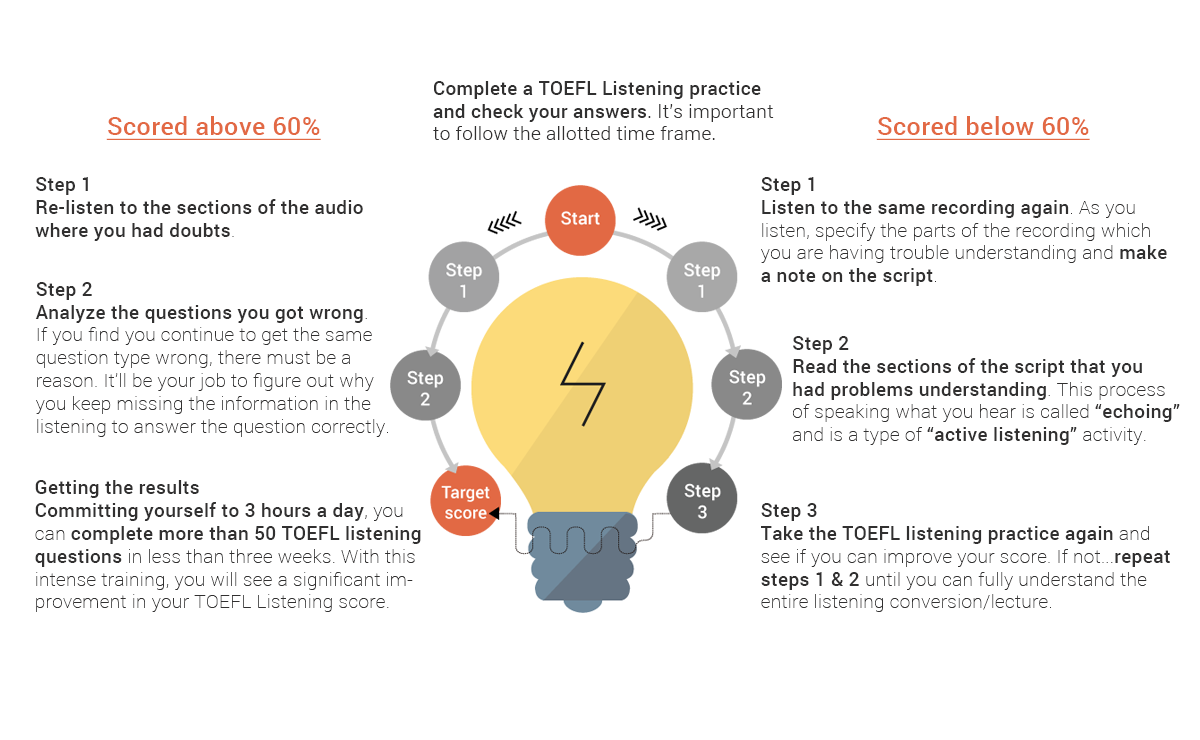
ZFirst คุณต้องฝึกการฟัง TOEFL ให้เสร็จสิ้น และ ตรวจคำตอบของคุณ สิ่งสำคัญคือต้องปฏิบัติตามกรอบเวลา allotted หากคุณหมดเวลา อย่าตอบคำถามที่เหลือ เราต้องการช่วยคุณปรับปรุง และการโกงจะทำให้คุณได้รับ ข้อมูลที่ไม่ถูกต้อง
สองส่วนถัดไปจะแบ่งออกเป็นขั้นตอนต่างๆ ขึ้นอยู่กับว่าคุณ ผ่านหรือล้มเหลว การฝึกฟัง
โปรดทราบว่า pass หรือ failed ไม่ใช่เครื่องหมายปกติที่สูงกว่าหรือต่ำกว่า 50% ทุกอย่างขึ้นอยู่กับคะแนน TOEFL เป้าหมาย ของคุณ ดังนั้นบางคนอาจต้องทำคะแนนมากกว่า 80% ในทุกส่วน ดังนั้นสิ่งใดก็ตามที่อยู่ด้านล่างจะถือว่าไม่ผ่าน อย่างไรก็ตาม ค่าเฉลี่ยควรสูงกว่า 60% ดังนั้นเราจะใช้เปอร์เซ็นต์นั้นกับส่วนที่เหลือของบทความนี้
Zคะแนนต่ำกว่า 60%
ขั้นตอนที่ 1: ฟังการบันทึกเดิมอีกครั้ง ขณะที่คุณฟัง ให้ระบุส่วนของการบันทึกที่คุณมีปัญหาในการทำความเข้าใจและ จดบันทึกลงในสคริปต์ (คุณสามารถพิมพ์สำเนาบทสนทนาได้) โดยปกติแล้ว สาเหตุของความเข้าใจผิดมาจาก คำที่ไม่คุ้นเคย ดังนั้นให้ค้นหาความหมายและฝึกฝนการออกเสียง...หากคุณประสบปัญหา อ่านออกเสียง สามารถช่วยได้
ขั้นตอนที่ 2: เมื่อคุณเข้าใจคำที่ไม่คุ้นเคยแล้ว อ่านส่วนของสคริปต์ ที่คุณมีปัญหาในการทำความเข้าใจ กระบวนการพูดสิ่งที่คุณได้ยินนี้เรียกว่า “echoing” และเป็นกิจกรรมประเภทหนึ่งของ “การฟังอย่างกระตือรือร้น” ผลการศึกษาพบว่าการฟังแบบพาสซีฟช่วยพัฒนาทักษะการฟัง ได้อย่างมีประสิทธิผลมากกว่า มากกว่าการฟังแบบเฉยๆ (การฟังแบบพาสซีฟ)
ขั้นตอนที่ 3: ฝึกการฟัง TOEFL อีกครั้งและดูว่าคุณจะสามารถ ปรับปรุงคะแนนของคุณได้หรือไม่ ถ้าไม่... ให้ทำซ้ำ ขั้นตอนที่ 1 และ 2 จนกว่าคุณจะเข้าใจการแปลงการฟัง/การบรรยายทั้งหมดได้อย่างถ่องแท้
Zได้คะแนนสูงกว่า 60%
ขั้นตอนที่ 1: ฟังส่วนของเสียงที่คุณมีข้อสงสัยอีกครั้ง บางทีคุณอาจไม่แน่ใจเกี่ยวกับคำถามและเดาระหว่างสองตัวเลือกคำตอบ นี่อาจเป็นคำถามที่ดีสำหรับ ค้นหาในไฟล์เสียง และเรียนรู้ว่าข้อสงสัยของคุณมาจากไหน
ขั้นตอนที่ 2: วิเคราะห์คำถามที่คุณตอบผิด หากคุณพบว่าคุณยังคงได้รับประเภทคำถาม เดิมผิด แสดงว่าจะต้องมีเหตุผล เป็นหน้าที่ของคุณที่จะต้องค้นหาว่า why คุณพลาดข้อมูลในการฟังเพื่อตอบคำถามอย่างถูกต้อง คำถามที่คุณสามารถถามตัวเองได้คือ “ทำไมไม่มีข้อมูลนั้นในบันทึกของฉัน”
ทำตามขั้นตอนเหล่านี้แล้วคุณจะเห็นว่ามันทำงานได้อย่างมหัศจรรย์
การทำกระบวนการทีละขั้นตอนข้างต้นให้เสร็จสิ้นจะใช้เวลาประมาณ 45 ถึง 60 นาที ต่อการฝึกฝนการฟัง TOEFL แน่นอนว่า หากคุณตอบคำถามทั้งหมดหรือส่วนใหญ่ถูกต้อง คุณจะใช้เวลาน้อยลงมาก
ดังนั้น ด้วยการทุ่มเท วันละ 3 ชั่วโมง คุณจะสามารถตอบ มากกว่า 50 คำถามการฟัง TOEFL ใน น้อยกว่าสามสัปดาห์ ด้วยการฝึกอบรมที่เข้มข้นนี้ คุณจะเห็น การปรับปรุงที่สำคัญ ในคะแนน TOEFL Listening ของคุณ
เรามีอีกหนึ่งข้อเสนอแนะสำหรับคุณ! Z กระจายการฝึกการฟัง 3 ชั่วโมงของคุณตลอดทั้งวัน กับส่วนอื่นๆ ของ TOEFL เช่น ฝึกทำข้อสอบ TOEFL หรือเริ่มเตรียมสอบ TOEFL การพูดของคุณ นี่คือ ตารางการเรียนรู้ที่ดีที่สุด เพราะการได้สัมผัสกับภาษาอังกฤษ อย่างต่อเนื่องและสม่ำเสมอ ในแต่ละวันจะกระตุ้นการเรียนรู้ของคุณ และคุณจะมีเวลาง่ายขึ้นมากในการสอบ TOEFL
เคล็ดลับใหม่สำหรับ TOEFL Listening
ต่อไปนี้เป็นเคล็ดลับการฟัง TOEFL ใหม่ๆ ที่จะช่วยให้คุณ ทำงานได้ดี ในส่วนการฟัง TOEFL:
- 1. รับฟังเพื่อจุดประสงค์หลัก ข้อความการฟังคือ สั้นและเน้นดังนั้นคำถามมักจะทดสอบความเข้าใจของคุณเกี่ยวกับผู้พูด แนวคิดหลัก, เป้าหมาย, or เจตนา. จดจ่ออยู่ที่ เหตุใดผู้พูดจึงพูด แทนที่จะพยายามจดจำทุกรายละเอียด
- 2. ใส่ใจกับบริบทในคำถามแบบเลือกคำตอบ คำถามเหล่านี้จะทดสอบว่าคุณเข้าใจหรือไม่ว่าคำตอบคืออะไร เหมาะสม ในสถานการณ์ที่กำหนด ตั้งใจฟัง สถานการณ์, the ความสัมพันธ์ระหว่างวิทยากร, and the โทนเสียง ของการสนทนา
- 3. ระบุแนวคิดหลักได้อย่างรวดเร็วในการพูดคุยเชิงวิชาการ วิทยากรมักจะแนะนำหัวข้อ ชัดเจน. ลอง สรุปการพูดคุยด้วยประโยคง่ายๆ ประโยคเดียว ในขณะที่คุณฟังเพื่อจดจ่ออยู่กับประเด็นสำคัญ
- 4. สังเกตน้ำเสียงและทัศนคติของผู้พูด บางคำถามถามเกี่ยวกับ ความคิดเห็น, ทัศนคติ, or ความรู้สึก. ให้ความสนใจกับ มีบางอย่างพูดอย่างไรไม่ใช่แค่สิ่งที่พูดโดยเฉพาะในการสนทนาและการประกาศ
- 5. ปฏิบัติตามวิธีการจัดระเบียบแนวคิด แม้แต่ข้อความการฟังสั้นๆ ก็ตาม โครงสร้างที่ชัดเจน. ฟังหา ตัวอย่าง, เหตุและผล, การเปรียบเทียบ, or ขั้นตอนในกระบวนการ เพื่อทำความเข้าใจว่าแนวคิดต่างๆ เชื่อมโยงกันอย่างไร
- 6. ใช้การกำจัดเมื่อคุณไม่แน่ใจ หากคำตอบที่ถูกต้องไม่ชัดเจน ให้ลบตัวเลือกที่ไม่ตรงกับผู้พูดออก ความหมาย หรือ โทนเสียง. คำตอบที่ดีที่สุดคือคำตอบที่เหมาะกับ ข้อความโดยรวม.
- 7. บริหารเวลาและเดินหน้าต่อไป คำถามจะต้องตอบ ตามลำดับ, and you ไม่สามารถกลับมาได้ เพื่อข้ามคำถาม คาดเดาอย่างมีเหตุผล หากจำเป็นและดำเนินการต่อไปเพื่อหลีกเลี่ยงการพลาดคำถามที่ง่ายกว่าในภายหลัง
แบบฝึกหัด TOEFL Listening รูปแบบใหม่ของเรา
คำถามฝึกฟัง TOEFL ของเราได้รับการออกแบบให้มีรูปลักษณ์และความรู้สึก เหมือนกับแบบทดสอบ TOEFL อย่างเป็นทางการ เราจับคู่ ความยาก, ประเภทคำถาม, การจัดรูปแบบ และ พฤติกรรมการทดสอบ อย่างระมัดระวัง เพื่อให้คุณสามารถฝึกฝนในสภาพแวดล้อมการทดสอบ ที่สมจริง หากต้องการสำรวจคำถามฝึกหัดการฟัง TOEFL ทั้งหมด ให้คลิกเมนูแบบฝึกหัด TOEFL ใน แอพติวเตอร์ TOEFL ของเรา คุณยังสามารถ ทำแบบทดสอบ TOEFL Simulation ได้ฟรีตอนนี้
ส่วนการฟังของ TOEFL เป็น ที่เน้นทักษะสูง และปรับปรุงอย่างมีนัยสำคัญด้วย การฝึกฝนแบบกำหนดเป้าหมาย ด้วยการฝึกฝนกลยุทธ์การฟังให้เชี่ยวชาญและทำ คำถามฝึกการฟัง TOEFL ที่มีอยู่ทั้งหมด ก่อนการสอบ คุณจะสามารถเพิ่มความสามารถในการ เข้าใจคำพูดภาษาอังกฤษ และ ตอบคำถามได้อย่างแม่นยำ ภายใต้แรงกดดันด้านเวลา
Zหากคุณต้องการความช่วยเหลือ เครื่องมือสนับสนุนการฟังของเราได้แก่:
- ZBestMyLingo (ฟังและตอบสนองต่อสถานการณ์ในชีวิตจริง)
- ZTOEFL การฝึกอบรมคำศัพท์ (แบบฝึกหัดแบบโต้ตอบที่เสริมสร้างการรู้จำคำศัพท์ที่รวดเร็ว)
- ZTOEFL แอปติวเตอร์การฟัง (ฝึกหัดกับคำถาม บทเรียน และแบบทดสอบการฟัง TOEFL มากกว่า 600 ข้อ)
ลำดับถัดไป
สร้างบัญชีฟรี เพื่อเข้าถึงบทเรียนการฟัง TOEFL พื้นฐานต่อไปนี้ และเริ่ม เพื่อเสริมสร้างทักษะการฟังของคุณ
- บทนำการฟัง TOEFL
- กลยุทธ์การฟัง TOEFL เพื่อความสำเร็จ
- เลือกการตอบกลับ
- คำถามสนทนา
- คำถามประกาศ
- คำถามพูดคุยเชิงวิชาการ
- คำถามเนื้อหาโดยสรุป
- คำถามวัตถุประสงค์โดยสรุป
- คำถามโดยละเอียด
- คำถามอนุมาน
- คำถามเกี่ยวกับฟังก์ชัน
- คำถามทัศนคติ
แหล่งเรียน TOEFL Listening ฟรี
หากคุณวางแผนที่จะสอบ TOEFL คุณจะต้องมี ทักษะการฟังที่แข็งแกร่ง เพื่อผ่าน 3 จาก 4 ส่วน ด้วยเหตุนี้ จึงเป็นสิ่งสำคัญที่คุณจะต้องฝึก อย่างสม่ำเสมอทุกวัน จนถึงวันทดสอบ
ด้านล่างนี้คือแหล่งข้อมูลบางส่วนที่คุณสามารถใช้เพื่อ train และ รักษาทักษะการฟังของคุณทุกวัน
- BBC การเรียนรู้ภาษาอังกฤษ - http://www.bbc.co.uk/learningenglish
- ZTEDZ - https://www.ted.com/
- ZVOA การเรียนรู้ภาษาอังกฤษ - https://learningenglish.voanews.com/
- Scientific American - วิทยาศาสตร์ 60 วินาที - https://www.scientificamerican.com/podcast/60-second-science/